5 Nov 2026
Wine Tasting Transformation Starts at Home
A wine tasting transformation begins with attention, not expertise. Learn a calm, repeatable way to notice aroma, texture, flavour and finish at home well.
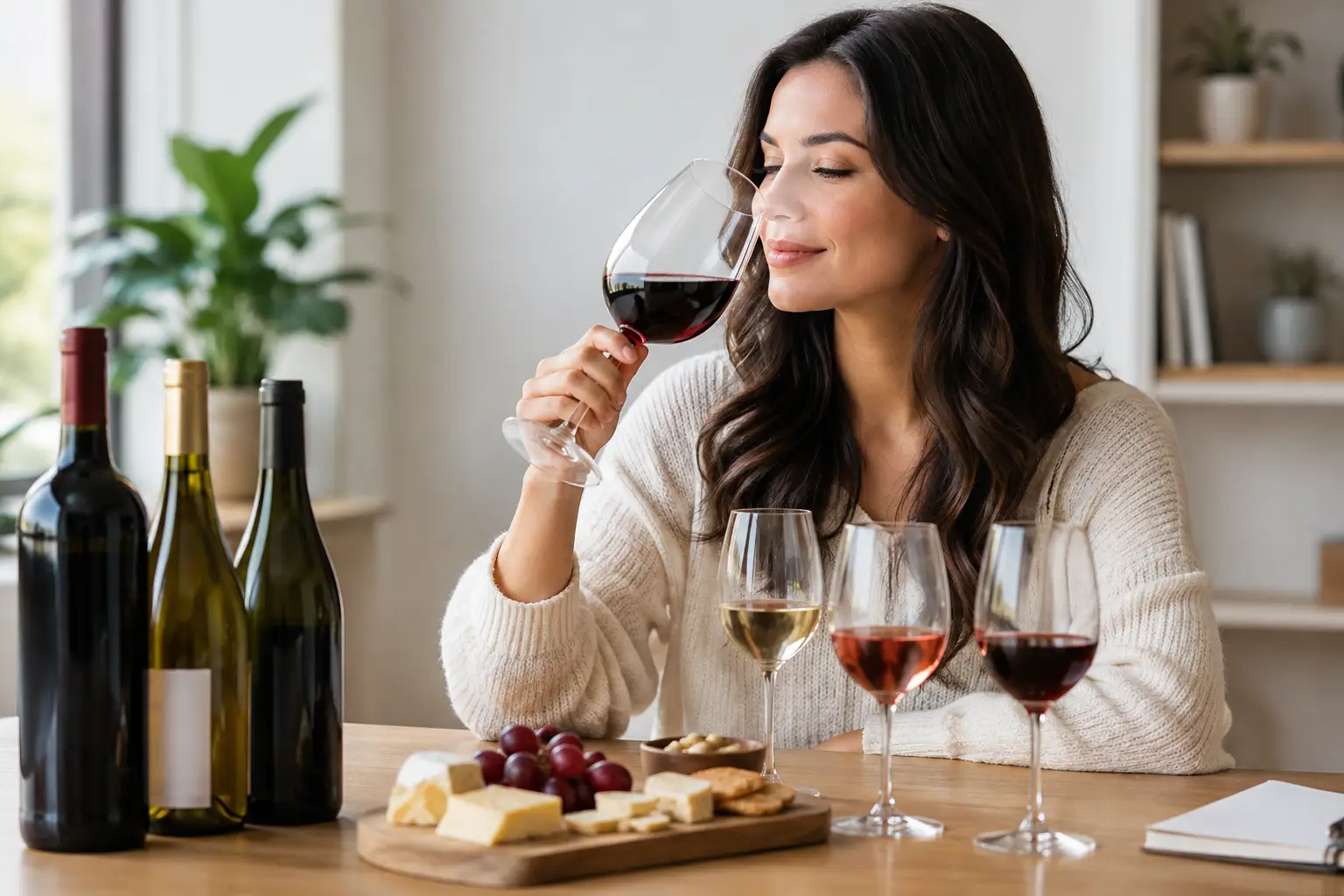
The bottle is open, the glasses are on the table, and someone asks what you can taste. For many people, that is the moment confidence disappears. A wine tasting transformation changes that experience. It does not require a cellar, a perfect vocabulary or a confident opinion on the first sip. It begins by knowing where to place your attention.
Good tasting is less about getting an answer right than noticing what is actually in front of you. With a few repeatable prompts, the wine you already bought for dinner can become more interesting, easier to describe and far easier to remember.
What a Wine Tasting Transformation Really Means
Transformation can sound dramatic, but the change is practical. You move from drinking wine as a pleasant background to tasting it with intention. Instead of saying, “I like it” or “I do not like it”, you begin to recognise what is creating that reaction: bright acidity, soft fruit, drying tannins, a creamy texture, a warm finish or an aroma that reminds you of lemon peel, blackcurrant or toast.
This is not about performing expertise. It is about building a personal reference point. Two people may notice different things in the same glass, and both can be right. Aroma and flavour are shaped by experience, memory, serving temperature and even what you have just eaten. The useful question is not “What should I be tasting?” but “What do I notice now?”
Over time, these small observations become a pattern. You may realise that you consistently enjoy fresh, high-acid whites with seafood, or that you prefer red wines with supple tannins over heavier, more drying styles. That knowledge makes choosing the next bottle more satisfying and removes much of the guesswork from a restaurant list or wine shop shelf.
Start With the Conditions, Not the Vocabulary
A thoughtful tasting does not need special equipment, although a clear glass with enough room to swirl helps. More important is the setting. Avoid strongly scented candles, perfume and cooking smells if possible. Give the wine a little space away from a busy meal, particularly when you are learning.
Temperature matters more than many people expect. A white served too cold can seem muted and simple. A red served too warm can feel alcoholic and heavy. There is no need to measure every bottle precisely, but allow a refrigerator-cold white to sit briefly before tasting, and consider giving a warm red a short rest in a cooler room.
Pour a modest amount. This gives you room to swirl and lets the wine change as it meets air. Before you taste, pause. That moment of attention is where the habit begins.
Look for clues, not verdicts
Hold the glass against a pale background and notice the colour, depth and clarity. A pale lemon white may suggest a lighter-bodied or younger style, while deeper gold can point towards age, oak or a riper profile. With reds, a bright purple rim often appears in younger wines, whereas garnet or brick tones can emerge with time.
These are clues, not rules. Colour alone cannot tell you whether a wine will be good, expensive or to your taste. Its value is that it slows you down and gives your senses a starting point.
Smell in layers
Swirl gently, then take a short sniff rather than a dramatic inhale. Your first impression may be fruit, flowers, herbs, spice, earth, wood or something less obvious. If you smell little at first, wait and return to it. Wine often reveals more as it warms slightly and opens in the glass.
Try to name broad families before reaching for precise descriptors. “Red fruit” is useful if you cannot tell whether it is cherry, raspberry or cranberry. “Fresh herbs” is more helpful than forcing a note of thyme. Specific language will come with repetition, but clear, honest language is already good tasting language.
Taste for Structure Before Flavour
On the palate, many people focus only on fruit. Flavour matters, but structure often explains why a wine feels refreshing, generous, sharp, soft or powerful. Take a small sip and let it move around your mouth for a moment.
Ask yourself whether your mouth waters. That is acidity, and it often brings freshness and lift. Notice whether your gums and tongue feel dry or grippy, particularly with red wine. That is tannin. It can feel silky and fine, firm and chalky, or bold and drying. Then consider body: does the wine feel light like skimmed milk, rounded like whole milk, or richer still?
Alcohol contributes warmth, especially at the back of the throat. Oak may bring flavours such as vanilla, toast, cedar or baking spice, but it can also influence texture, making a wine feel broader or creamier. None of these features is automatically positive or negative. The question is whether they feel balanced for you.
Finally, pay attention after swallowing. Does the flavour vanish quickly, remain quietly, or linger with changing notes? The finish is not a test of status. It is simply part of the experience, and a useful detail to save when comparing wines later.
Build Language You Will Actually Use
A personal tasting note does not need to read like a competition entry. In fact, the best notes are often the ones you understand weeks later. Start with a few plain observations: what you smelled, how the wine felt, what stood out on the palate and whether you would choose it again.
A note such as “fresh lemon and green apple, light-bodied, very crisp, better with food than alone” is specific enough to be useful. So is “plum and cocoa, smooth at first but too warm for me by the end”. These notes help you identify preferences without pretending that every glass contains twenty separate aromas.
If words do not come easily, use comparisons from everyday life. Does the acidity resemble biting into a Granny Smith apple? Is the texture like tea, yoghurt, velvet or wet stone? Sensory language becomes easier when it is linked to familiar sensations rather than borrowed from a textbook.
Turn One Bottle Into a Learning Ritual
The greatest change comes from repetition. Tasting once with focus is enjoyable; tasting several bottles over time with the same simple process develops judgement. Save the wine name, date, occasion and a short note. Include what you ate with it, because food can completely change your perception. A sharp white that feels severe on its own may become lively and balanced beside fish and chips or goat’s cheese.
It also helps to revisit a bottle over an evening. Taste it shortly after pouring, then again 20 or 30 minutes later. Some wines become more expressive with air, while others show their best side early. This is a useful reminder that a tasting note records a moment, not a permanent fact.
For a more revealing exercise, compare two wines with one variable in mind. Try two Sauvignon Blancs from different regions, or a lightly oaked Chardonnay beside an unoaked one. You do not need a formal flight of expensive bottles. The point is to notice contrast. Differences become clearer side by side than they do in isolation.
Audio Sommelier can support this routine with guided audio prompts, saved tasting memories and comparative Flights built from bottles you already own. The value is not being told what to think. It is having a calm structure that helps you notice more, record it clearly and return to what you learned.
Avoid the Habits That Make Tasting Harder
The most common obstacle is rushing. A quick sip tells you whether a wine is immediately pleasant, but it rarely reveals its shape. Give yourself enough time to smell before sipping and to notice the finish afterwards.
Another obstacle is treating a tasting wheel as an answer sheet. These tools can be helpful when you are searching for a word, but they can also make people second-guess a genuine impression. If you smell pear and the wheel suggests quince, pear is still the right note for your glass.
It is also worth resisting the idea that a more expensive wine must produce a more impressive response. Price can reflect rarity, production choices and reputation, but enjoyment remains personal. A modest bottle that suits your meal and preferences is a successful choice.
Make Tasting More Social Without Making It Formal
A shared tasting at home works best when everyone has permission to notice different things. Pour small measures, choose one or two bottles and ask simple questions: what does this remind you of, how does it feel in the mouth, and would you drink it again? Keep the conversation grounded in experience rather than trying to identify a hidden grape variety.
For guests with different confidence levels, begin with a familiar style. A bright rosé, approachable red or aromatic white gives people accessible reference points. If you compare wines, make the contrast obvious enough to be interesting, such as a dry Riesling next to an off-dry one. Too many bottles can blur the lesson and dull the palate.
A wine tasting transformation is built one attentive glass at a time. Keep your notes honest, your comparisons simple and your curiosity active. The next bottle does not need to be special before you pour it - the attention you bring to it is what makes it memorable.