10 Jun 2026
How to Compare Wine Side by Side
Learn how to compare wine side by side with confidence. A clear, practical method to notice aroma, texture, flavour and finish at home.
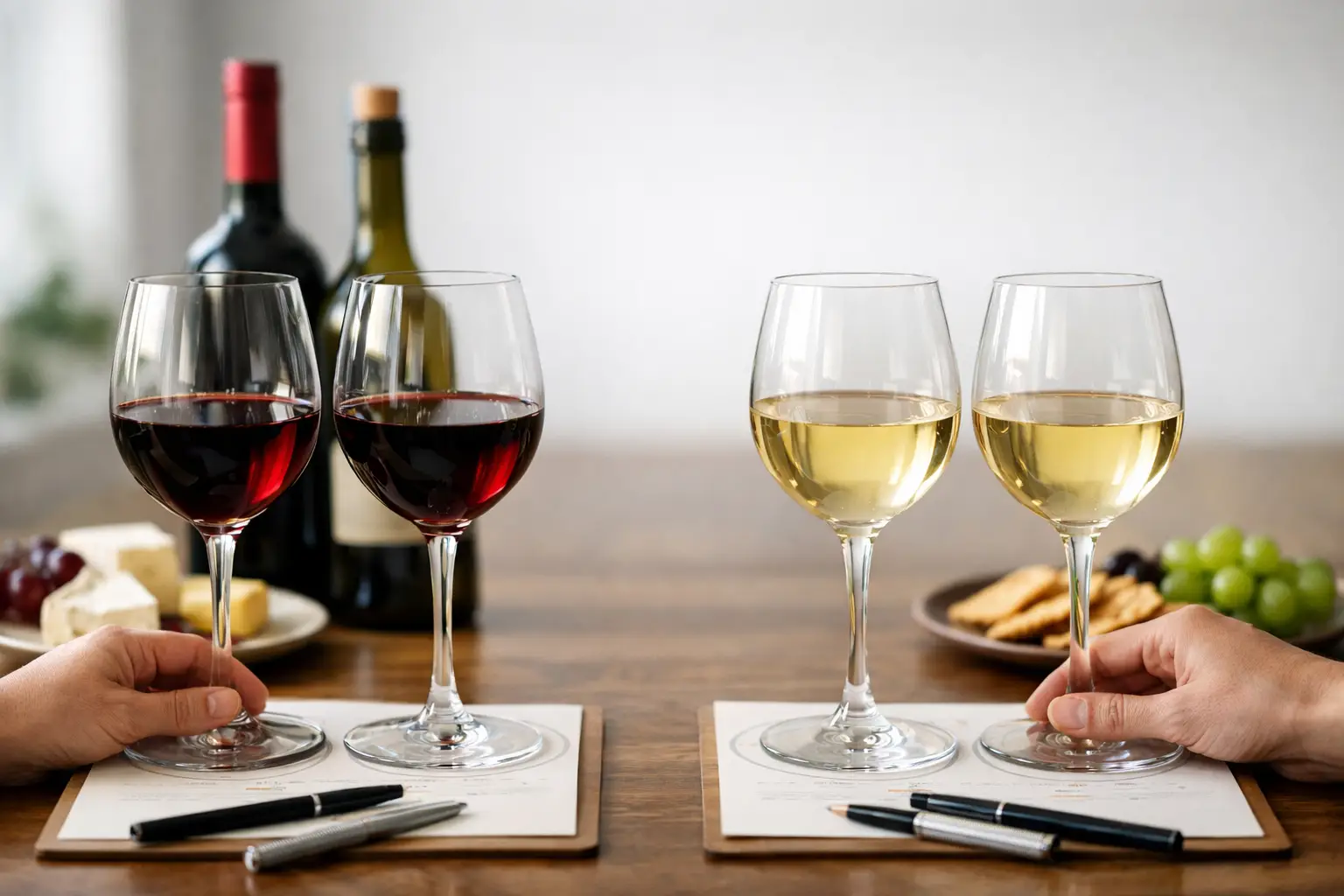
Most people notice the difference between two wines only after the second glass, when the first has already become a vague memory. If you want to compare wine side by side properly, the trick is not better wine knowledge. It is structure. With two glasses poured at the same time, even a beginner can spot contrasts in aroma, texture, flavour and finish that would be easy to miss on separate evenings.
That is why side by side tasting is one of the fastest ways to build confidence. It turns wine from a blur of general impressions into something clearer and more memorable. You do not need specialist equipment, formal training or a perfect vocabulary. You simply need a calm method and the willingness to notice what changes from one glass to the next.
Why compare wine side by side?
A single wine can be enjoyable without telling you very much. You might think it is crisp, fruity or smooth, but those words stay broad until another wine sits next to it. Comparison gives your palate edges. One white suddenly feels leaner, while the other seems rounder. One red smells more floral, while the other leans earthy or savoury.
This matters because tasting is relative. Sweetness, acidity, tannin and body are easier to judge when they appear in contrast. If you drink one wine on Friday and another two weeks later, memory will do most of the work, and memory is rarely precise. Side by side tasting removes that guesswork.
It is also less intimidating than many people expect. You are not trying to identify every aroma exactly. You are trying to answer simpler, more useful questions. Which wine smells fresher? Which feels lighter? Which leaves a longer finish? Those are practical observations, and they build better tasting language over time.
What to pour when you compare wine side by side
The best pairings are not always the most expensive or the most dramatic. In fact, wines that are broadly similar often teach you more than wines from opposite ends of the spectrum. Comparing a Sauvignon Blanc with a Chardonnay is helpful, but comparing two Sauvignon Blancs from different regions can be even more revealing.
A good place to start is with one clear point of difference. Keep the grape the same and change the country. Keep the country the same and change the style. Compare an unoaked Chardonnay with an oaked one. Try a young Rioja against a Reserva. Put a pale Provence rosé beside a deeper, fruitier rosé from another region. The closer the category, the easier it becomes to notice the details.
If you are completely new, avoid setting out four or five wines at once. Two is enough. Three can work if you are organised, but more than that often turns into general drinking rather than focused tasting.
Set up matters more than most people think
Pour modest amounts into similar glasses and give yourself space to concentrate. A side by side comparison becomes harder if one glass is much larger, one wine is too cold, or the room is full of cooking smells. You do not need a formal tasting room, but a little attention to context helps.
Natural light is useful for judging appearance, and plain surroundings keep your senses from getting distracted. If possible, taste before a strongly flavoured meal rather than after. Water nearby is helpful, and so is a simple sheet of notes on your phone or in a notebook.
Temperature is worth getting roughly right. A heavily chilled white can hide its aroma and texture. A red served too warm can feel loose and alcoholic. You do not need exact degrees, but you do want each wine presented fairly.
A simple method to compare wine side by side
Start by looking. Hold both glasses against a light background and compare colour, brightness and intensity. One may appear paler or more golden. One red may show a youthful purple rim while the other looks softer and more brick-toned. Appearance will not tell you everything, but it often gives an early clue about age, richness or style.
Then smell both wines before you sip either. This is where side by side tasting becomes especially useful. Move back and forth between the glasses rather than trying to decode one in isolation. Ask yourself whether the fruit feels fresh or ripe, whether there is a floral, herbal, spicy or oaky note, and which wine seems more expressive straight away.
When you taste, take a small sip of the first wine, then the second. Return to the first if needed. The point is not speed. The point is contrast. Notice where the wine lands in the mouth and how it moves. Does it feel sharp and lively or broad and creamy? Does the fruit stay bright or turn more savoury? Are the tannins fine and gentle, or firmer and drier?
Finally, pay attention to the finish. Many people focus only on the first impression, but the finish often tells you which wine feels more complete. One may disappear quickly. Another may leave citrus, spice, dried herbs or soft oak for several seconds. Length is not the only measure of quality, but it is a useful part of comparison.
What to notice without overthinking it
You do not need a huge bank of tasting terms to make good comparisons. A few steady categories are enough. Aroma, sweetness, acidity, tannin, body, flavour concentration and finish will take you a long way. If you can describe each of those in plain language, you are already tasting with more precision than most casual drinkers.
It also helps to trust broad descriptions before chasing exact ones. Saying a wine smells like orchard fruit, citrus peel or dark berries is often more useful than forcing a very specific note you are not sure about. The goal is clarity, not performance.
There are trade-offs here. A richer wine may feel more luxurious but less refreshing. A very crisp white may seem exciting with food but slightly severe on its own. A softer red may be immediately charming, while a more structured one could show better after air or alongside dinner. Side by side tasting helps you see those differences without insisting that one wine must simply be better.
Common mistakes when comparing two wines
The biggest mistake is rushing. If you move too quickly, both wines blur together and you end up preferring whichever one feels louder at first sip. Give each glass a little time. Wines often change after a few minutes in the glass, and some improve noticeably with air.
Another common issue is comparing wines that are too different without a clear reason. A delicate Picpoul next to a heavily oaked Chardonnay can be interesting, but it may teach you less than two fresher whites with subtler distinctions. Big contrasts are easy to notice. Fine contrasts are what sharpen your palate.
Food can also interfere if you are trying to learn. There is nothing wrong with tasting over dinner, but if your aim is sensory clarity, do your comparison first and then return to the wines with the meal. That way you will understand both the wine itself and how food shifts your perception.
How notes make future comparisons easier
A side by side tasting becomes much more valuable when you record what you noticed. Not because your notes need to sound polished, but because memory fades quickly. A short note such as brighter acidity, softer tannin, more stone fruit, shorter finish is enough to preserve the comparison.
Over time, those notes become your own tasting reference point. You stop relying on shelf labels, scores or vague recollection. You begin to recognise patterns in what you enjoy. Perhaps you consistently prefer whites with tension and mineral freshness, or reds with moderate tannin and savoury depth. That is useful knowledge, especially when you are buying wine for home or choosing bottles for guests.
This is where a guided format can help. Audio Sommelier, for example, is built to make tasting feel calmer and more intentional, with structured guidance and a way to save what you tasted so future comparisons are easier to revisit. For many people, that is the difference between drinking something nice and actually learning from it.
Side by side tasting is about preference, not passing a test
One of the most reassuring things about comparing wine is that it gives you permission to like what you like for clear reasons. You may prefer the brighter, simpler wine over the more expensive one because it feels fresher and easier to enjoy. You may choose the fuller wine because you want texture and warmth. Neither response is wrong.
That is worth holding on to, because confidence in tasting does not come from sounding expert. It comes from paying attention, noticing patterns and trusting your own palate a little more each time. When two glasses sit next to each other, wine becomes easier to read.
Next time you open a bottle, consider opening another with it. Not to make the evening complicated, but to make it clearer.