12 Jun 2026
Wine Aroma Wheel for Beginners Explained
Learn how to use a wine aroma wheel for beginners to spot scents, build tasting confidence, and describe wine more clearly at home.
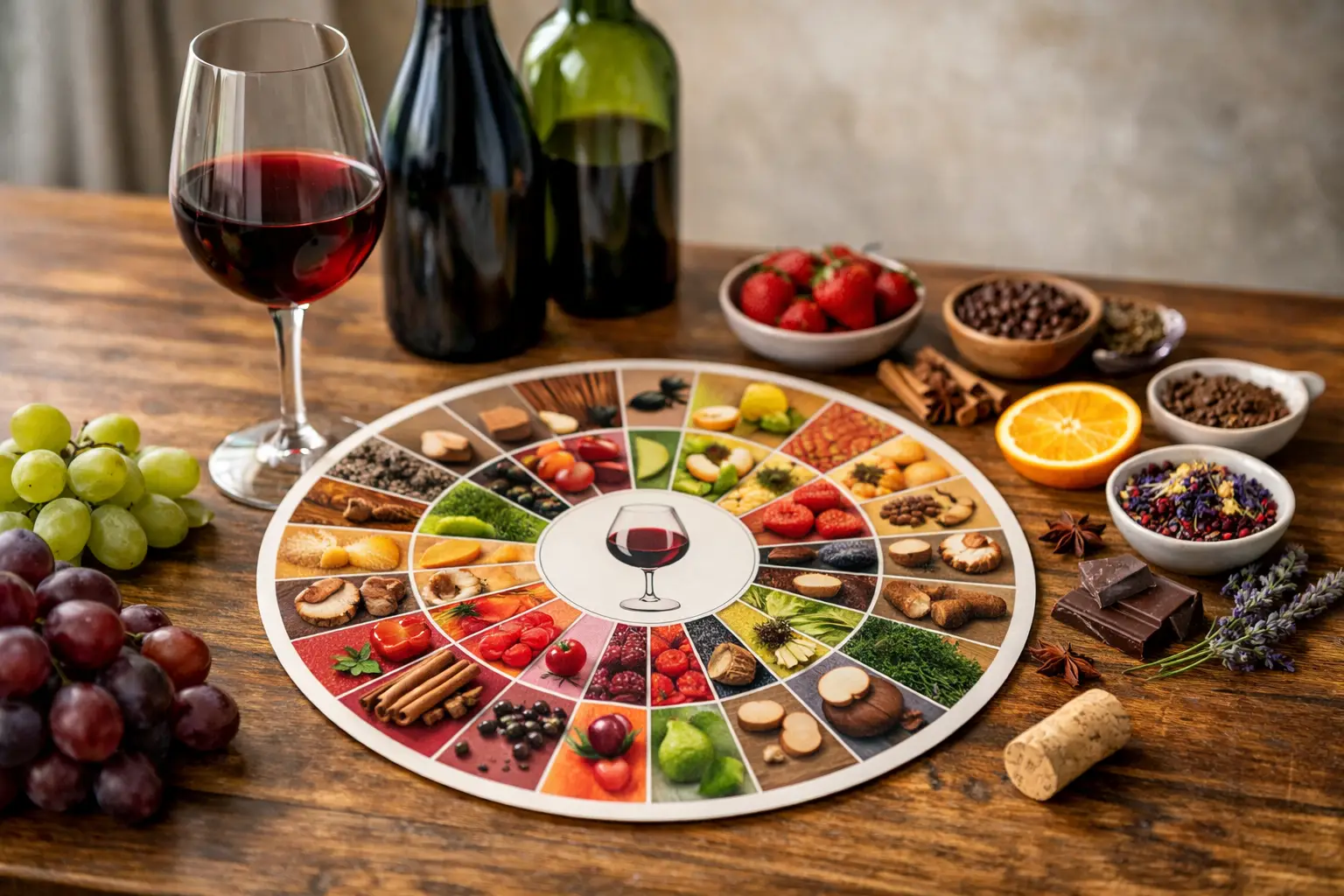
You swirl, smell, pause - and then the mind goes blank. You know the wine smells of something, but finding the right word can feel oddly difficult. A wine aroma wheel for beginners helps bridge that gap. It gives you a simple visual path from broad impressions to more precise notes, so you can move from “fruity” to “citrus” to “lemon peel” with far more confidence.
That matters because tasting is not about sounding clever. It is about noticing more, enjoying more, and remembering what you actually liked. For anyone building confidence at home, the aroma wheel turns wine from a vague experience into something clearer and more repeatable.
What a wine aroma wheel for beginners actually does
At first glance, an aroma wheel can look overly technical. In practice, it is one of the most beginner-friendly tasting tools available. The wheel groups aromas into families, usually with the broadest categories in the centre and the more specific descriptors around the outside.
So instead of trying to name a scent from nowhere, you start with a simple question. Is this fruit, floral, herbal, spicy, woody, or earthy? Once you have that rough direction, the next layer becomes easier. If it is fruit, does it lean towards orchard fruit, citrus, tropical fruit, or darker berry notes? From there, you can narrow further.
This is why the wheel works so well for new tasters. It reduces pressure. You do not need the perfect answer straight away. You only need a starting point.
Why beginners often struggle with aroma
Most people are not bad at smelling wine. They are simply unused to translating scent into language. We recognise smells all day long - coffee, cut grass, toast, orange peel - but we rarely practise naming them carefully.
Wine adds another layer of difficulty because aromas can overlap. A white wine might show lemon, green apple and white blossom at the same time. A red might suggest cherry, dried herbs and a little vanilla from oak ageing. None of that is wrong or unusual. In fact, complexity is part of the appeal.
There is also the issue of expectation. If you think you should be finding twenty precise notes in every glass, tasting becomes tense very quickly. A better approach is to notice two or three honest impressions and build from there. The aroma wheel supports that slower, more reliable method.
How to use the wheel without overthinking it
Begin with the glass still. Take one gentle sniff before swirling. This often gives you the lighter, more delicate notes. Then swirl and smell again. That second pass usually reveals more fruit, spice, or oak-related aromas.
Now look at the wheel and stay near the centre first. Choose the broad family that feels closest. If you think “fruit”, that is enough for the moment. Then ask whether the fruit smells fresh, ripe, cooked, or dried. Next, move outward towards a more exact note such as pear, blackcurrant, plum, or grapefruit.
It helps to say your impressions out loud, even if they feel uncertain. “I think this is citrus, maybe lemon, perhaps more peel than juice.” That kind of phrasing is useful because tasting is often approximate. Wine is not a puzzle with one correct answer. Different people notice different details, and serving temperature, glass shape, and even your own recent meal can influence what stands out.
The main aroma families worth knowing first
You do not need to memorise every section of the wheel. For beginners, a few core families will carry most of your tasting.
Fruit is usually the easiest entry point. In white wines, that might mean apple, pear, lemon, lime, peach, or tropical fruit. In reds, you might notice strawberry, cherry, raspberry, blackberry, or plum. Younger wines often show fresher fruit, while older wines can shift towards dried fruit, jam, or stewed notes.
Floral aromas are common too, though often lighter. Think rose, violet, elderflower, orange blossom, or chamomile. These are more likely to appear as a hint than a dominant feature.
Herbal and vegetal notes can be especially helpful for identifying style. Sauvignon Blanc might suggest cut grass or green pepper. Some reds can show dried herbs, bay leaf, or mint. These notes are not flaws. Used in balance, they add freshness and character.
Spice and oak-related aromas appear often in wines aged in oak or made in richer styles. Vanilla, clove, cinnamon, toast, cedar, smoke, or cocoa can all sit in this family. The key is not to force them. If the wine smells mainly of fresh fruit, let that be the story.
Earthy and savoury notes tend to become easier with practice. You may notice mushroom, forest floor, leather, tobacco, or damp stone in some wines, especially mature reds. Beginners often miss these at first, which is perfectly normal.
A simple tasting exercise at home
Choose one wine and give it ten quiet minutes. Smell it before swirling, then after swirling, and then again after a few minutes in the glass. Wines change as air reaches them, and this is one of the simplest ways to train your nose.
Use the aroma wheel in three steps. First, write one broad family. Second, write one or two more specific notes. Third, add a confidence level. For example: “Fruit - citrus, green apple - fairly confident.” This keeps the exercise grounded and removes the pressure to be exact.
If you want to learn faster, compare two wines side by side. A crisp Sauvignon Blanc next to a rounder Chardonnay, or a light Pinot Noir next to a fuller Malbec, makes aroma families much easier to spot. Contrast teaches quickly because differences stand out more clearly than isolated details.
Common mistakes with a wine aroma wheel for beginners
The most common mistake is treating the wheel like an exam sheet. It is a prompt, not a test. If you smell peach and the wheel reminds you of apricot, that is useful. If you smell nothing more precise than “ripe fruit”, that is useful too.
Another mistake is chasing every possible note. A wheel contains many descriptors because wine can be complex, not because every glass should contain all of them. Two or three well-observed impressions are more valuable than a long list of guesses.
Temperature can also get in the way. If a white wine is too cold, aromas may seem muted. If a red is too warm, alcohol can dominate. Glassware matters a little, but not as much as people think. A clean glass and a bit of patience will do more for your tasting than expensive equipment.
Finally, do not ignore memory. The best aroma training often happens away from wine. Smell lemon zest while cooking. Notice black tea, wet leaves, fresh basil, vanilla pods, or a punnet of strawberries. The more reference points you store, the easier wine becomes to describe later.
Building confidence over time
Aroma wheels are most helpful when used consistently rather than occasionally. The goal is not to become dependent on the wheel forever. It is to absorb the structure until your own vocabulary starts arriving more naturally.
That is where a guided approach can make a real difference. If you taste regularly and save what you noticed, patterns begin to emerge. You may realise you consistently enjoy wines with citrus and mineral notes, or softer reds with cherry and spice rather than heavier oak. This is far more useful than trying to remember vague impressions bottle by bottle.
For beginners, a calm system matters. Guided tasting, spoken in clear language, helps you slow down and notice aroma, texture and finish without second-guessing yourself. That is part of what makes Audio Sommelier useful at home - it gives structure without making the experience feel formal or intimidating.
When the wheel helps most - and when it helps less
The wheel is especially useful when you are learning categories, comparing wines, or trying to put language to a new experience. It gives shape to the moment and keeps you from defaulting to “nice” or “smooth” for everything.
It helps less if you rely on it too rigidly. Some wines are subtle, and some days your sense of smell is simply less sharp. Context matters. Time of day, glass condition, room smells, and even your own attention span can affect what you notice. There is no value in pretending certainty when the wine is giving only a quiet signal.
A good tasting habit balances structure with honesty. Use the wheel to guide your attention, then trust your own senses. If your note says “red fruit, maybe cherry, slight pepper, not much else today”, that is a perfectly good note.
The real win is not naming every aroma perfectly. It is learning how to notice what is in your glass with a bit more ease each time. Once that starts to happen, wine becomes less mysterious and far more personal.