6 Jun 2026
How to Describe Wine Flavours Clearly
Learn how to describe wine flavours with simple, confident language. A practical guide to aroma, texture, finish and tasting notes.
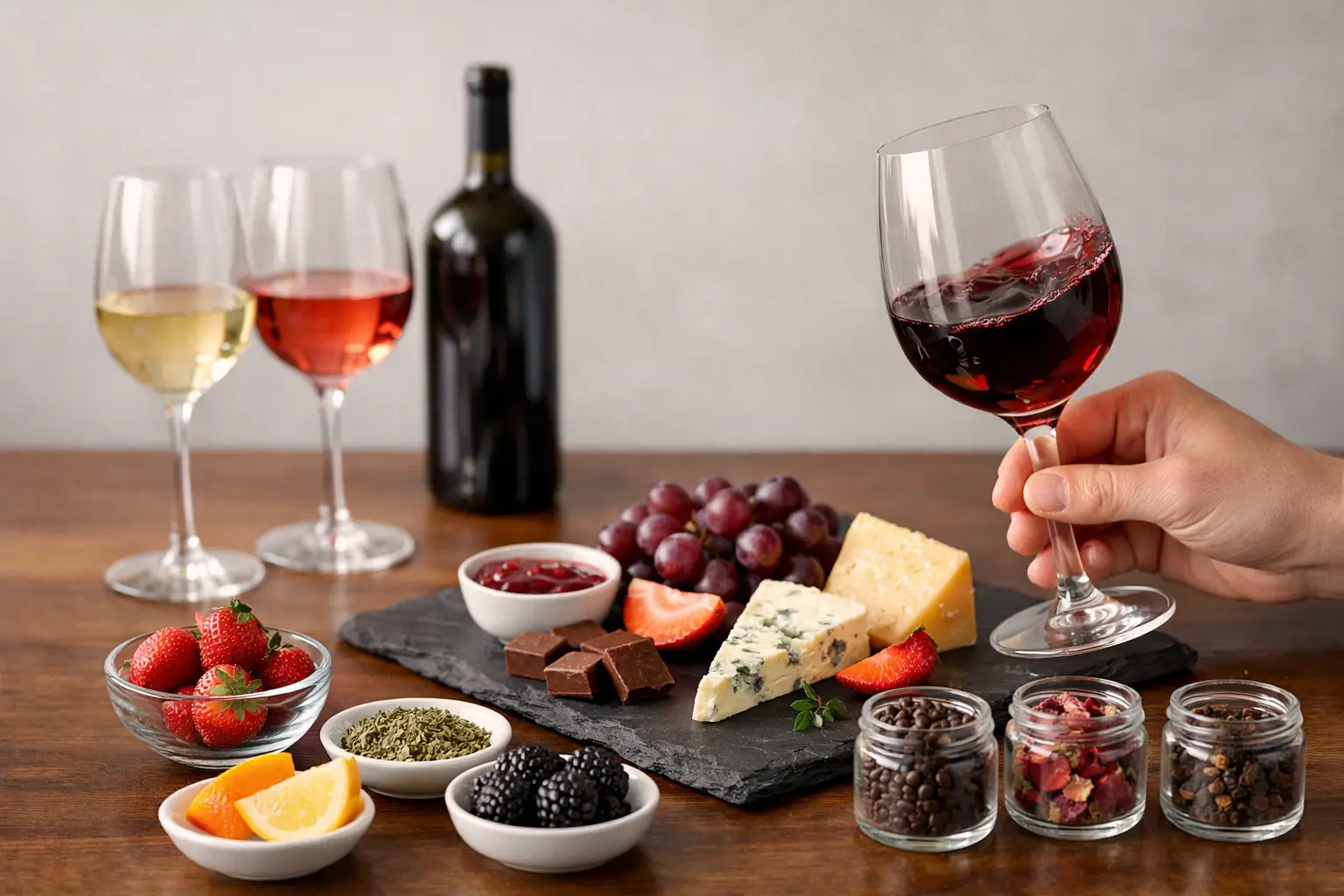
You take a sip, know you like it, and then stall at the first question: what does it actually taste like? If you have ever searched for how to describe wine flavours without sounding forced or overly technical, the good news is this - you do not need a trained palate or a dramatic vocabulary. You need a structure.
Most people are not bad at tasting wine. They are simply trying to describe too much at once. A better approach is to break the experience into a few clear parts: aroma, fruit character, non-fruit notes, texture, acidity, tannin, sweetness, body and finish. Once you do that, wine becomes much easier to talk about.
Why describing wine often feels harder than it should
Wine language can seem crowded with borrowed terms, romantic metaphors and opinions presented as facts. That is usually what makes beginners hesitate. They assume there is one correct answer hidden in the glass.
There rarely is. Tasting is personal, and flavour memory plays a huge role. One person says blackcurrant, another says blackberry, and both may be noticing the same family of flavours. The aim is not to perform expertise. The aim is to describe what you notice in a way that is useful, repeatable and honest.
This matters because better language leads to better choices. When you can explain why a wine feels bright, soft, savoury or ripe, you start buying with more confidence. You also remember what you enjoyed, instead of relying on a vague sense that a bottle was "nice".
How to describe wine flavours in a simple order
A reliable order keeps your notes clear and stops your brain racing ahead. Start with the nose, move to the palate, then finish with texture and length.
1. Begin with aroma, not judgement
Before the first sip, smell the wine. Keep it simple. Is the aroma fresh or rich? Light or concentrated? Fruit-led, floral, herbal, spicy or earthy?
Then get more specific. In a white wine, you might notice lemon, green apple, pear, peach, blossom or a touch of honey. In a red, you might pick up cherry, plum, blackberry, violet, pepper, cedar or dried herbs. If nothing clear appears immediately, that is normal. Give it another swirl and try again.
It helps to describe what the smell reminds you of rather than chasing textbook answers. Freshly cut apple is more useful than simply saying fruity. Cracked black pepper is clearer than spicy.
2. Identify the main fruit flavours
When you taste, ask one core question first: what is the fruit profile? This is often the easiest anchor.
Try placing the fruit on a spectrum. Is it more tart and crunchy, like cranberry, red cherry or green apple? Or is it riper and softer, like blackcurrant, plum, mango or baked peach? That one distinction tells you a great deal about the style of the wine.
Red wines often sit somewhere between red fruit and black fruit. White wines may lean towards citrus, orchard fruit or stone fruit. Rosé can move from delicate strawberry and watermelon to richer raspberry and blood orange. Sparkling wines often combine fruit with citrus and bready notes.
You do not need to list six fruits. One or two well-chosen descriptors are usually stronger than a long, uncertain catalogue.
Go beyond fruit without overcomplicating it
Once fruit is clear, notice what sits around it. These are the details that make one wine feel simple and another more layered.
Non-fruit flavours can include flowers, herbs, spice, earth, oak or ageing notes. A Sauvignon Blanc may show grass or gooseberry. A Chardonnay may suggest vanilla, butter or toast if oak is involved. A Pinot Noir might carry mushroom, forest floor or clove alongside red cherry fruit.
These descriptions are helpful when they point to a real impression. They are less helpful when they become theatre. If a wine reminds you of dried herbs and smoke, say that. If it does not, there is no need to force complexity into the glass.
Texture is where confidence grows
A lot of people focus only on flavour and miss the physical feel of the wine. Yet texture often gives you the most reliable language.
Ask yourself how the wine moves across the mouth. Is it light, medium or full-bodied? Crisp or rounded? Silky, creamy, lean or grippy?
Acidity
Acidity is the mouth-watering freshness in wine. High-acid wines make your mouth feel alert and refreshed, a bit like a squeeze of lemon. Lower-acid wines feel softer and broader.
Words such as bright, crisp, zesty and refreshing work well for higher acidity. Soft, mellow or rounded suggest lower acidity.
Tannin
Tannin matters mostly in red wines, though some skin-contact whites show it too. It creates that drying sensation on the gums, similar to strong tea.
If the tannins are gentle, you might say smooth or fine. If they are more obvious, try firm, grippy or structured. Avoid using "dry" when you mean tannic, because dry properly refers to sweetness, not texture.
Sweetness and body
Sweetness is straightforward: does the wine taste dry, off-dry or sweet? Many wines people call sweet are actually fruity rather than sugary, so pause and check. A ripe peach note does not always mean residual sugar.
Body refers to weight. Think of the difference between skimmed milk and single cream. A light-bodied wine feels more delicate. A full-bodied wine feels broader and richer.
How to describe wine flavours without sounding rehearsed
Natural tasting notes usually follow a simple sentence pattern. Start with the fruit, add one or two supporting notes, then describe the structure.
For example, instead of saying, "This wine has an exceptionally opulent bouquet with integrated tertiary complexity," you could say, "It tastes of ripe blackberries and plum, with a little pepper and a smooth, full feel."
That is clearer, more human and more useful.
A practical format might look like this in your own notes:
The nose shows lemon and green apple. On the palate it feels crisp, light-bodied and dry, with a clean citrus finish.
Or:
This red has cherry and raspberry fruit, a touch of spice, bright acidity and soft tannins. The finish is fresh rather than heavy.
Neither note is flashy. Both communicate the wine well.
The finish tells you more than you think
The finish is what remains after you swallow. Does the flavour disappear quickly, or linger? Does it end clean, savoury, warming, bitter or fresh?
A short finish is not automatically bad, but it often suggests a simpler wine. A longer finish can indicate more concentration or balance. If the wine ends with lingering citrus, spice or gentle oak, that is worth noting.
This final stage often helps you decide whether you would drink the wine again. Sometimes the finish is where the whole wine makes sense.
Common mistakes when describing wine
The biggest mistake is trying to be impressive instead of accurate. The second is using broad words that do not tell you much later.
"Nice", "smooth" and "fruity" are not wrong, but they are incomplete. Nice compared with what? Smooth because it has low tannin, soft acidity or creamy texture? Fruity in a red-berry way or a black-fruit way?
Another common issue is confusing flavour with quality. If you dislike vanilla notes in an oaked white, that does not automatically mean the wine is poor. It may simply be a style mismatch. Better tasting language helps you separate preference from judgement.
Build a personal tasting vocabulary that lasts
Your best wine language will come from your own food and flavour memory. If you cook, bake or shop fresh produce regularly, you already have useful references. Think of lemon zest, poached pear, black tea, thyme, vanilla pod, wet stone or cocoa. Familiar details are easier to recall than formal wine jargon.
It also helps to keep your notes consistent. Use the same sequence each time so you can compare bottles properly. Over time, patterns become obvious. You may realise you prefer whites with high acidity and no obvious oak, or reds with lighter body and bright red fruit.
That is where a guided system can make a real difference. Audio Sommelier, for example, is built to help people notice flavour, texture and finish in a more structured way, then save those observations for later comparison. For many drinkers, that is the step that turns random impressions into real tasting confidence.
A better way to practise at home
If you want to improve quickly, compare two wines side by side. Try two whites made from different grapes, or two reds with different body levels. Contrast makes flavour easier to identify.
When tasting, give yourself four prompts: what do I smell, what fruit do I taste, how does it feel, and what stays after swallowing? That is enough for a useful note.
You do not need to detect everything. You only need to notice a little more clearly each time. Wine description is not about passing a test. It is about paying attention well enough to trust your own palate.
The next time a glass leaves you searching for words, start smaller than you think you need to. A few honest details - ripe cherry, soft tannin, fresh finish - can say far more than a paragraph of borrowed language.