25 Aug 2026
Wine App vs Sommelier Guidance for Better Tasting
Wine app vs sommelier guidance: see what each can offer, when quick bottle facts fall short, and how guided tasting builds lasting confidence at home.
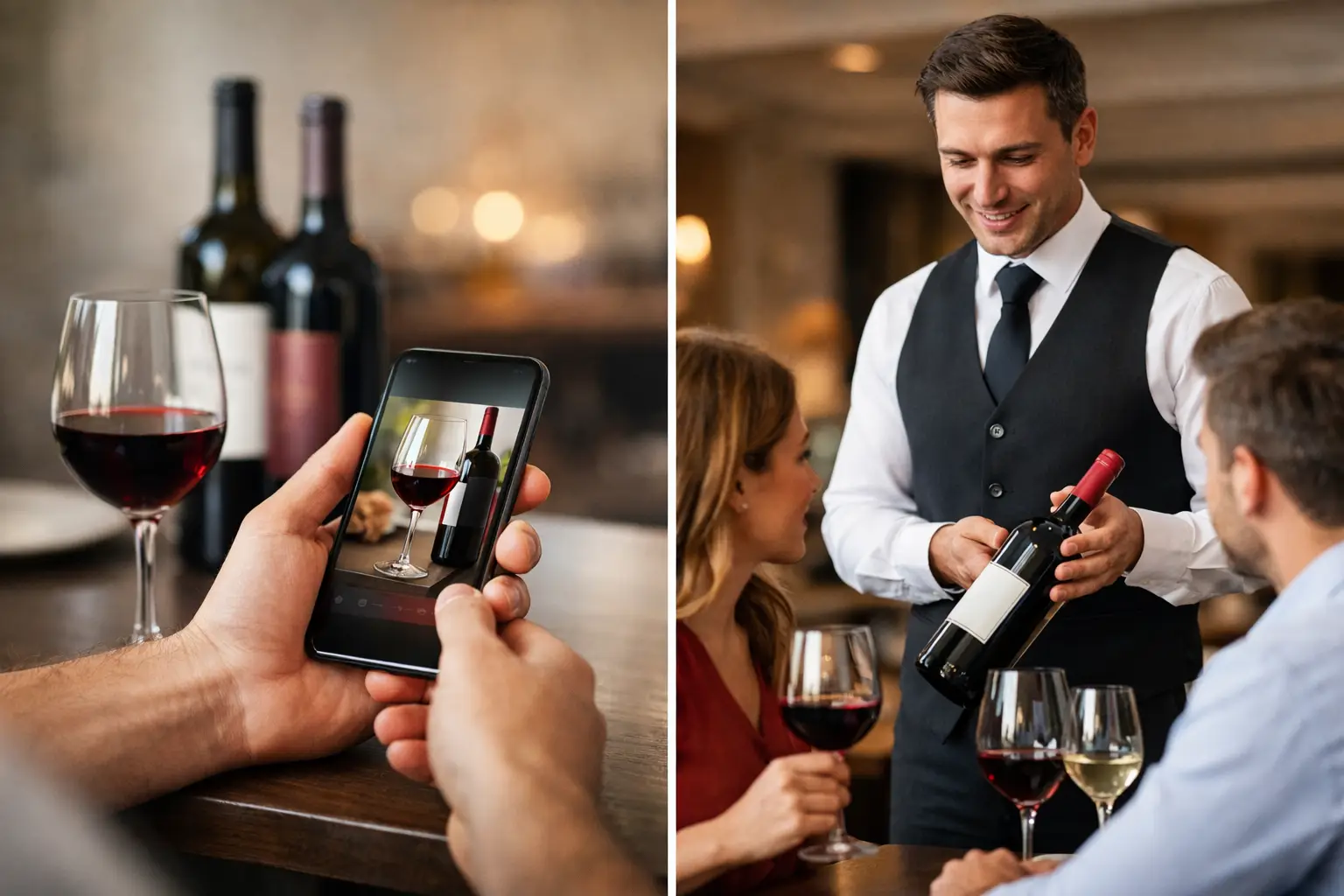
A wine app can identify a bottle in seconds. It may show a community score, typical tasting notes and a suggested food match before you have even poured a glass. That convenience is useful, but in the wine app vs sommelier guidance question, the real difference is not how much information you receive. It is whether that information helps you notice what is actually in your glass.
For many people, the difficult moment comes after the label has been scanned. You read “blackberry, cedar and soft tannins”, take a sip, and wonder what any of it means for you. Good tasting guidance turns that uncertainty into a simple next step: smell again, take a smaller sip, notice where the flavour sits, and let the finish develop.
What a wine app does well
A wine app is often at its best before you buy, or when you want a quick reference point. It can help you recognise a producer, check a grape variety, compare average prices or save a bottle you might want to find again. If you are standing in a wine shop choosing between unfamiliar labels, that is practical support.
Apps can also make a useful personal record. A photograph of the label, a star rating and a short note such as “liked with roast chicken” may be enough to guide a repeat purchase. For a casual drinker, this is a low-effort way to begin paying attention to preferences.
The limitation is that most wine apps describe the bottle in general terms. They cannot know whether your particular bottle has been opened for ten minutes or two hours, whether it is warmer than ideal, or whether you have just eaten something spicy. They also cannot tell you if the “vanilla” in a tasting note is a flavour you should search for, a texture you are mistaking for sweetness, or simply not something you perceive at all.
That does not make the app wrong. It means bottle information and tasting support are different jobs.
Wine app vs sommelier guidance: the key difference
Sommelier guidance starts with your experience rather than a database entry. Instead of asking you to agree with a list of expert notes, it gives you a calm structure for finding your own observations. You might begin with appearance, move to aroma, then consider acidity, body, tannin, flavour and finish. Each stage makes the next sip more purposeful.
This matters because tasting is a sensory skill, not a memory test. No wine knowledge needed does not mean nothing is happening in the glass. It means you need a clear way to interpret what you are already smelling and feeling.
A useful guide might ask whether the aroma feels fresh or ripe, whether the wine makes your mouth water, or whether the drying sensation on your gums is gentle or firm. Those questions are easier to answer than “Can you detect graphite?” They build vocabulary through experience, without making anyone feel they have failed a test.
Traditional sommelier service can offer this kind of insight in a restaurant, but it is not always available at home. Nor does every occasion call for a formal explanation from another person. Digital guidance can bring the same thoughtful sequence to a quiet weeknight glass, a dinner with friends or a focused tasting of bottles you already own.
Why general tasting notes can feel disconnected
Professional tasting notes are usually written to be concise, comparable and useful across a wide audience. They have value, especially when you are learning about regions, styles and producers. Yet they can create an unhelpful expectation that everyone should find the same precise aromas.
Wine changes in the glass. Temperature changes it too. A lightly chilled red may feel brighter and less alcoholic than the same wine served too warm. A bold red can appear more structured after food, while a dry white may seem fruitier on its own. Your sensitivity to aromas, your memories and your meal all influence the words that come to mind.
That is why a score or a flavour wheel cannot replace attention. If an app says a wine has plum and you notice dark cherry, there is no need to correct yourself. The more useful question is whether the fruit feels fresh, cooked, concentrated or restrained, and what else is happening around it.
Sommelier-style guidance gives those observations a place. It helps you move beyond “nice” or “not for me” without demanding specialist language. Over time, you may find that what you call “dry” is often firm tannin, that “sharp” can be lively acidity, or that a wine you once thought sweet is simply generously fruity.
When an app is the better choice
There are moments when speed matters more than a guided tasting. If you need a quick check on a bottle’s grape, region or likely style, an app is efficient. It can also be useful when you are shopping for a gift, checking whether a bottle is one you have tried before, or looking for broad food-pairing inspiration.
For someone who only wants a simple purchasing aid, that may be all they need. There is no reason to turn every glass into a lesson. Enjoyment can be spontaneous, and a good tool should respect that.
The most helpful approach is often to use an app for information and guidance for understanding. One helps you choose. The other helps you taste.
When guided tasting earns its place
Guided tasting is particularly valuable when you want to learn from a bottle rather than merely rate it. Perhaps you keep buying Sauvignon Blanc but cannot explain why one feels exciting and another does not. Perhaps you enjoy whisky but find the usual tasting notes too theatrical. Or perhaps you are hosting friends and want a relaxed activity that feels more interesting than comparing labels.
In these situations, a guided format slows the pace just enough. You do not need special glassware, a cellar or a perfect palate. You need a few quiet minutes and permission to notice what is there.
Audio guidance has a particular advantage here. You can keep your hands free, look at the drink rather than a screen, and follow prompts at a natural pace. A calm voice can make pauses feel intentional rather than awkward. It is closer to being accompanied than being instructed.
Audio Sommelier is designed around that experience: add the bottle you already have, start a guided tasting, then save what you noticed. Its Smart Vault and comparative Flights make the learning cumulative. Rather than collecting isolated scores, you build a personal picture of the styles, textures and flavours you return to.
The value of remembering more than a rating
A five-star rating is quick, but it rarely explains what to buy next. Did you enjoy the bottle because it was light and citrus-led, because it had a creamy texture, or because it worked beautifully with dinner? A useful tasting memory captures the reason.
This is where guided notes become practical over time. If you save a few observations after each tasting, patterns begin to appear. You may learn that you favour whites with high acidity and a saline finish, reds with moderate tannin, or whiskies with dried-fruit richness rather than heavy smoke. That makes future choices easier, whether you are browsing a shop shelf or planning a meal.
It also gives you better language when sharing a bottle. You can say, “This feels lighter and fresher than the last one,” or “I like how the spice stays after the fruit fades.” Those are meaningful observations, even if you never use the vocabulary of a wine exam.
Choose the support that fits the occasion
The choice is not between technology and expertise. The best digital tools can make expertise feel more welcoming, private and useful at home. A wine app is excellent for fast facts and practical bottle discovery. Sommelier guidance is better when you want to turn a drink into an experience you can understand and remember.
Start with the bottle already on your table. Pour a modest glass, take a moment before the first sip, and ask one simple question: what do you notice now that you did not notice last time?