18 Jun 2026
How to Remember Wines You Liked
Learn how to remember wines you liked with simple tasting habits, better notes, and a personal system that makes future bottle choices much easier.
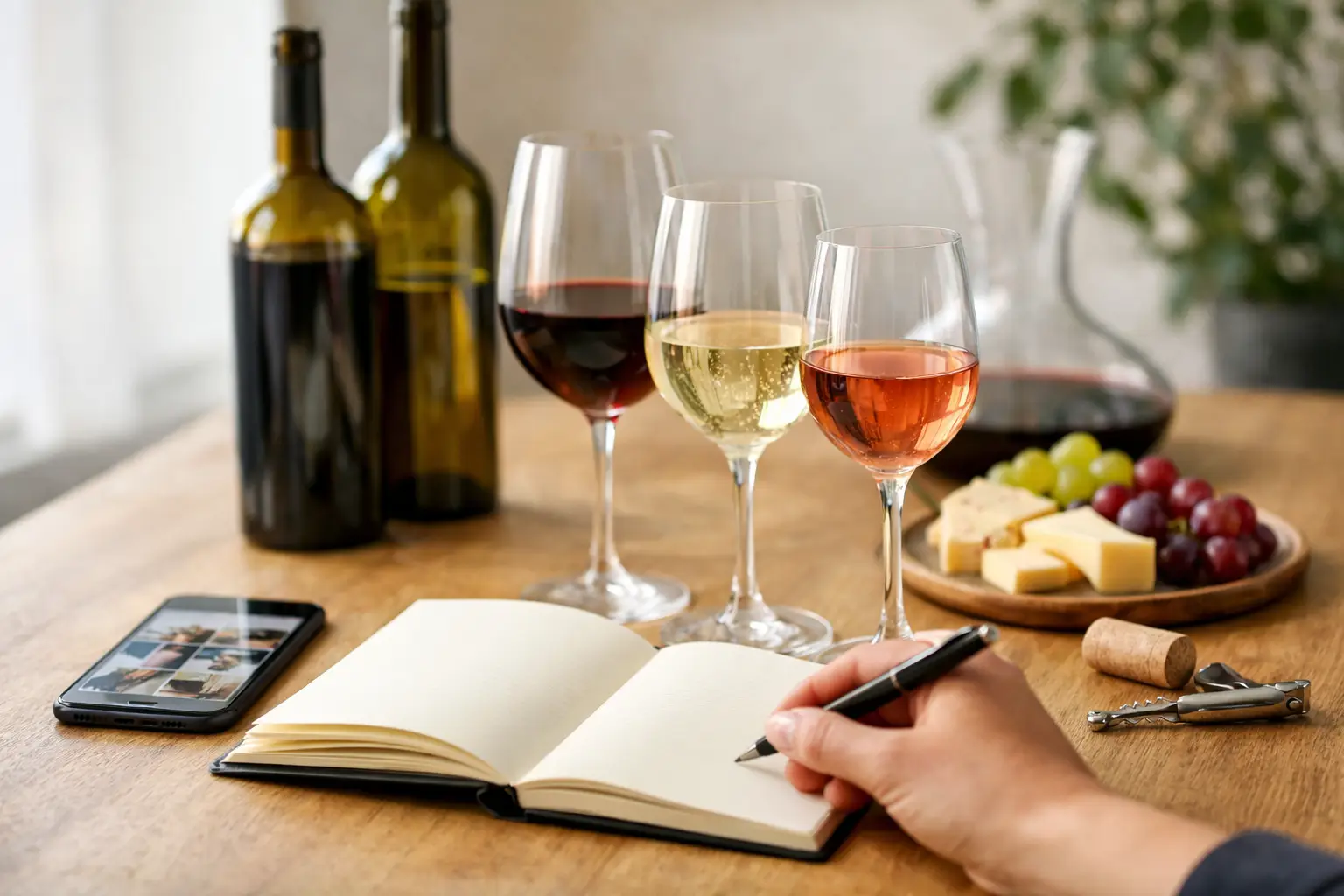
You know the feeling. A bottle was excellent on Friday, you promised yourself you would buy it again, and by the next shop you can remember only that the label was perhaps cream, or green, or had a bird on it. If you have ever wondered how to remember wines you liked, the answer is not a better memory. It is a better tasting system.
Most people do not forget wine because they are inattentive. They forget because the memory was never anchored properly in the first place. Wine is sensory, situational, and often shared. You might remember the evening, the meal, or the company more clearly than the glass itself. That is normal. The good news is that a few small habits can turn vague impressions into something you can actually use the next time you buy.
Why wine memory fades so quickly
Wine disappears from memory faster than many other purchases because the details tend to blur together. Red berries become simply "fruity". Fresh acidity becomes "nice". A soft, round texture becomes "easy to drink". Those phrases may be true, but they are not distinctive enough to help you spot a similar bottle later.
There is also the problem of label-led memory. Many people rely on the front label, the producer name, or the grape variety alone. That works sometimes, but not always. You may enjoy one Rioja and dislike another. You may love one Chardonnay because it is lean and mineral, then buy a broad, oaky version expecting the same experience. Remembering the category is useful, but it is rarely precise enough.
A stronger memory usually comes from combining three things: what the wine tasted like, how it felt in the mouth, and the context in which you enjoyed it. When those elements are stored together, recall becomes much easier.
How to remember wines you liked by noticing less, but better
Many beginners think they need to identify every aroma in the glass. They do not. In fact, trying to notice too much often leads to blankness. A calmer approach works better.
Start by narrowing your attention to four cues: aroma, texture, freshness, and finish. Ask yourself what stands out most in each area. Does it smell more like citrus or orchard fruit? Is the texture crisp, creamy, or light? Does the acidity feel bright and mouth-watering, or softer and gentler? Does the flavour disappear quickly, or does it stay with you?
This is enough to create a usable memory. You are not trying to pass an exam. You are trying to recognise patterns in your own preferences.
For example, saying "I liked this white wine" is weak memory. Saying "I liked that white because it was dry, lemony, crisp, and not oaky" is much stronger. It gives you a clear set of repeatable buying clues.
Write notes you can actually use later
The biggest mistake with wine notes is making them too vague or too ambitious. If your note says only "lovely" or "smooth", it will not help. If it reads like a textbook, you probably will not keep doing it. The useful middle ground is short, personal, and consistent.
A good note answers five simple questions. What was it? What did it smell or taste like? How did it feel? What were you eating, if anything? Would you buy it again?
That might look like this in practice: pale white Burgundy, lemon peel and apple, crisp with a chalky edge, great with roast chicken, yes - buy again. In one line, you have the bottle style, the sensory impression, the pairing, and a decision.
The final part matters more than many people realise. A wine note should not just describe. It should help you choose. Adding a quick verdict such as "buy again", "good for guests", or "too jammy for me" turns a passive note into a practical record.
Build a repeatable personal system
If you only save notes occasionally, your memory will still feel patchy. The goal is not to write more. It is to make saving effortless enough that you actually do it every time a wine stands out.
Some people prefer a notebook. Others use their phone. Either can work, provided the format stays consistent. What matters is that each entry gives you the same reference points: producer or bottle name, grape or style, country or region, key tasting cues, and your verdict.
It also helps to save wines in a way that allows comparison. One liked bottle is pleasant. Three or four saved bottles start to reveal your taste. You may notice that the reds you return to most often are medium-bodied rather than heavy, or that your favourite sparkling wines are more citrus-led than bready. That is the point where memory becomes useful rather than sentimental.
For people who want more structure without any fuss, a digital tasting memory system can be especially helpful. Audio Sommelier, for instance, is built around guided tasting and saving what you notice, so the memory part does not rely on guesswork later. That kind of support is often the difference between enjoying wine casually and actually learning your preferences over time.
Use comparison to make memory stick
One wine on its own can be hard to place. Two wines side by side are much easier to remember. Comparison sharpens attention.
If you drink a Sauvignon Blanc one week and a Chardonnay the next, your impressions may drift. If you compare them more directly, even across saved notes, the contrast becomes clearer. One may feel more zesty and green, the other broader and softer. A Rioja may seem polished next to a youthful Malbec. A Provence rosé may feel drier and more restrained than a fruit-forward pink from elsewhere.
This is one of the fastest ways to improve recall. The human brain remembers difference well. If you can say why one bottle appealed more than another, you are far more likely to choose well again.
Do not rely on grape variety alone
Grape names are useful shortcuts, but they can also mislead. Pinot Noir can be light and floral or darker and earthier depending on where it is from and how it is made. Riesling can be bone dry or noticeably sweet. Shiraz from a cooler climate may feel peppery and taut, while a warmer version can be richer and fuller.
So when you save a wine, go one step beyond the grape. Note the style. Was it fresh and mineral, ripe and plush, savoury and structured, or soft and uncomplicated? This gives you a much better chance of finding something similar.
If you often feel unsure in shops or on restaurant lists, this is especially helpful. You do not need encyclopaedic wine knowledge. You simply need a few reliable ways to describe what suits you.
Context matters more than people think
Sometimes you liked the wine. Sometimes you liked the moment. Usually, it is a bit of both.
That does not make the memory less valid, but it does mean context should be part of the record. A chilled red on a warm evening may seem more appealing than it would in winter. A full-bodied red can feel wonderful with lamb and too heavy on its own. A sparkling wine that felt perfect at a party may not be your preferred quiet Friday bottle.
When you note where you were, what you ate, or what mood the wine suited, you give yourself better future guidance. Instead of asking, "Was this good?" you begin asking, "When is this good for me?" That is a more useful question.
How to remember wines you liked without overcomplicating it
The best system is the one you will still use in six months. If taking notes starts to feel like homework, scale back. Save only the wines you would gladly drink again. Use three flavour words instead of ten. Record a quick voice note if typing feels tedious. Keep the barrier low.
It also helps to revisit your saved wines from time to time. Memory strengthens with review. Before buying for a dinner party, glance back at what has worked with similar food. Before choosing a restaurant bottle, remind yourself whether you tend to prefer brighter acidity, gentler tannins, or less oak. These small check-ins turn old notes into active guidance.
There is no perfect method, because taste is personal and circumstances change. What matters is building enough structure that enjoyment does not vanish the moment the bottle is recycled.
Wine becomes far more rewarding when your preferences stop feeling random. A little attention, a few honest notes, and a habit of comparison can give you that. The next time you finish a bottle you genuinely love, do your future self a favour and save more than the label.