3 Jun 2026
AI Guided Wine Tasting at Home Explained
Learn how ai guided wine tasting at home builds confidence, sharpens flavour language and makes every bottle more useful and enjoyable.
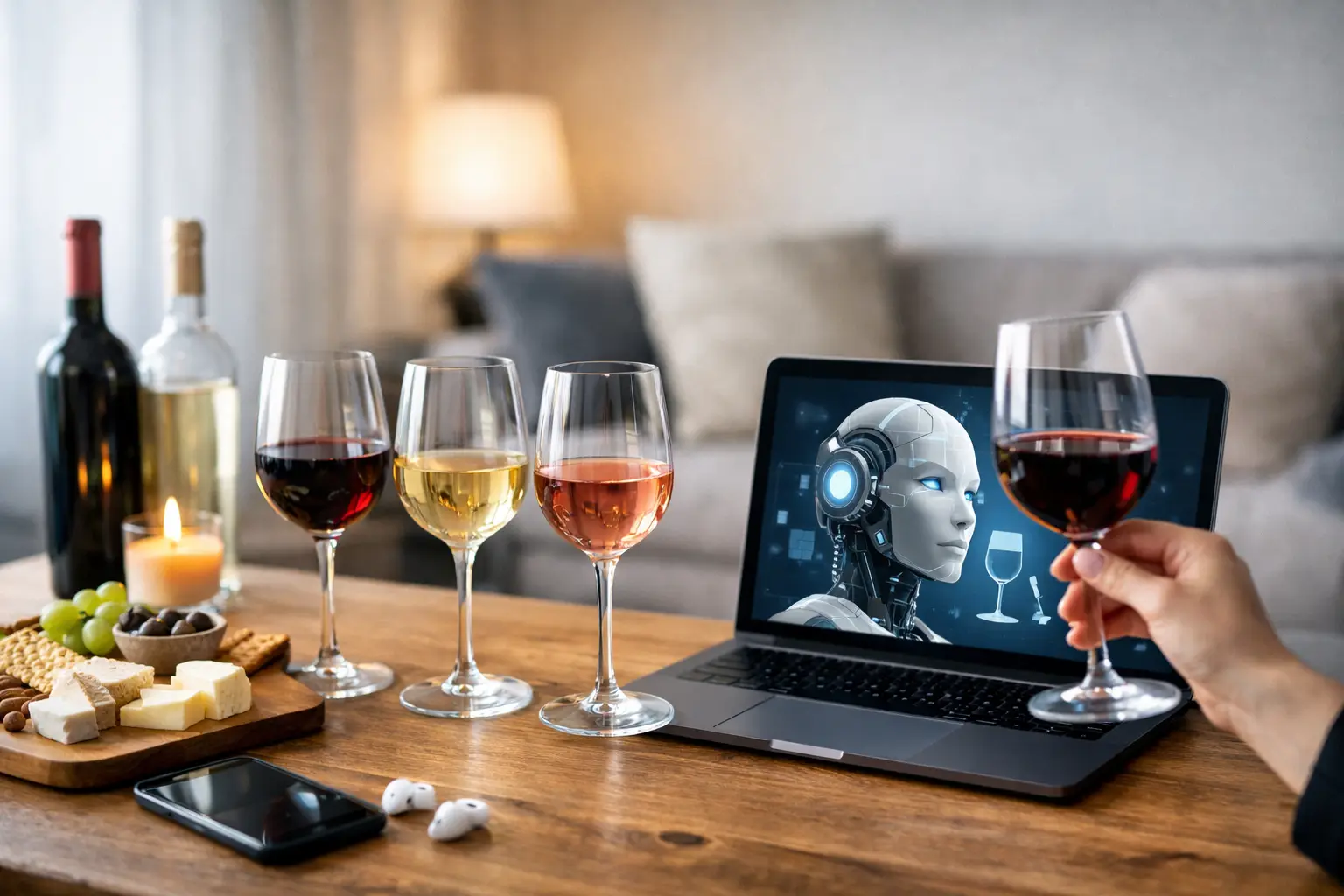
Pour a glass, press play, and suddenly the question is not whether you like the wine. It is why. That is the promise of AI-guided wine tasting at home - turning a vague, slightly intimidating moment into something calm, clear and genuinely enjoyable, even if you have never used words like tannin or minerality in your life.
For many people, wine at home sits in an awkward middle ground. It is more thoughtful than opening a soft drink, but less structured than a formal tasting or restaurant recommendation. You know there is more to notice than red berries or "quite nice", yet most bottles are still consumed without much confidence or memory. A week later, the label is gone and so is any chance of remembering what made that bottle worth buying again.
That is where guided tasting matters. Not because every glass needs ceremony, but because a little structure helps you notice more. And when that structure is delivered through AI and audio, it becomes far more practical for real life than a static tasting note or a dense article full of jargon.
What AI-guided wine tasting at home actually does
At its best, AI-guided wine tasting at home does not try to replace personal taste. It gives you a framework for recognising what is already in the glass. Instead of presenting wine as a test you might fail, it prompts you through a sequence that feels manageable - look, swirl, smell, sip, compare, describe.
That matters because tasting is not only about detecting flavour. It is also about timing and attention. Aroma often changes after a few minutes in the glass. Texture can be easier to recognise once you know whether to focus on dryness, weight or acidity. Finish becomes easier to describe when someone calmly directs you to notice what remains after swallowing.
Audio guidance is especially effective here. Reading while tasting can pull you out of the moment. Audio lets you stay present with the glass, which is exactly where your attention should be. The result is closer to having a patient sommelier beside you than scrolling through a review written for somebody else.
Why home tasting often feels harder than it should
Wine can feel complicated for reasons that have very little to do with your actual ability to taste it. Most people are dealing with three simple barriers.
The first is vocabulary. You may notice something bright, soft, sharp or warming, but not know the conventional term. The second is confidence. Many drinkers worry they are getting it wrong, particularly if they do not pick up the exact fruit or spice notes mentioned on the label. The third is memory. Without a system for saving and comparing impressions, every new bottle starts from scratch.
An AI-led tasting experience can reduce all three. It can suggest sensory language without forcing it, reassure you that variation is normal, and help you record what stood out so your palate develops over time. No wine knowledge needed, just a willingness to pay attention.
The real benefit is not expertise. It is first sip confidence
Most people are not trying to become wine professionals. They want to feel more at ease choosing a bottle, serving friends, or understanding why one glass feels fresher, fuller or more balanced than another. That is a more realistic goal, and arguably a more useful one.
AI guidance works well when it focuses on confidence rather than performance. Instead of asking you to identify obscure notes, it can help you make grounded observations. Is the wine light or weighty? Is the acidity mouth-watering or gentle? Do the tannins feel silky, chalky or firm? These are approachable entry points, and they lead naturally to better tasting language.
That practical shift is important. Once you can describe what you enjoy in a simple, repeatable way, buying wine becomes easier. You stop relying purely on price, medals or luck. You begin to recognise patterns in your own preferences.
How an AI-guided tasting should feel
The best experiences are measured and unpretentious. They do not flood you with facts about soil, vintage reports and producer history before you have even taken a sip. They guide attention in the right order and at the right pace.
A good session usually starts with orientation. What style of wine might you expect? What should you notice first? Then it moves into sensory cues that are specific enough to be useful but broad enough to fit variation across bottles. Finally, it should help you turn impressions into memory - whether that means notes, saved bottles or future comparisons.
This is where a platform such as Audio Sommelier feels particularly relevant. The combination of audio-led tasting, AI support and a personal memory system reflects how people actually learn at home: by tasting, recording, revisiting and comparing, not by memorising theory in isolation.
AI-guided wine tasting at home is only as good as the guidance
There is, of course, a trade-off. AI can make tasting more accessible, but only if it is designed with restraint. Generic prompts can feel hollow. Overconfident tasting claims can make beginners more self-conscious, not less. And if the experience becomes too automated, it risks flattening the pleasure that makes wine worth opening in the first place.
The strongest platforms avoid that trap by acting as a calm companion rather than an oracle. They offer structure, not judgement. They treat tasting as a skill you can build, not a status marker. Built for trust, not hype, that approach suits home drinkers far better than the old model of wine expertise as performance.
It also respects a basic truth: context changes perception. The same wine can feel different depending on temperature, food, glassware and even your own energy levels. Good guidance leaves room for that. It helps you notice patterns without pretending every bottle has a single correct reading.
What to look for if you want to try it
If you are considering AI-guided wine tasting at home, look for a few practical qualities. The first is clarity. You should understand what to do next without effort. The second is sensory usefulness. Prompts should help you taste more precisely, not simply flatter you for participating. The third is memory. If you cannot save what you learned, progress becomes harder to track.
A useful platform should also work with the bottles you already own. That keeps the experience grounded in everyday life and makes the habit far more sustainable than chasing special purchases for every session. In most homes, the best tasting tool is not a rare bottle. It is a reliable system that helps you get more from an ordinary Tuesday night glass.
Comparisons matter too. Tasting one wine in isolation can teach you something, but tasting across time teaches you far more. If you can build simple flights from wines you have already saved, your palate starts to sharpen naturally. You begin to notice not only what a wine is, but how it differs from others you have enjoyed.
A better way to entertain without pretending to be an expert
There is also a social advantage that often gets overlooked. Hosting wine at home can feel oddly pressurised when you are expected to know what to say. AI-guided tasting softens that pressure. It gives everyone at the table a shared structure, which makes conversation easier and more inclusive.
That is particularly helpful for mixed-experience groups. One person may drink wine regularly, another may rarely think beyond red or white. Guided prompts bring both into the same conversation without embarrassment. The evening feels more intentional, but never stiff.
You do not need to turn dinner into a masterclass. A short guided tasting before the meal, or a comparison of two styles after it, can be enough to make the experience memorable. The point is not to impress guests. It is to help everyone notice a bit more.
Why this format fits how people learn now
Digital guidance often works best when it respects attention and routine. Most adults do not have the time or appetite for formal wine study, but they do have bottles at home and moments when curiosity strikes. AI and audio fit neatly into that reality.
They allow tasting education to happen in small, repeatable sessions. Ten or fifteen focused minutes can be more valuable than reading pages of theory you never apply. Over time, those sessions build something surprisingly useful: a personal reference point. You know what crisp means to you, what fuller-bodied feels like to you, and what kinds of finish you tend to prefer.
That personal calibration is where confidence really comes from. Not from borrowing somebody else's expertise, but from learning how to trust your own palate with better tools.
A good bottle can always be enjoyed casually. But when you want to understand it, remember it and talk about it with more ease, guided support changes the experience. If wine has ever felt more mysterious than it needs to be, this is a gentler way in - one glass, one prompt and one clear observation at a time.