29 Aug 2026
Wine App Comparison for More Confident Tasting
This wine app comparison helps you choose the right tool for ratings, cellar records and guided tasting, so each bottle teaches you something useful.
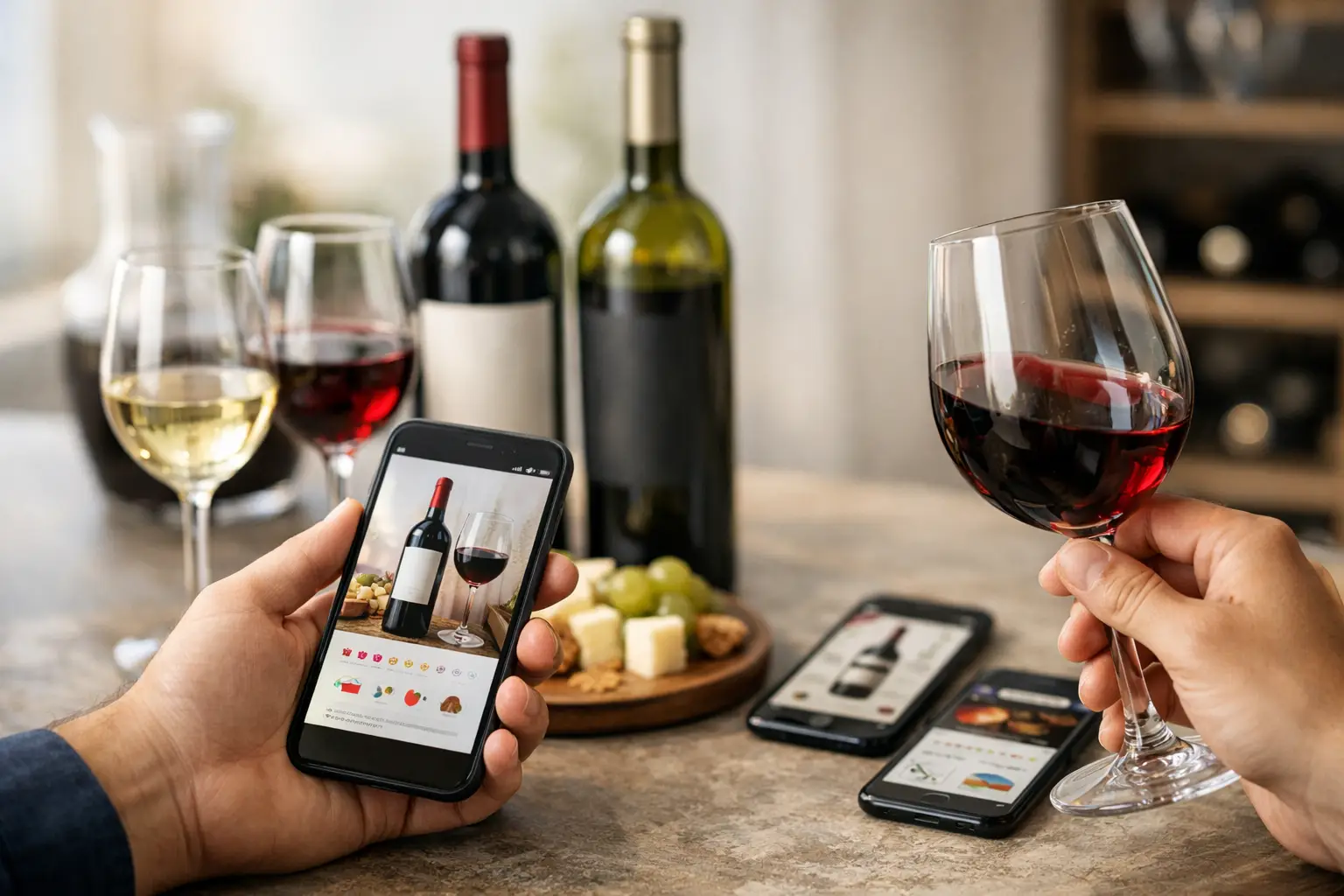
A bottle can look promising on the shelf, earn a high score in an app, and still leave you unsure what you are meant to notice once it is poured. That is the gap a useful wine app comparison should address. The best app is not necessarily the one with the most ratings or the longest database. It is the one that helps you make a better decision before opening the bottle, and a more confident observation after your first sip.
For many people, wine apps begin as a quick way to scan a label in a shop. Over time, the more valuable question becomes personal: which wines did you actually enjoy, why did you enjoy them, and what should you try next? Different apps answer different parts of that question.
Wine app comparison: choose the job first
It helps to think of wine apps as tools with distinct jobs, rather than expecting one service to do everything perfectly. A label-scanning app is built for quick buying decisions. A cellar app is designed to organise bottles and track when they may be ready to drink. A community-led platform offers other drinkers' ratings and tasting notes. A guided tasting app focuses on the experience in the glass.
None of these approaches is automatically better. If you are standing in a supermarket choosing between unfamiliar bottles, broad ratings and price comparisons can be genuinely helpful. If your cupboard contains a growing collection of special bottles, vintage details and storage records may matter more. If your aim is to build tasting confidence at home, a score from a stranger will only take you so far.
The practical choice depends on the habit you want to create. Do you want to buy with less guesswork, keep track of what you own, or learn to describe what you taste? Many enthusiasts eventually use more than one tool, but one clear primary purpose prevents another forgotten app on your phone.
1. Label scanners and crowd ratings
Apps such as Vivino are often the first stop for casual wine drinkers. Scan a label, see a community score, read short tasting comments and get a sense of typical price. The appeal is immediate: they reduce uncertainty when the shelf is crowded and the back label tells you very little.
Their strength is scale. A popular wine may have thousands of ratings, which can offer a useful signal that it is broadly enjoyable for its style and price. The limitations are equally worth understanding. Scores reflect a wide range of palates, serving conditions and expectations. A rich, sweet-fruited red may receive enthusiastic ratings from one audience and feel heavy to someone who prefers fresher, lighter wines.
Treat crowd ratings as a starting point, not a verdict. Read a handful of notes and look for recurring descriptors such as blackcurrant, oak, citrus or high acidity. Then ask whether those features sound appealing to you. A 4.2 rating is less useful than knowing you tend to enjoy crisp whites with lemon, herbs and a dry finish.
2. Cellar and collection-management apps
CellarTracker and similar services are most useful once you have bottles worth remembering. They help you record producer, vintage, purchase price, storage location and drinking window. For collectors, or anyone who has ever forgotten a good bottle at the back of a cupboard, this is practical organisation rather than wine theatre.
The depth is valuable, but it can feel like more administration than guidance for a beginner. Adding detailed bottle information is rewarding when you buy wine regularly, follow vintages or store bottles for several years. It is less compelling if you tend to open what you buy within a week.
Cellar tools also tend to prioritise the bottle over the moment. They are excellent at answering, “What do I own?” and sometimes, “When should I open it?” They are less likely to help with, “What am I tasting right now?” If your notes repeatedly say only “nice” or “not for me”, the record will not reveal much when you look back.
3. Social discovery and visual wine apps
Some wine apps are designed around discovery, sharing and attractive bottle photography. Delectable is a familiar example of the social approach, where following people and browsing their finds can make wine feel more conversational. This can be enjoyable for discovering producers, regions or food pairings you might not otherwise encounter.
The trade-off is that social activity can become a substitute for attention. Seeing what others are drinking is inspiring, but it does not automatically teach you how to recognise acidity, tannin, body or length in your own glass. It may also steer choices towards fashionable bottles rather than wines that suit your taste.
Use social features when you want ideas, not certainty. Save a few bottles that sound interesting, then notice what they have in common. Perhaps you keep returning to Loire Cabernet Franc, dry Riesling or traditional-method sparkling wine. Those patterns are more useful than chasing a single viral recommendation.
4. Guided tasting and personal tasting memory
A guided tasting platform serves a different need. Rather than beginning with the label, it begins with your senses. It gives you calm prompts to observe aroma, texture, flavour and finish, helping you move from “I like this” to a clearer, more useful description.
This approach is especially valuable for curious beginners and developing hobbyists because it removes the pressure to know the right words before you start. You do not need to identify every aroma precisely. You can notice that a wine feels light or full, that it tastes fresh or warming, that the finish disappears quickly or stays with you. Those are real observations, and they become more detailed with practice.
Audio Sommelier is designed for this part of the experience. Its guided audio tastings use bottles you already own, while its Smart Vault keeps your tasting items and notes together. Over time, saved bottles can become comparative Flights, making it easier to see the difference between two Sauvignon Blancs, several styles of whisky, or the sparkling wines you serve to guests.
This category is less useful if all you need is an instant shelf score. Its value appears after the cork is out, when you want to get more from a bottle rather than simply judge whether it was a safe purchase.
What to compare before downloading
A strong wine app should fit comfortably into your real routine. Start with the information you want to capture. If you only need a quick buying prompt, label recognition and accessible ratings matter most. If you keep bottles for later, check how easily the app records vintages, quantities, locations and drinking windows. If learning is your priority, look for prompts that explain what to notice without making tasting feel like an exam.
Also consider the quality of the personal record. Can you add your own notes in a way you will actually use? Can you find them later? Does the app help you compare one bottle with another, or does it simply store an isolated entry? Your memory is the most valuable data point, because it reflects your palate rather than an average of everyone else's.
Privacy and pricing deserve a clear look too. A free app may be supported by advertising, sales partnerships or promoted listings. A subscription may be a better fit if it offers focused educational value and a quieter experience, but only when you will use the guidance regularly. There is no virtue in paying for complexity you do not need.
Build a simple system that lasts
You do not need to log every glass. Start with bottles that feel memorable: a new grape variety, a wine you bought for a dinner, something you would happily purchase again, or a bottle that surprised you. Record the occasion, a few sensory impressions and whether you would choose it again.
After five or six entries, look for patterns rather than perfect terminology. You may notice that you enjoy wines with bright acidity, softer tannins, less obvious oak or a savoury finish. That knowledge makes shop recommendations, restaurant lists and future app ratings far easier to interpret.
For a practical tasting note, capture three things: what you noticed on the nose, how the wine felt in your mouth, and what stayed after swallowing. “Lemon and peach, light but mouth-watering, clean finish” is far more helpful to your future self than a number out of five.
The right app should leave you more present with the glass, not more distracted by the screen. Pour a small taste, give yourself a moment before deciding, and let each bottle add one useful detail to the picture of what you enjoy.