22 Jul 2026
What Should Wine Taste Like? A Calm Tasting Guide
What should wine taste like? Learn how fruit, acidity, tannin, texture and finish work together, so every glass feels easier to understand and enjoy fully.
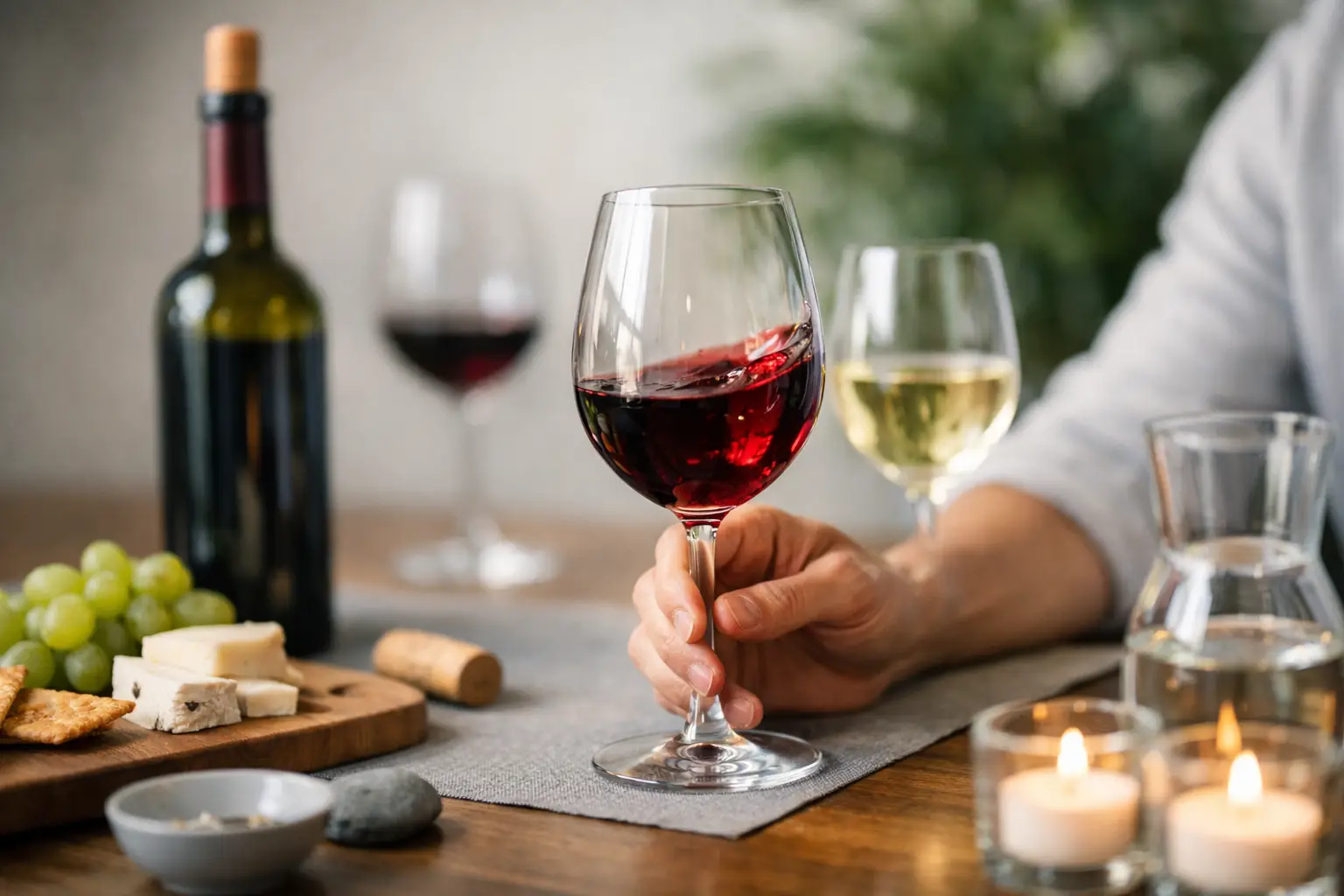
A wine can smell of blackberries, taste unexpectedly dry, feel almost creamy, then leave a gentle warmth after you swallow. None of that means you are tasting it wrongly. If you have ever wondered, what should wine taste like?, the reassuring answer is that there is no single correct flavour. A good wine should taste balanced, recognisable as itself, and enjoyable to you.
The useful question is not whether you can name every flavour. It is whether you can notice what the wine is doing in your mouth: is it fresh or soft, light or weighty, juicy or savoury, brief or lingering? Once you start there, tasting becomes less intimidating and far more rewarding.
What should wine taste like in a good glass?
Wine is made from grapes, but its flavour is shaped by far more than fruit. Grape variety, climate, ripeness, fermentation, ageing and bottle age all leave a mark. A cool-climate Sauvignon Blanc may taste sharp, citrus-led and grassy. A warm-climate Shiraz may feel fuller, with ripe blackberry fruit, pepper and a warming finish. Both can be well made. They are simply expressing different styles.
Rather than searching for a universal flavour, look for balance. In a balanced wine, no one element overwhelms everything else unless the style deliberately calls for it. A dessert wine, for example, can be very sweet but still feel fresh because its acidity keeps the sweetness lively. A young Barolo can be firmly tannic, yet its fruit, acidity and length may make that structure compelling rather than harsh.
A wine may taste delicious because it is simple and refreshing, or because it slowly reveals layers of fruit, spice, earth and savoury notes. Price does not automatically decide which experience is better. The best glass is often the one that suits the occasion, the food and your own preferences.
Start with the five things you can feel
You do not need an expert vocabulary to taste with confidence. Focus on fruit, sweetness, acidity, tannin and body first. These are practical reference points, not a test.
Fruit flavour is not the same as sweetness
Most wines offer fruit impressions: lemon, apple, peach, cherry, plum, blackberry or dried fruit. These descriptions do not mean fruit has been added. They are familiar comparisons for aromas and flavours created by grapes and winemaking.
A wine can taste vividly of ripe peach and still be dry. Dry means there is little or no residual sugar left after fermentation, not that the wine lacks fruit. If a dry Riesling tastes like lime and apricot, it may still finish clean rather than sugary.
Sweetness sits on the tongue
Sweetness is usually easiest to notice at the front of the tongue. Think of the difference between a dry white wine, an off-dry rosé and a sweet late-harvest wine. Sweetness can make flavours feel rounder and more generous, but it should not necessarily make a wine feel heavy.
If you are unsure, ask yourself whether the wine reminds you of tasting sugar, honey, jam or ripe fruit juice. Then pause. High fruit flavour alone is not proof of sweetness.
Acidity brings freshness and lift
Acidity is the mouth-watering sensation that makes you want another sip. It is often most obvious in white wines and sparkling wines, though red wines have it too. Picture biting into a lemon or a crisp green apple: that bright, salivating response is a helpful comparison.
Too little acidity can leave a wine feeling flat or broad. High acidity can feel thrillingly fresh, though in an unbalanced wine it may seem sharp. With food, acidity is especially useful. It cuts through rich dishes and can make a simple meal feel more composed.
Tannin gives many red wines their grip
Tannin is not a flavour so much as a drying, slightly grippy feeling on your gums and cheeks. Brew a strong cup of black tea, let it cool and take a sip: the drying sensation is a close reference point. Tannin comes mainly from grape skins, seeds and oak ageing, so it is most common in red wine.
Tannin is often mistaken for bitterness. Bitter flavours tend to register more at the back of the mouth, while tannin feels tactile. A young Cabernet Sauvignon may have firm tannin that softens with food, air or time in the bottle. If it feels too drying for your taste, that is a preference worth remembering, not a failure of judgement.
Body is the wine's weight
Body describes how light or full a wine feels. Skimmed milk, semi-skimmed milk and full-fat milk provide a simple mental scale. A light-bodied Pinot Grigio may feel delicate and quick, while a full-bodied oaked Chardonnay or Amarone can feel broader, richer and more coating.
Alcohol, sugar, oak and concentration can all add weight. Fuller is not better. On a warm evening, a chilled, light-bodied white may be exactly right. With a slow-cooked dinner, a deeper, more structured red may feel more satisfying.
Flavour develops in stages
Take a modest sip and let it move across your palate before swallowing. Notice the first impression, what grows in the middle, and what remains afterwards. This is a calmer and more useful approach than trying to identify ten separate tasting notes at once.
The opening may be fruit-led: citrus, red berries, black fruit or orchard fruit. The middle of the palate often reveals texture and secondary notes such as vanilla, toast, pepper, herbs, nuts or yoghurt-like creaminess. The finish is what lingers after you swallow. A longer finish can be a sign of quality, but it is not the only measure of enjoyment.
Some wines change noticeably as they warm in the glass. A cool red may initially seem closed and tannic, then show more fruit after ten minutes. A white served too cold can hide its aromas and taste thinner than it really is. Give the wine a little time before making up your mind.
Not every unusual flavour is a fault
Wine is an agricultural product, and it can offer flavours that are not obviously fruity. Mushroom, leather, dried leaves, olive, smoke, wet stone and savoury spice can all be normal in the right wine. Mature reds, for example, often move away from fresh fruit towards earthier, more complex notes.
There is still a difference between a distinctive style and a flawed bottle. Wine that smells strongly of damp cardboard or a musty cellar may be corked. Wine that smells like vinegar or nail-varnish remover may be spoiled or badly oxidised. A faintly fizzy sensation in a still wine can indicate unwanted refermentation, although some natural wines are intentionally bottled with a little spritz.
Context matters. A flavour that seems odd on its own may make sense beside food. High tannin can feel stern until you eat roast lamb. A very dry sparkling wine can seem bracing before a salty snack, then beautifully balanced afterwards.
How to find the styles you genuinely enjoy
Your palate becomes clearer through comparison, not through memorising rules. Try two wines side by side that differ in one obvious way: a Sauvignon Blanc and an oaked Chardonnay, or a Pinot Noir and a Cabernet Sauvignon. Notice which texture, acidity level and flavour direction you prefer.
Keep your notes plain and personal. “Crisp, lemony, too sharp without food” is more useful than forcing a poetic description you do not believe. “Soft, dark-fruited, drying finish, liked with dinner” gives you a reliable memory for the next bottle.
This is where guided tasting can be particularly helpful. Audio Sommelier encourages you to pause at the right moments, name what you are sensing and save the details that matter to you. Over time, patterns emerge: perhaps you enjoy high-acidity whites, silky reds, savoury styles or wines with a creamy texture.
A simple way to taste without overthinking
Pour a small amount into a clean glass and look at it only briefly. Colour can offer clues, but it cannot tell you whether you will enjoy the wine. Swirl gently, smell twice, then take a small sip.
First, ask whether it feels light, medium or full. Next, decide whether it is dry, off-dry or sweet. Then look for freshness from acidity, grip from tannin and the main flavour family: citrus, stone fruit, red fruit, black fruit, floral, herbal, spicy or savoury. Finally, notice whether the finish disappears quickly or stays with you.
You may not identify every element on the first try. That is normal. Tasting is a skill built through attention, and attention grows more naturally when there is no pressure to perform.
The next time a wine surprises you, stay with that surprise for a moment. A glass does not need to taste like anyone else says it should. It only needs to give you something clear to notice, something enjoyable to return to, and one more clue about your own palate.