22 Jun 2026
How to Write Tasting Notes Clearly
Learn how to write tasting notes with clear, useful language. Build confidence, notice more in the glass, and remember what you actually enjoyed.
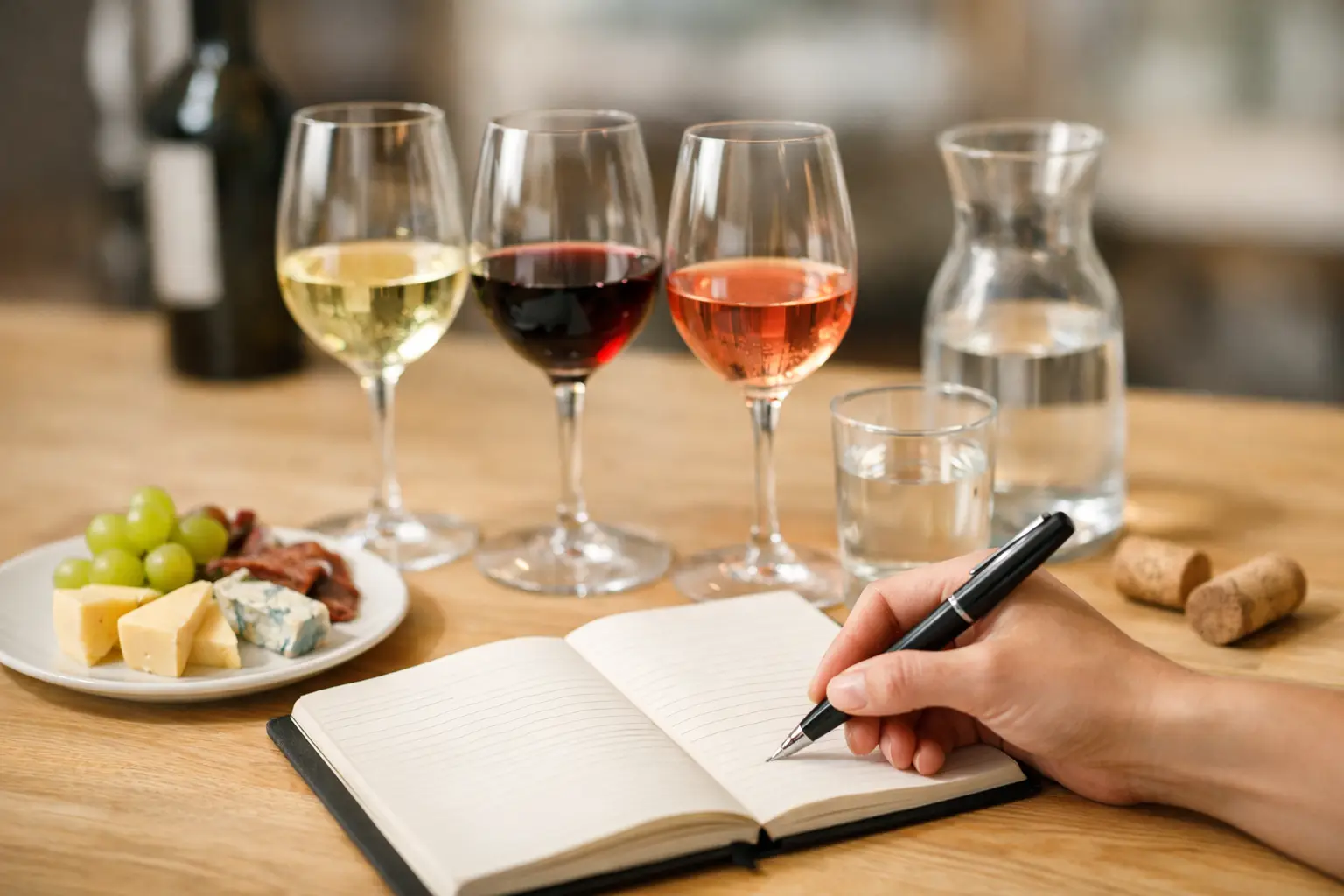
You know the feeling: you taste something you genuinely enjoy, then try to describe it and end up with “nice”, “smooth”, or “fruity”. A week later, the bottle is gone and so is the memory. If you want to learn how to write tasting notes, the goal is not to sound clever. It is to notice more, describe it clearly, and give your future self something useful to come back to.
Good tasting notes are practical. They help you remember whether that Rioja felt savoury or plush, whether that IPA finished crisp or lingering, and whether that whisky opened up with water or lost shape. They also make your palate more reliable over time. The more precisely you write, the more confidently you taste.
How to write tasting notes without overthinking
Most people make one of two mistakes. They either try to capture every possible detail and get lost, or they keep things so vague that the note tells them nothing later. The sweet spot sits in the middle: enough structure to guide you, enough freedom to be honest.
Start by accepting that tasting notes are subjective, but not random. Your perception is shaped by context, temperature, glassware, mood, and experience. That does not make your notes less valid. It simply means they become more useful when they are specific about what you noticed, rather than trying to chase some perfect official description.
A clear note usually answers four simple questions. What does it smell like? What does it feel like? What does it taste like? What happens after you swallow? Once you have those, add one final layer: did you enjoy it, and why?
Begin with what is actually in your glass
Before writing anything, slow the moment down. Give the drink a little attention. Look at it, smell it more than once, and take a small sip before your “real” tasting sip. This sounds simple because it is, but it changes the quality of your notes immediately.
Appearance matters a little, but not equally across every category. With wine and beer, colour and clarity can tell you something useful. With whisky or rum, appearance tends to be less revealing unless you are comparing styles. So write what helps. “Pale lemon, bright” is useful. A whole paragraph on colour usually is not.
On the nose, resist the urge to hunt for obscure references. You do not need to find candied bergamot peel or antique cedar chest. If it smells like green apple, toast, vanilla, orange peel, pepper, honey, or wet stone to you, that is already helpful. Familiar language is stronger than theatrical language.
Then taste. Notice the first impression, the mid-palate, and the finish. Some drinks arrive softly then build. Others give you everything upfront and fade quickly. That movement is often more memorable than a long list of flavour nouns.
Use a simple structure every time
If you are learning how to write tasting notes consistently, a repeatable framework removes pressure. It also makes old notes easier to compare.
Nose
Write two to four aroma impressions. Aim for broad accuracy before fine detail. Fruit, floral, spice, oak, earth, cereal, herb, smoke, and confectionery are all useful families. If one specific note stands out, include it. If not, stay broad.
For example, “ripe orchard fruit, vanilla, light baking spice” is better than stretching for something over-precise you are not sure about.
Palate
Describe flavour and structure together. People often focus only on flavour, but texture is what separates many good notes from forgettable ones. Ask yourself whether it feels light, creamy, lean, oily, juicy, tannic, prickly, soft, or full.
A simple line such as “black cherry and cocoa, medium body, fine tannins, fresh acidity” gives a far clearer picture than “rich and balanced”.
Finish
The finish tells you what lingers and for how long. Is it short, medium, or long? Does it fade cleanly, turn bitter, grow sweeter, or leave spice behind? A short finish is not automatically a flaw. In some styles it suits the drink perfectly.
Overall impression
This is where your own judgement belongs. Was it elegant, comforting, direct, layered, youthful, easy, or slightly disjointed? Most importantly, would you choose it again?
Write for your future self, not for an exam
The best tasting note is one you can revisit in three months and immediately understand. That means clarity beats performance every time.
There is no prize for sounding like a competition judge. If a beer reminds you of brown toast and marmalade, write that. If a sparkling wine feels “sharp at first, then softer with food”, that is excellent note-taking because it captures experience, not just flavour.
This is especially useful at home, where you are often tasting in real conditions rather than idealised ones. You may be drinking with dinner, comparing two bottles with friends, or revisiting a favourite after work. Your note should reflect the moment enough to stay meaningful. A short mention like “better after ten minutes in the glass” or “much softer on day two” can be more valuable than another aroma descriptor.
The most useful words are often the simplest
Many beginners worry that their vocabulary is too basic. In practice, basic words are often the strongest foundation. Apple, lemon, plum, pepper, honey, biscuit, smoke, herbs, leather, coffee, and nuts all communicate clearly.
It helps to move from general to specific only when it feels natural. “Citrus” may become “lemon zest”. “Red fruit” may become “cherry”. “Spice” may become “clove” or “black pepper”. You do not need to force that extra layer every time.
It is also worth separating flavour from quality. “Dry” is not the same as “sharp”. “Smooth” is not the same as “good”. “Complex” is not the same as “enjoyable”. Try to describe what is there before you judge whether you like it.
Common mistakes when learning how to write tasting notes
One common mistake is copying the language on the bottle or from a retailer’s description. That can be useful for comparison later, but it should not replace your own observation. If you write someone else’s note first, you often stop noticing what you actually think.
Another is writing only in verdicts: lovely, decent, not for me. Those reactions matter, but without sensory detail they are hard to learn from. “Too much vanilla for my taste” is already far more helpful than “not my thing”.
The opposite problem is overloading the note. Ten aroma descriptors, six palate notes, three finish notes, and a score can look impressive, yet tell you very little about the drink’s character. If you had to cut your note in half, what would remain essential? That is usually the right length.
Scoring is another area where it depends. Some people enjoy numerical ratings because they make sorting and comparison easier. Others find numbers flatten the experience. If you use them, pair them with words. A 91 without context will not help much later.
Comparison is what sharpens your palate
Single tasting notes are useful. Comparative tasting notes are where progress speeds up. When you place two Chardonnays side by side, or a bourbon next to a rye, differences become easier to spot. One may feel broader and creamier, the other tighter and spicier. Once you see contrast, your language becomes more precise.
This is also why saving notes matters. Patterns emerge. You may realise you consistently prefer higher acidity in white wine, softer peat in whisky, or beers with bitterness that finishes clean rather than sticky. A memory system, whether a notebook or a digital vault, turns isolated impressions into real self-knowledge.
For many people, guided tasting makes this much easier. A calm prompt at the right moment helps you notice aroma, texture, flavour, and finish in order, instead of trying to remember what comes next. That is part of why Audio Sommelier focuses on structured, audio-led tasting rather than leaving people alone with a blank page.
A practical example of a good note
Here is the sort of note that works well because it is clear, brief, and easy to revisit:
“Bright ruby. Nose of cherry, dried herbs, and a little cedar. Palate is medium-bodied with fresh acidity, fine tannins, and sour cherry, plum, and spice. Finish is medium, savoury, and slightly earthy. Feels balanced and food-friendly. I would happily have this with roast chicken again.”
Notice what it does not do. It does not try to prove expertise. It simply records what matters.
If you prefer an even shorter style, that can work too:
“Fresh and savoury. Cherry, herbs, light spice. Good acidity, not heavy, better with food than on its own.”
That is still a proper tasting note because it captures profile, structure, and use.
Keep your notes honest and repeatable
Your palate changes. So do your references. A note you write today may be less detailed than one you write six months from now, and that is fine. The point is not instant perfection. It is building a habit of attention.
Try to write your notes in the same order each time. Keep them short enough that you will actually maintain the practice. Revisit older entries before buying again. If a note helps you choose better, remember more, or describe your taste with more confidence, it has done its job.
The best tasting notes do not make you sound impressive. They make your next glass easier to understand.