20 Jun 2026
Beginner Guide to Tasting Structure
A beginner guide to tasting structure that helps you notice body, acidity, tannin, sweetness and finish with more confidence at home.
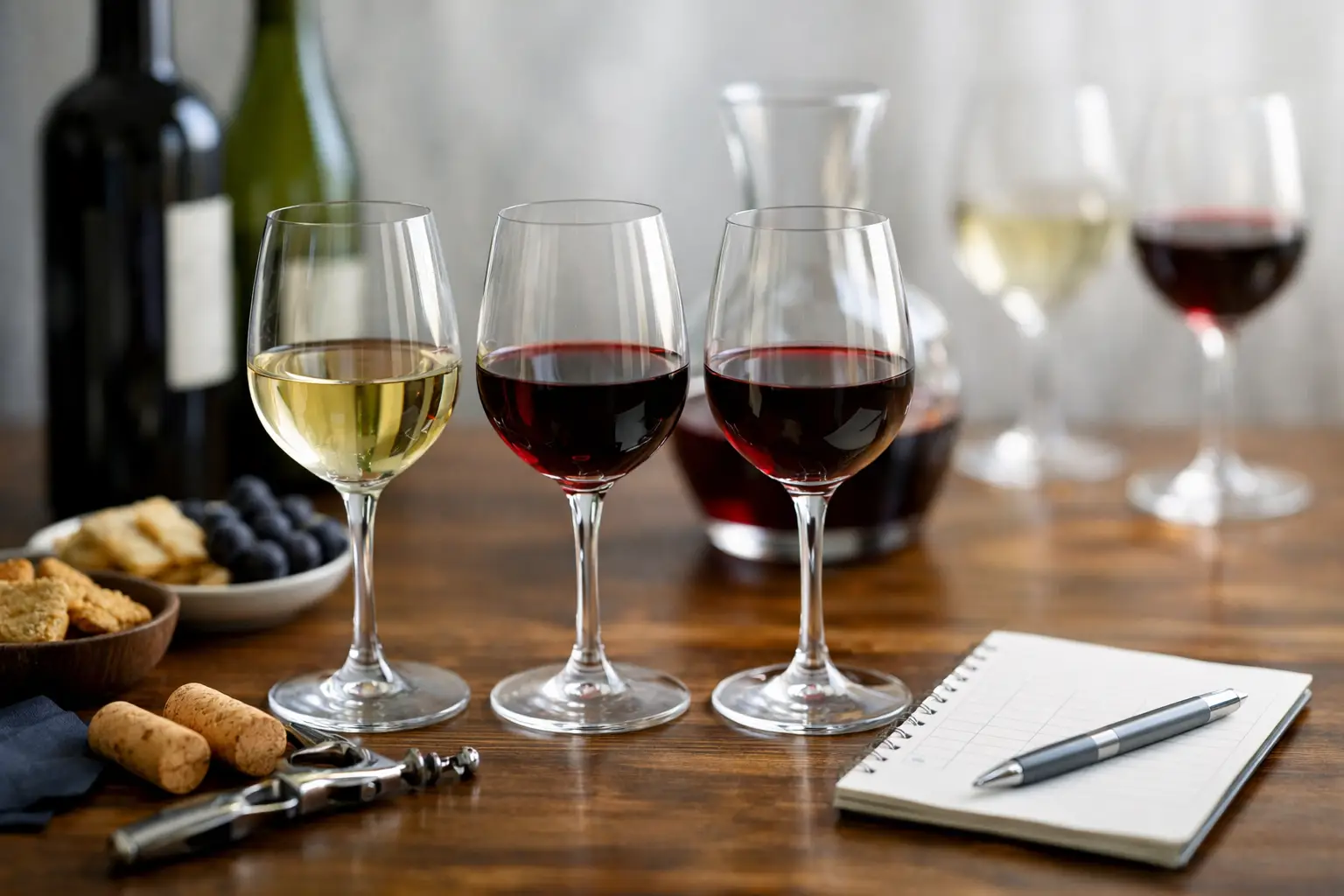
You take a sip, know you like it, and then get stuck. Is it smooth? Sharp? Heavy? Dry? For most people, that blank moment is not a lack of taste. It is a lack of structure. This beginner guide to tasting structure is here to give you a simple framework for what to notice in the glass, so your impressions stop feeling vague and start becoming useful.
Structure is the part of tasting that makes a drink feel shaped rather than merely flavoured. Aroma and flavour matter, of course, but structure tells you how a wine, whisky, beer or spirit behaves in the mouth. It is the difference between something that feels crisp and lifted, something that feels broad and creamy, and something that feels firm, drying or warming. Once you can spot those sensations, tasting becomes much less intimidating.
What tasting structure actually means
When people first learn to taste, they often focus only on flavour notes. They look for apple, vanilla, spice, berries or oak. That can be enjoyable, but flavour alone rarely explains why one bottle feels refreshing and another feels dense or why one dram seems elegant while another feels forceful.
Structure is the framework underneath flavour. Depending on what you are drinking, it usually includes body, acidity, sweetness, tannin, bitterness, alcohol and finish. Not every category matters equally in every beverage. Tannin is central in many red wines but less useful in vodka. Bitterness matters in beer and some amari more than in most sparkling wines. The principle stays the same, though. You are noticing how the liquid lands, moves and lingers.
That is why structure is so helpful for beginners. You do not need perfect vocabulary or a trained palate. You only need to ask a few steady questions and trust the physical sensations you are already having.
A beginner guide to tasting structure in the glass
The simplest way to begin is to taste in layers rather than trying to identify everything at once. Start with the first sip and ask what the drink feels like. Then ask what gives it shape. Finally, notice what remains after swallowing.
Body - how heavy or light it feels
Body is the weight of the drink on your palate. Think of it as texture and presence. Does it feel light and delicate, medium and balanced, or full and coating? A zesty white wine may feel light-bodied. A stout or a rich, oaked Chardonnay may feel fuller. In spirits, body can show up as oiliness, creaminess or density.
Beginners often confuse body with flavour intensity. They are related, but not identical. A drink can have vivid flavour and still feel light. Another can be relatively quiet aromatically but feel broad and substantial in the mouth.
A useful comparison is milk. Skimmed, semi-skimmed and whole each have different weight. You are not saying the beverage tastes like milk. You are borrowing a familiar texture reference.
Acidity - the mouth-watering edge
Acidity is the fresh, bright sensation that makes your mouth water. In wine, it is one of the main drivers of freshness. In beer, it can appear in sour styles or in lighter, brisk examples. In some spirits and cocktails, it shows up through citrus or other acidic ingredients.
The easiest way to identify acidity is to pay attention to your jawline and the sides of your tongue after a sip. If your mouth waters and the drink feels lively, acidity is likely playing a clear role. High acidity often makes a beverage feel energetic and food-friendly. Lower acidity tends to feel softer and rounder.
This is one of the most confidence-building parts of structure because it is a physical response, not a guessing game.
Sweetness - more than sugary flavour
Sweetness is often misunderstood because people assume it only refers to obviously sugary drinks. In tasting, sweetness can be overt, subtle or simply part of the overall balance. Some wines are clearly sweet. Others are technically dry but still seem ripe or soft because fruit character gives an impression of sweetness.
In whisky, rum and liqueurs, the distinction matters even more. A spirit may smell of caramel, toffee or vanilla without actually being sugary on the palate. What matters is whether the mouthfeel and finish suggest real sweetness or just sweet-associated aromas.
If you are unsure, compare how quickly the sip turns fresh, dry or warm. True sweetness tends to soften edges and linger differently from fruitiness alone.
Tannin and bitterness - the grip factor
Tannin is most commonly discussed in wine, especially red wine, though it can appear in tea-like or barrel-influenced drinks too. It creates a drying, gripping sensation on your gums and cheeks. Bitterness, by contrast, sits more on the tongue and is common in beer, aperitifs and certain spirits.
The two can overlap in experience, which is why beginners often bundle them together. The easiest distinction is this: tannin feels textural, while bitterness tastes more like an edge or bite. A young red may dry your mouth. An IPA may leave a firm bitter note at the back of the palate.
Neither is automatically good or bad. They are structural tools. In the right balance, they add shape, seriousness and length.
Alcohol - warmth and lift
Alcohol contributes warmth, weight and sometimes intensity. In wine, it can make a glass feel fuller and slightly hotter at the finish. In spirits, it is naturally more pronounced, but the key is not just strength. It is integration.
A well-balanced high-strength whisky can feel composed and expressive. A lower-strength drink can still feel sharp if its elements are not sitting together well. Instead of asking whether you can taste alcohol, ask whether the alcohol feels separate or woven into the rest of the experience.
That shift in thinking helps you move from judgement to observation.
Finish - what stays behind
Finish is what remains after swallowing. How long do flavour, texture and sensation continue? Does the drink fade quickly, or does it develop and linger? Does it end clean, dry, warming, creamy, bitter or spicy?
For beginners, finish is where memory starts to form. You may forget the exact fruit note, but you will remember that one bottle ended crisp and snappy while another stayed broad and oaky for ages. That is useful tasting information.
Why structure matters more than fancy descriptors
You do not need to identify twelve aromas to taste well. In fact, relying too heavily on flavour notes can make beginners feel they are doing it wrong. Structure is more dependable because it is less about being correct and more about noticing what your senses are telling you.
It also makes comparison easier. If you taste two drinks side by side, you may struggle to name every aroma, but you can often say which has more body, higher acidity, firmer tannin or a longer finish. That is the beginning of real tasting confidence.
This is also how you build personal preference. You may discover you consistently enjoy high-acid whites, softer reds, beers with lower bitterness or spirits with a rounder, more integrated mouthfeel. Those patterns are far more helpful than chasing expert-approved descriptors.
How to practise tasting structure without overthinking it
Keep the process small. Pour a modest serving, take one sip for enjoyment, then a second sip for attention. On that second sip, focus on only three things: body, freshness and finish. Once that feels natural, add sweetness, tannin or bitterness depending on the drink.
It helps to compare rather than isolate. Two wines, two beers or two whiskies will teach you more than one bottle tasted alone. Contrast makes structure clearer. A crisp Sauvignon Blanc beside a softer Viognier, or a lager beside a bitter pale ale, will show you what words like light, fresh, grippy or lingering actually mean in practice.
You do not need a formal tasting room either. A quiet evening at home is often better. Fewer distractions mean more attention, and more attention is what turns casual drinking into useful memory.
If you want to keep improving, save short notes rather than polished ones. “Light body, high acidity, clean finish” is enough. Over time, those notes become a pattern library of what you enjoy and why.
The main mistake beginners make
The biggest mistake is trying to sound advanced too early. Tasting is not a performance. If a drink feels sharp, say sharp. If it feels soft, say soft. If the finish seems short, trust that. Precise vocabulary can come later.
The other common mistake is assuming every category must be equally important every time. It depends on the beverage. In sparkling wine, acidity and mousse may matter more than tannin. In stout, texture and bitterness may matter more than acidity. In whisky, alcohol integration, body and finish may carry the experience. Structure is not a rigid checklist. It is a guided way of paying attention.
That is one reason guided tasting works so well for newcomers. A calm framework helps you notice more without feeling tested. Audio Sommelier is built around exactly that kind of first-sip confidence - clearer prompts, better tasting language and a simple way to remember what you found.
The more you practise structure, the less mysterious tasting becomes. You stop asking, “What am I supposed to be getting?” and start asking, “What is this actually doing on my palate?” That is a much better question, and it usually leads to a much more enjoyable glass.