5 Aug 2026
What Is Mouthfeel in Beer? Taste Texture Better
What is mouthfeel in beer? Learn how body, carbonation, malt and alcohol shape texture, and use simple tasting cues to describe each sip clearly at home.
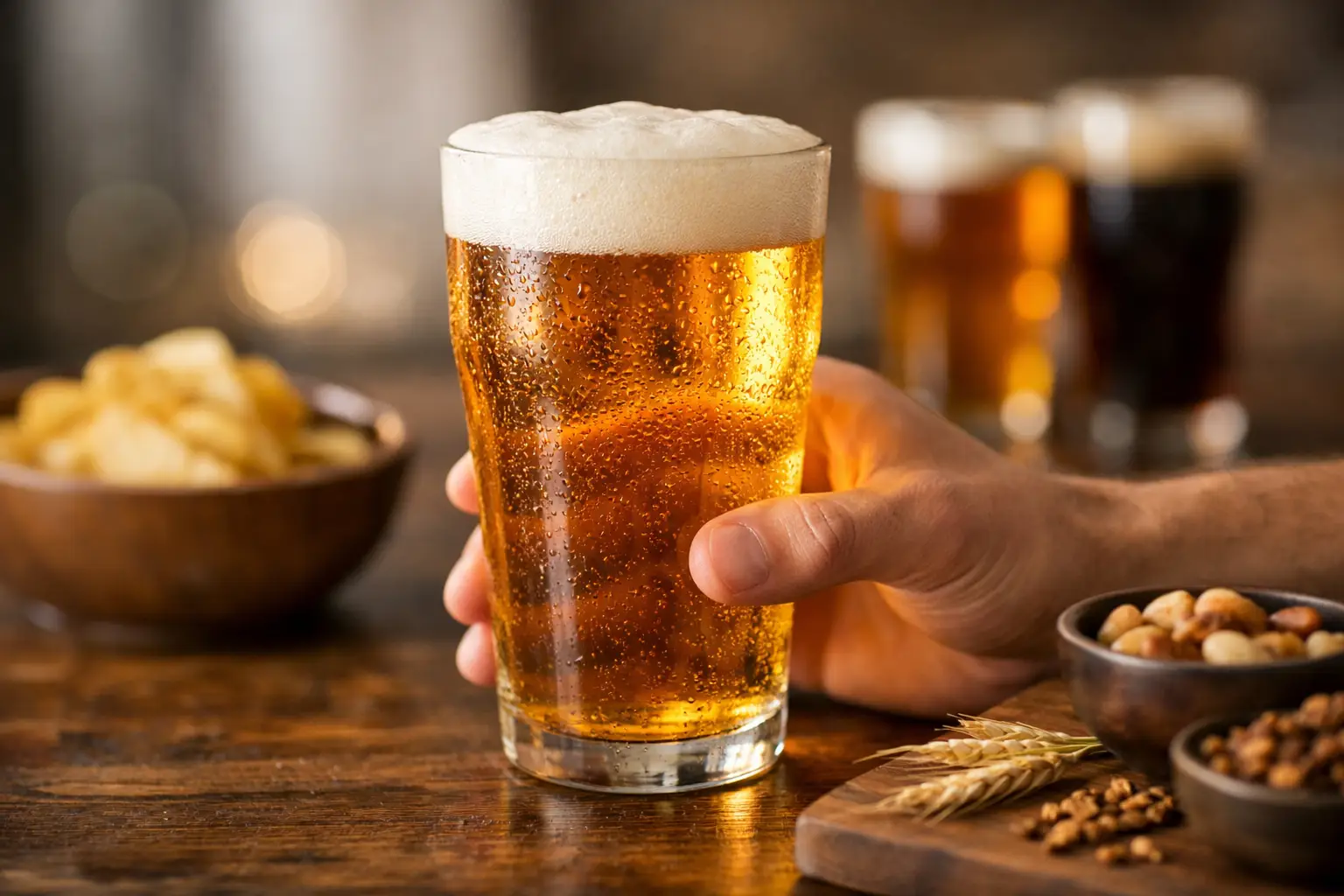
A beer can taste beautifully bitter, fruity or malty and still leave a completely different impression depending on how it sits on your palate. That physical impression is the answer to what is mouthfeel in beer. It is the texture, weight and movement of beer in your mouth, from the first touch on the tongue to the moment you swallow.
Mouthfeel is often the missing piece when someone says, “I like this, but I cannot quite explain why.” You may notice that one pale ale feels light and crisp while another seems soft and rounded, even when their flavours overlap. Learning a few texture cues gives you a more useful way to describe what you enjoy - and makes choosing, serving and comparing beer more rewarding.
What is mouthfeel in beer?
Mouthfeel is the collection of physical sensations a beer creates in the mouth. It includes its body, carbonation, creaminess, warmth, smoothness, dryness, thickness and sometimes astringency. Flavour tells you whether you are tasting citrus, toast, coffee or pine. Mouthfeel tells you whether those flavours arrive in a light, sparkling, velvety or chewy form.
Think of still water, sparkling water, skimmed milk and double cream. Their flavours may be relatively neutral, but their textures are immediately different. Beer works in much the same way, although its texture is shaped by many more ingredients and brewing decisions.
There is no ideal mouthfeel across all beer styles. A Czech-style pilsner often feels best when it is brisk and lively. A stout may feel more satisfying with a smooth, fuller texture. The useful question is not whether a beer has “good” mouthfeel in isolation, but whether its texture suits the style and your own preference.
The main elements of beer mouthfeel
Body: the beer’s sense of weight
Body describes how light or full a beer feels on the palate. It is not simply about strength. A low-alcohol beer can have a surprisingly rounded body, while a stronger beer may drink lightly if it is highly attenuated, meaning more of the fermentable sugars have been converted during brewing.
A light-bodied beer can feel clean, quick and refreshing. Medium-bodied beers often feel balanced and versatile, with enough weight to support malt and hop flavour. Full-bodied beers linger more heavily, sometimes feeling rich, coating or almost meal-like.
Malt composition has a strong influence here. Grains that leave behind more unfermentable sugars and proteins can add fullness, while additions such as oats or wheat often create a softer, more substantial texture. This is one reason an oatmeal stout can feel plush even if its flavour is not especially sweet.
Carbonation: the lift and prickle
Carbonation is one of the easiest elements to notice. It creates bubbles, pressure and a tingling sensation on the tongue. In a highly carbonated beer, the texture may seem sharp, energetic or even slightly bitey. In lower-carbonated beer, it may feel gentle, creamy or smooth.
Carbonation also changes how flavour is perceived. A lively lager can feel drier and more refreshing because the bubbles lift aromas and clear the palate quickly. In contrast, softer carbonation can allow chocolate, caramel or stone-fruit notes to seem broader and more settled.
Neither approach is automatically better. If a wheat beer feels spritzy and bright, that may be part of its appeal. If a cask-conditioned ale seems low in fizz compared with a canned lager, it is not necessarily flat. It may simply be intended to offer a quieter, silkier expression.
Creaminess and softness
Creaminess is a smooth, rounded sensation rather than a literal dairy flavour. It can come from proteins in malted barley, wheat or oats, from a fuller body, or from fine bubbles. Nitrogen-served beer is particularly associated with this effect because nitrogen creates very small bubbles and a dense, soft head.
A creamy mouthfeel can make roasted flavours in stout feel like cocoa powder or espresso with a velvety finish. In a hazy pale ale, softness may make tropical fruit flavours feel juicy rather than sharp. However, too much heaviness can blur delicate flavours, so this quality is always a matter of balance.
Dryness, crispness and astringency
Dryness describes how little residual sweetness remains after swallowing. A dry beer often finishes cleanly and encourages another sip, even when it has noticeable body. Crispness is closely related, but usually refers to a fresh, snappy finish supported by carbonation and a clean fermentation profile.
Astringency is different. It is the drying, slightly rough sensation you may recognise from over-steeped tea or a very tannic red wine. In beer, it can come from grain husks, hop material or roasted malts. A faint drying grip may work in some styles, but strong harshness can distract from the beer’s balance.
Warmth and alcohol texture
Alcohol can create a warming sensation in the throat and chest, especially in stronger beers such as barley wines, imperial stouts and Belgian-style ales. At the right level, warmth adds depth and structure. If it dominates, it can feel hot, thin or out of place.
Alcohol also affects perceived body. A beer may seem fuller and smoother as alcohol rises, but high strength alone does not guarantee richness. Pay attention to whether the warmth is integrated with malt, sweetness and flavour, or whether it arrives separately at the end of the sip.
Why mouthfeel changes from one beer to another
Brewers shape mouthfeel through ingredients, fermentation, water chemistry, carbonation and serving method. This explains why two beers with a similar alcohol percentage can feel remarkably different.
The grain bill matters because different malts contribute varying levels of protein, sugar and texture. Yeast matters because it determines how dry the beer becomes and can leave a softer or cleaner finish. Water chemistry can sharpen bitterness or make the palate feel rounder. Even the same beer can seem different when served on draught, from a bottle or in a can.
Temperature has a practical effect, too. Very cold beer can feel firmer, crisper and less aromatic. As it warms slightly, body and creaminess become easier to notice, while sweetness and alcohol may become more apparent. There is a trade-off: serving a delicate lager too warm may make it seem loose, while serving a rich stout too cold can hide its texture.
How to taste mouthfeel with more confidence
You do not need specialist equipment or a large vocabulary. Pour a modest amount into a clean glass, ideally one with enough room for aroma and a visible head. Take a small sip and pause before deciding whether you like it.
First, notice the beer’s entry. Does it touch your tongue lightly, or does it seem to spread across the palate? Then consider the bubbles. Are they fine and creamy, lively and prickly, or restrained? Finally, focus on the finish. Does the beer disappear quickly, leave a soft coating, dry your mouth or create a gentle warmth?
A helpful way to organise your thoughts is to use contrasts. Rather than trying to find the perfect technical term, ask whether the beer feels lighter or fuller, sharper or softer, drier or sweeter, smoother or more gripping than another beer you know. Comparison builds tasting confidence quickly because texture becomes easier to recognise side by side.
Try tasting two contrasting beers on separate occasions: perhaps a pilsner and a stout, or a West Coast IPA and a hazy IPA. You are likely to notice that the pilsner moves quickly and cleanly, while the stout stays longer on the palate. Between the two IPAs, one may feel crisp and lean while the other feels pillowy or juicy. Save a few notes on what you felt, not only what you tasted.
Useful words for describing beer texture
Clear language helps turn an impression into a memory. “Light-bodied”, “medium-bodied” and “full-bodied” are reliable starting points, but they do not need to be the end of the note. You might describe a beer as crisp, smooth, creamy, silky, velvety, pillowy, chewy, prickly, lively, dry, warming or slightly astringent.
Use these words honestly rather than trying to sound expert. “Soft bubbles and a dry finish” is more helpful than a long string of vague praise. Equally, if something feels thin, harsh or syrupy to you, that is a valid observation. Tasting language is there to make your preferences clearer, not to pass an exam.
Common mouthfeel misunderstandings
Mouthfeel is not the same as flavour, although the two influence each other. A beer can taste sweet but finish dry, or taste bitter while feeling soft and creamy. It is also not identical to alcohol strength. A 4% beer can feel full, and an 8% beer can feel surprisingly light.
Nor does more body always mean better beer. A fuller texture can be comforting in a porter on a cool evening, yet tiring when you want a refreshing drink with food. Preferences shift with the occasion, serving temperature and what you are eating. The point is to notice the effect, then decide whether it works for you.
The next time you open a beer, give texture the same attention you give aroma and flavour. A short guided tasting with Audio Sommelier, or simply a quiet moment with your own notes, can turn “nice and smooth” into a clear personal preference you will remember when choosing your next bottle.