5 Jun 2026
How to Taste Beer Properly at Home
Learn how to taste beer properly at home with simple steps for aroma, flavour, texture and finish - no jargon, just clear guidance.
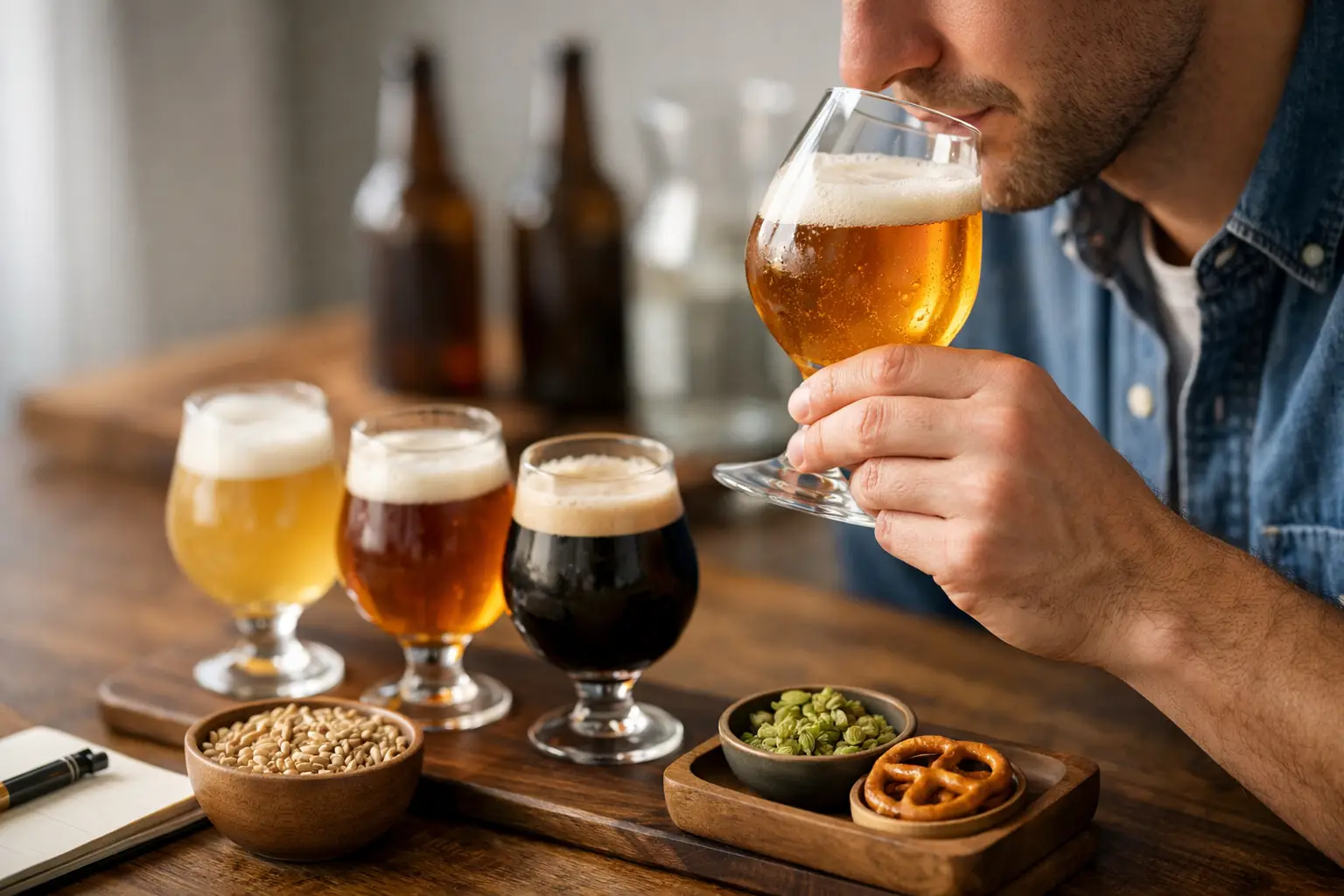
That first sip tells you less than you think. If you drink beer straight from the fridge, take a quick mouthful and move on, you will still know whether you like it - but you will miss most of what makes it interesting. Learning how to taste beer properly is not about acting like an expert. It is about noticing more, describing what you notice, and feeling more confident with every bottle or can you open.
The good news is that beer tasting is highly learnable. You do not need specialist training, a perfect palate or a shelf full of rare bottles. You just need a little structure, the right pace and a willingness to pay attention.
How to taste beer properly without overcomplicating it
A proper beer tasting has a simple rhythm. Look at the beer. Smell it before you drink. Take a measured sip. Notice the texture. Then stay with the finish for a few seconds longer than you normally would. That short pause is where much of the detail appears.
If you are new to this, one beer is enough. If you already enjoy comparing styles, taste two or three side by side, but keep the range sensible. A pale lager next to a stout can be useful for contrast. Five heavily hopped IPAs in a row usually just lead to palate fatigue.
Environment matters more than people expect. Strong cooking smells, scented candles and loud distractions make it harder to focus. A clean glass matters too. So does temperature. Very cold beer hides aroma and softens flavour differences, which is helpful if all you want is refreshment, but less helpful if you want to understand what is in the glass.
Start with appearance
Before you sip, take a few seconds to look. Hold the glass against a light background and notice the colour, clarity and foam. Beer can be pale straw, gold, amber, copper, brown or nearly black. None of that tells you whether it is good or bad, but it does give useful clues about style and flavour.
Clarity is worth noticing without turning it into a test. Some beers are brilliantly clear. Others are intentionally hazy. A hefeweizen or New England IPA may look cloudy by design, while a pilsner often aims for brightness. The head also matters. Is the foam dense or loose? Does it vanish quickly or hold its shape? A lasting creamy head can hint at protein content, carbonation and texture.
Appearance is the opening note, not the full performance. It helps set expectations, but tasting becomes more meaningful when you compare what you saw with what you later smell and taste.
Smell first, then smell again
Aroma is where beer becomes more detailed. Before drinking, bring the glass towards your nose and take a gentle sniff. Then take another. The first pass gives an overall impression. The second often reveals something more specific.
You might notice malt-driven notes such as bread, biscuit, caramel, toffee or chocolate. Hops can suggest citrus, pine, floral notes, herbs, tropical fruit or earthiness. Yeast can contribute spice, banana, clove or a lightly fruity character. In some beers, especially darker or stronger styles, you may also find coffee, dried fruit or warming alcohol.
There is no prize for finding the most poetic descriptor. If a beer smells like orange peel, say orange peel. If it reminds you of fresh bread crust or a hedgerow after rain, that is useful too, as long as it is honest. Better tasting language starts with familiar references, not textbook jargon.
It also helps to notice intensity. Is the aroma expressive as soon as the beer is poured, or do you need to search for it? Is one family of aromas dominant, or does it shift as the beer warms slightly? Some beers open up over a few minutes, while others are brightest at the start.
Taste in stages, not all at once
The most common mistake is to turn tasting into one big question: do I like it? That matters, of course, but it is more helpful to break the sip into stages.
Take a moderate sip and let the beer move across your tongue. First notice the attack - the immediate impression. Is it crisp, sweet, bitter, roasty, zesty, soft? Then notice the mid-palate, where the core flavours settle. This is often where balance becomes clearer. Finally, pay attention to the finish. Does bitterness linger? Does a malty sweetness stay behind? Does it dry out cleanly or leave a fuller impression?
This is also the point where flavour and aroma meet. A beer that smelled strongly of grapefruit may taste more resinous than fruity. A dark ale that suggested chocolate on the nose may lean more towards coffee on the palate. Those small shifts are worth noticing because they help you describe the beer more accurately.
If you are tasting with food, keep in mind that pairing changes perception. Salty snacks can soften bitterness. Spicy food can make alcohol feel warmer. Rich food can make a crisp beer feel even more refreshing. There is no single correct setting. It depends what you want to learn from the glass.
Pay attention to texture and carbonation
Many people focus on flavour and ignore mouthfeel, but texture is one of the clearest ways to understand beer properly. Two beers with similar flavour notes can feel completely different.
Notice the body first. Is it light, medium or full? Does it feel watery, silky, creamy or chewy? Then think about carbonation. Fine, lively bubbles can lift a beer and make it feel sharper or more refreshing. Lower carbonation can make the same flavour profile feel rounder and softer.
A dry stout, for example, may seem smooth and creamy even though it finishes relatively dry. A saison can feel bright and energetic because of high carbonation and peppery yeast character. A strong Belgian ale may carry more weight and warmth. Texture is not a side note. It shapes how all the other elements come across.
Temperature changes what you notice
If you want to know how to taste beer properly, temperature deserves more attention than it usually gets. Beer served too cold often tastes muted. That is why many mass-market lagers are pushed very cold - it emphasises refreshment while keeping flavour in the background.
For tasting, take the beer out of the fridge a little before pouring. Lighter styles generally work cooler, while stronger, darker or more complex beers often show more detail at a slightly warmer temperature. You do not need a thermometer to begin. If the glass feels ice-cold and the beer has almost no aroma, give it a few minutes.
The trade-off is simple. Cooler temperatures sharpen crispness and control sweetness. Warmer temperatures reveal aroma and depth. Neither is universally better. It depends on the style and on what you want from the experience.
Compare beers to train your palate
Tasting one beer carefully is useful. Tasting two with intention is often better. Comparison helps your palate notice contrast, and contrast builds memory.
Try comparing beers within a sensible frame. Taste two pale ales from different breweries, or compare a lager with a pilsner, or a porter with a stout. Ask simple questions. Which has more aroma? Which feels drier? Which bitterness lingers longer? Which one would you want with food, and which one works better on its own?
This is where notes become valuable. You do not need paragraphs. A few clear observations are enough: lemon zest, soft malt, fine bubbles, dry finish, more bitter than expected. Over time, patterns emerge. You start to recognise what you actually enjoy rather than what you think you should enjoy.
For many people, that is the moment tasting becomes less intimidating. It stops being about guessing the right answer and starts becoming a personal reference system. If you use a guided format such as Audio Sommelier, that process can feel even steadier because the prompts help you slow down and notice one element at a time.
Common tasting mistakes to avoid
Rushing is the biggest one. Beer is easy to drink quickly, which is part of its appeal, but speed works against perception. Another common mistake is judging a beer too early, especially before it has warmed slightly in the glass.
Overloading your palate can also get in the way. Very spicy food, toothpaste, strong coffee or smoking just beforehand will interfere with aroma and flavour. Glassware matters too. Drinking from the can is convenient, but it limits aroma and hides appearance. For tasting, a glass gives you far more to work with.
The last mistake is assuming you are bad at tasting because you cannot name everything precisely. Sensory confidence builds gradually. The goal is not to perform. The goal is to notice more than you noticed last time.
Beer rewards attention in a generous way. The more calmly you approach it, the more it gives back - not just in flavour, but in confidence, memory and enjoyment. Start with one glass, one quiet moment and one honest observation. That is enough to begin.