21 Aug 2026
Top Flavour Terms to Know Before Your Next Pour
Learn the top flavour terms to know, from aroma and body to tannin and finish, so every glass is easier to describe, compare and enjoy with confidence.
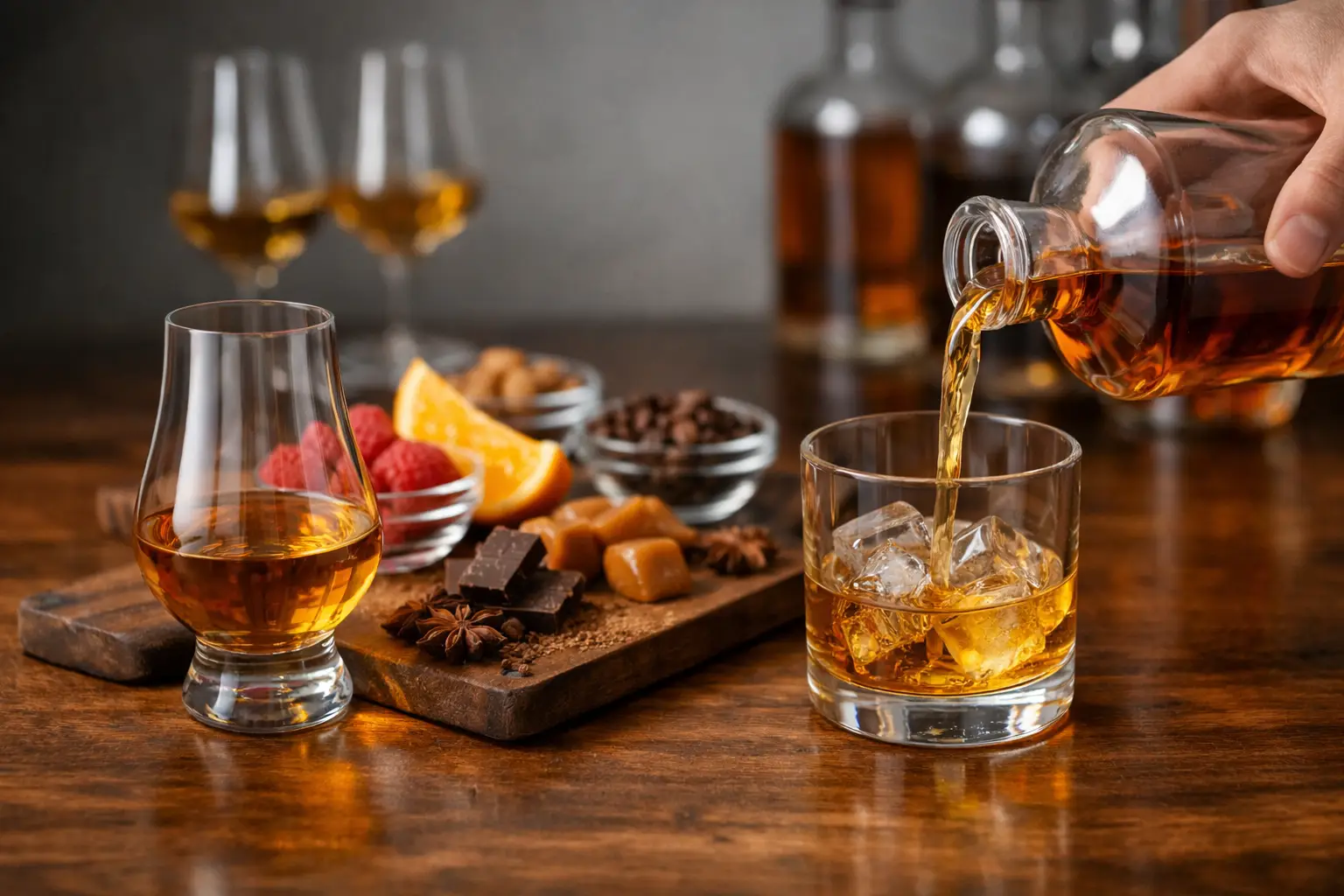
You take a sip, know that you like it, then someone asks what you can taste. “Smooth” or “nice” may be perfectly honest answers, but they do not help you remember the bottle or choose another one later. Learning the top flavour terms to know gives you a calmer, clearer way to notice what is already in your glass - no wine knowledge needed.
These are not rules for sounding impressive. They are practical labels for sensations: what you smell, how a drink feels in the mouth, which flavours stand out, and what remains after you swallow. Once you can name a few of them, tasting becomes easier to enjoy and much easier to compare.
The top flavour terms to know, in plain English
Aroma
Aroma is what you smell before taking a sip. It is often the quickest route into a drink because smell does much of the work we think of as flavour. Swirl a still wine gently, or simply pause over a glass of whisky, beer or spirit, then take two short breaths rather than one deep inhale.
Try to identify broad families before chasing exact answers. Is it fruity, floral, spicy, herbal, nutty, smoky or sweet-smelling? A white wine might suggest lemon peel and white flowers; a stout may bring coffee and cocoa; a whisky may seem like dried fruit, vanilla or bonfire smoke. “It smells bright and citrus-led” is more useful than forcing a precise fruit you are not sure about.
You may also hear the word bouquet. In everyday tasting, it is often used much like aroma, though it can refer more specifically to scents developed through ageing. For a relaxed home tasting, aroma is the term you need.
Flavour
Flavour is what you perceive once the drink is in your mouth. It combines the basic tastes on your tongue - sweet, sour, bitter, salty and savoury - with the aromas that rise to your nose as you sip.
This is why a drink can smell of ripe peach but taste dry, or smell sweet and still have a pronounced bitter edge. When describing flavour, separate what you notice into simple layers. First, what is the main impression? Then ask whether there are secondary notes underneath it. A gin might lead with juniper and citrus, then show pepper and herbs. A red wine may begin with blackberry, followed by liquorice, cedar or earth.
There is no prize for finding the longest list. Two observations you can clearly remember are more valuable than ten borrowed descriptors.
Sweetness
Sweetness comes from residual sugar, or from a flavour impression that resembles sugar. The distinction matters. Vanilla, ripe fruit and caramel can make a drink seem sweet, even when it is technically dry.
Use a simple scale: dry, off-dry, medium-sweet or sweet. Dry does not mean flavourless. A dry Riesling can taste intensely of lime and peach while having little sugar. In beer and spirits, malt, oak and fruit can create a rounded sweetness without making the drink dessert-like.
If you are unsure, compare the sensation with fresh lemon juice versus lemonade. Acidity can make a drink feel fresh and less sweet, while actual sugar tends to linger as a soft, coating impression.
Acidity
Acidity creates freshness, lift and mouth-watering tension. It is especially noticeable in wine, cider, sparkling wine and lighter beers, but it also shapes cocktails and fruit-led liqueurs. Think of biting into a lemon, green apple or tart berry.
High acidity is not a fault. In the right drink, it keeps ripe fruit flavours from becoming heavy and can make food pairings feel more balanced. A low-acid red may feel softer and broader; a high-acid white may feel crisp and energetic. If your mouth waters after a sip, acidity is probably doing its job.
Tannin
Tannin is the drying, grippy feeling that can appear on your gums, teeth and cheeks. It is most associated with red wine, where it comes from grape skins, seeds and sometimes oak, but tea, cider and some beers can show it too.
A useful comparison is stewed black tea: it is not sour, and it is not necessarily bitter, but it dries the mouth. Tannins may feel powdery, silky, firm, chalky or rough. A young Cabernet Sauvignon often has more obvious grip than a Pinot Noir, though winemaking and ageing make a difference.
Tannin can be mistaken for bitterness. Bitterness sits more on the tongue, like dark chocolate or grapefruit pith. Tannin is more about texture and dryness. Noticing the difference helps you describe a red wine with far more confidence.
Body
Body describes weight, not strength. Imagine the difference between skimmed milk, whole milk and single cream. A light-bodied drink feels delicate and less coating; a full-bodied one feels broader, richer and more substantial.
Alcohol, sugar, fruit concentration and texture can all add body. A 12% white wine may feel light-bodied, while an oaked Chardonnay may feel fuller. Likewise, a pale lager and an imperial stout can have very different weights even before you consider their flavours.
Body is personal as well as descriptive. If you usually enjoy drinks that feel refreshing and easy, lighter body may suit you. If you want a slow, contemplative pour, a fuller body can feel more satisfying. Neither is inherently better.
Texture and mouthfeel
Mouthfeel is the physical character of a drink in your mouth. It is where terms such as creamy, silky, oily, velvety, lean, crisp, spritzy and astringent become useful.
A sparkling wine may feel fine and mousse-like, with small, persistent bubbles. A liqueur may be viscous and coating. An unfiltered beer can feel soft and pillowy, while a high-proof spirit may feel oily before the warmth arrives. Texture often explains why two drinks with similar flavours feel completely different.
Be careful with “smooth”. It is a valid personal reaction, but it is vague on its own. If you can add why it feels smooth - perhaps soft tannins, low bitterness, creamy texture or gentle alcohol warmth - your note becomes more useful next time.
Alcohol warmth, or heat
Alcohol can bring a warming sensation in the chest or a noticeable prickle on the palate. Tasting notes may call this heat. A little warmth can support rich flavours, particularly in fortified wine, whisky or a full-bodied red. Too much can feel sharp, distracting or out of balance.
Heat is not the same as spice. Pepper, ginger and clove are flavours or aroma impressions; alcohol warmth is a physical sensation. Separating the two helps when a drink feels powerful but you are not sure why.
Finish and length
The finish is what remains after you swallow. Length describes how long those sensations stay with you. A short finish fades quickly; a long finish continues with evolving flavours, perhaps from fruit to spice, smoke or a pleasant bitterness.
Longer is not automatically better for every occasion. A light lager on a warm afternoon may be enjoyable precisely because it finishes cleanly. But when you are assessing a special bottle, finish can reveal a great deal about its balance and detail.
After swallowing, wait five seconds before reaching for another sip. Ask: what is still present? Drying tannin, citrus freshness, toasted oak, cocoa, smoke or sweetness? That small pause is one of the easiest ways to make tasting more intentional.
The terms that explain quality: balance, intensity and complexity
These three words are often used together, but they describe different things. Balance asks whether sweetness, acidity, tannin, bitterness, alcohol and flavour work together without one element taking over. A bold drink can still be balanced. A delicate drink can still be unbalanced.
Intensity is the strength of the aroma and flavour. Is it subtle, pronounced or somewhere between? Complexity is the number and development of distinct impressions. A simple drink can be delicious and refreshing. Complexity matters most when you want a drink to reward attention over time.
Think of these as observations rather than scores. You might write: “Medium-bodied, high acidity, soft tannin, blackberry and cedar, with a dry finish.” That is already a clear tasting memory, and it is far more useful than trying to decide whether the bottle is objectively good.
How to turn flavour terms into a useful habit
Start with one glass and three questions: what do I smell, how does it feel, and what stays after the sip? Give yourself permission to use familiar references from your own kitchen, garden or favourite foods. If something reminds you of lemon curd, pencil shavings, digestive biscuits or a wet pavement after rain, that association is valid if it helps you recognise the sensation again.
Save just a few notes each time. Over several tastings, patterns become visible: perhaps you consistently enjoy high-acid whites, silky reds with modest tannin, or whiskies with dried-fruit notes rather than heavy smoke. Audio Sommelier is designed to help turn those small observations into a personal tasting memory you can revisit and compare.
The best tasting language is not the fanciest language. It is the language that helps you choose your next bottle with a little more confidence - and enjoy the one already open a little more fully.