30 Jul 2026
How to Train Your Nose for Better Tasting
Learn how to train your nose with simple, calm tasting exercises that build aroma confidence, sharper recall and better words for every glass at home today.
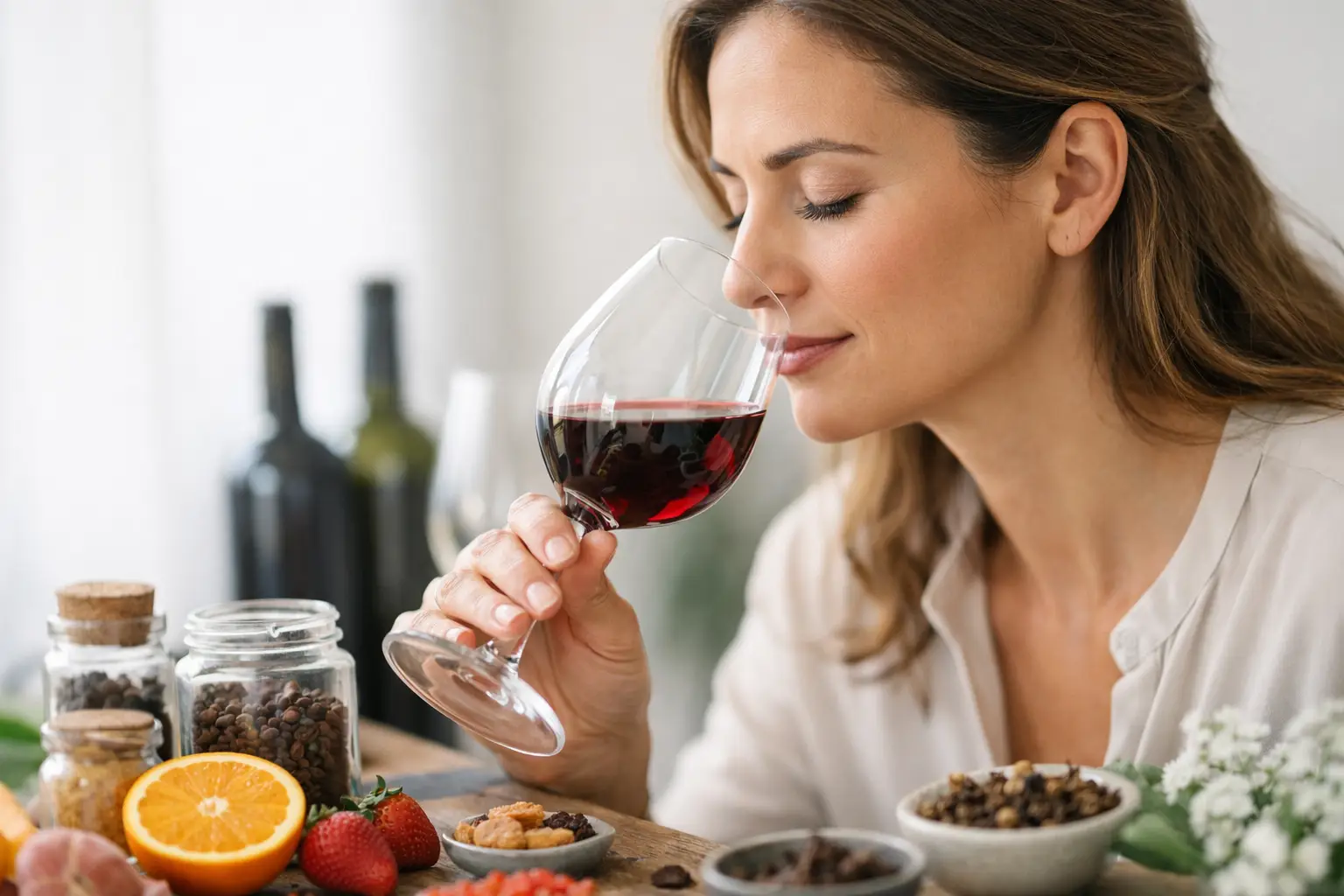
A wine can smell like blackberry, cedar or wet stone. A whisky may suggest orange peel, vanilla and soft smoke. Yet when you first put your nose to the glass, you might simply think: “It smells nice.” That is not a failure of taste. Learning how to train your nose is about slowing down, paying attention and giving familiar scents useful names.
You do not need a professional nose, an expensive collection or a shelf of aroma vials. You need curiosity, a few quiet minutes and a repeatable way to notice what is already around you. The aim is not to identify every note perfectly. It is to become more confident, more precise and better able to remember what you enjoy.
Why your nose improves before your vocabulary does
Your sense of smell is already doing considerable work. It helps you recognise coffee brewing, rain on warm pavement, a just-cut lemon and the difference between a ripe pear and an unripe one. The difficulty in tasting is usually not sensing an aroma. It is retrieving the right word for it.
Aroma memory works through association. You smell something in a glass, your brain connects it to a past experience, then the name arrives - sometimes quickly, sometimes not at all. Regular practice strengthens that connection. Over time, “fruity” may become blackcurrant, baked apple or dried fig. “Spicy” may become cracked black pepper, clove or ginger biscuit.
This is why tasting notes should be treated as prompts, not tests. If a wine is described as having cassis and you smell dark berries, you are in the same neighbourhood. Your own honest reference point matters more than finding the one supposedly correct answer.
How to train your nose with everyday scents
The best training materials are often in your kitchen, garden or local shop. Begin with smells you can see and handle. That visual cue makes it easier to build a clear mental link between aroma and language.
Set aside ten minutes once or twice a week. Choose three or four items rather than trying to smell everything at once. For example, place a lemon, an apple, a sprig of rosemary and a small dish of coffee beans on the table. Smell each item gently, with short sniffs rather than one long inhale.
As you smell, ask simple questions. Is it fresh or cooked? Sweet or sharp? Green, floral, earthy, woody or creamy? Does it remind you of a particular food, place or season? Say your answer aloud if you can. Speaking helps turn a vague recognition into usable tasting language.
Then close your eyes and smell the items again in a different order. Do not worry if you miss one. The exercise is about attention and recall, not scoring points. Repeat the same scents on another day before adding new ones. Familiarity is how aroma memory settles in.
You can make this practice more varied with a small home scent cupboard. Useful references include citrus peel, berries, stone fruit, fresh herbs, dried herbs, vanilla, cinnamon, dark chocolate, nuts, black tea and honey. Include both fresh and cooked versions where possible. A fresh apple and apple crumble may belong to the same family, but they create very different impressions in a glass.
Smell in families before hunting for details
Trying to name a precise aroma too early can make tasting feel like a quiz. Start broad, then narrow your focus. This is how many experienced tasters work, even if it becomes instinctive with practice.
First, decide which family is most present. Is the aroma mainly fruit, flowers, herbs, spice, wood, earth, grain, nuts, smoke or something savoury? Next, give it a little more shape. If it is fruit, is it citrus, orchard fruit, stone fruit, tropical fruit or dark fruit? Only then ask whether it feels like grapefruit, pear, peach, pineapple or blackberry.
This approach is especially useful with whisky, aged spirits and complex beers, where several aroma families may arrive at once. A peated whisky might begin as smoke, then become bonfire ash, seaweed or smoked bacon as you spend time with it. There is no need to rush the label. Let the glass develop.
Temperature also changes what you notice. A very cold white wine may seem quiet at first, while a beer straight from the fridge can hide much of its malt and hop character. Give the drink a few minutes in the glass. With spirits, a small splash of water can soften the alcohol and make fruit, cereal or spice notes easier to find. It depends on the drink and your preference, so add water gradually rather than assuming it is always needed.
Use a simple nose routine at the glass
A reliable sequence makes tasting less intimidating. Start by smelling the drink without swirling. This gives you a first impression before oxygen changes the aroma. Then swirl gently and smell again. Keep your mouth slightly open as you sniff, which can make the experience feel less sharp and more connected to flavour.
Take two or three short sniffs, then pause. Your nose adapts quickly, particularly to alcohol. If you smell continuously, the glass may seem to lose its character when your senses have simply become tired. Looking away for a few seconds, smelling the back of your hand or taking a breath of neutral air can reset your attention.
Write down only what you genuinely notice. A useful note might read: “Fresh lemon at first, then apple and a light biscuit note.” It does not need to sound poetic or technical. A clear record helps you compare future bottles and see how your palate is changing.
Avoid relying on coffee beans as a reset between every sniff. They have a strong aroma of their own and can become another distraction. Neutral air, a brief break and a sip of water are usually enough.
Train recall, not just recognition
The greatest improvement comes after the glass is finished. Before checking a producer note or discussing the bottle with someone else, ask yourself what you remember. Which aroma appeared first? What stayed with you? Did it feel bright, warm, savoury, delicate or rich?
Keep your notes consistent so comparisons become easy. Record the drink, date, aroma families, a few specific descriptors and whether you enjoyed it. You may find that wines you repeatedly like share citrus and herbal lift, or that your favourite whiskies lean towards orchard fruit and gentle spice rather than heavy smoke. That pattern is useful. It turns “I like this” into a preference you can recognise and explore.
Comparative tasting is one of the fastest ways to learn. Pour small measures of two drinks that have a clear point of difference: a Sauvignon Blanc beside a Chardonnay, an unpeated whisky beside a smoky one, or a crisp lager beside a Belgian-style ale. Smell them alternately. Contrast makes aromas easier to identify because your brain has an immediate reference.
There is a trade-off: tasting too many drinks in one session can blur the differences and tire your nose. Two is plenty when you are learning. Three can work if the pours are small and you take your time. Save the experience rather than chasing volume.
Give yourself permission to be approximate
Aroma is personal. One person’s strawberry jam may be another’s red sweets. Both may be responding to the same ripe, sweet red-fruit character. The goal is shared understanding, not rigid agreement.
Be careful with suggestion, too. Once somebody says “vanilla”, it can be hard not to find it. Smell first, make a private note, then compare it with any guidance available. This protects your own sensory judgement while helping you expand your vocabulary.
If you want a calm structure for the habit, Audio Sommelier can guide you through aroma, texture, flavour and finish using bottles you already own, while helping you save the notes that matter to you. No prior wine knowledge is needed - only a willingness to pause and notice.
Your nose does not need to become perfect to make a glass more rewarding. Next time you pour something you enjoy, give it one extra minute before the first sip. Name one scent with confidence, even if it is simply “fresh pear” or “warm spice”, and let that small observation become part of your tasting memory.