3 Aug 2026
How to Save Tasting Memories and Taste Better
Learn how to save tasting memories with simple notes, sensory prompts and comparisons that help every bottle teach you something useful at home over time.
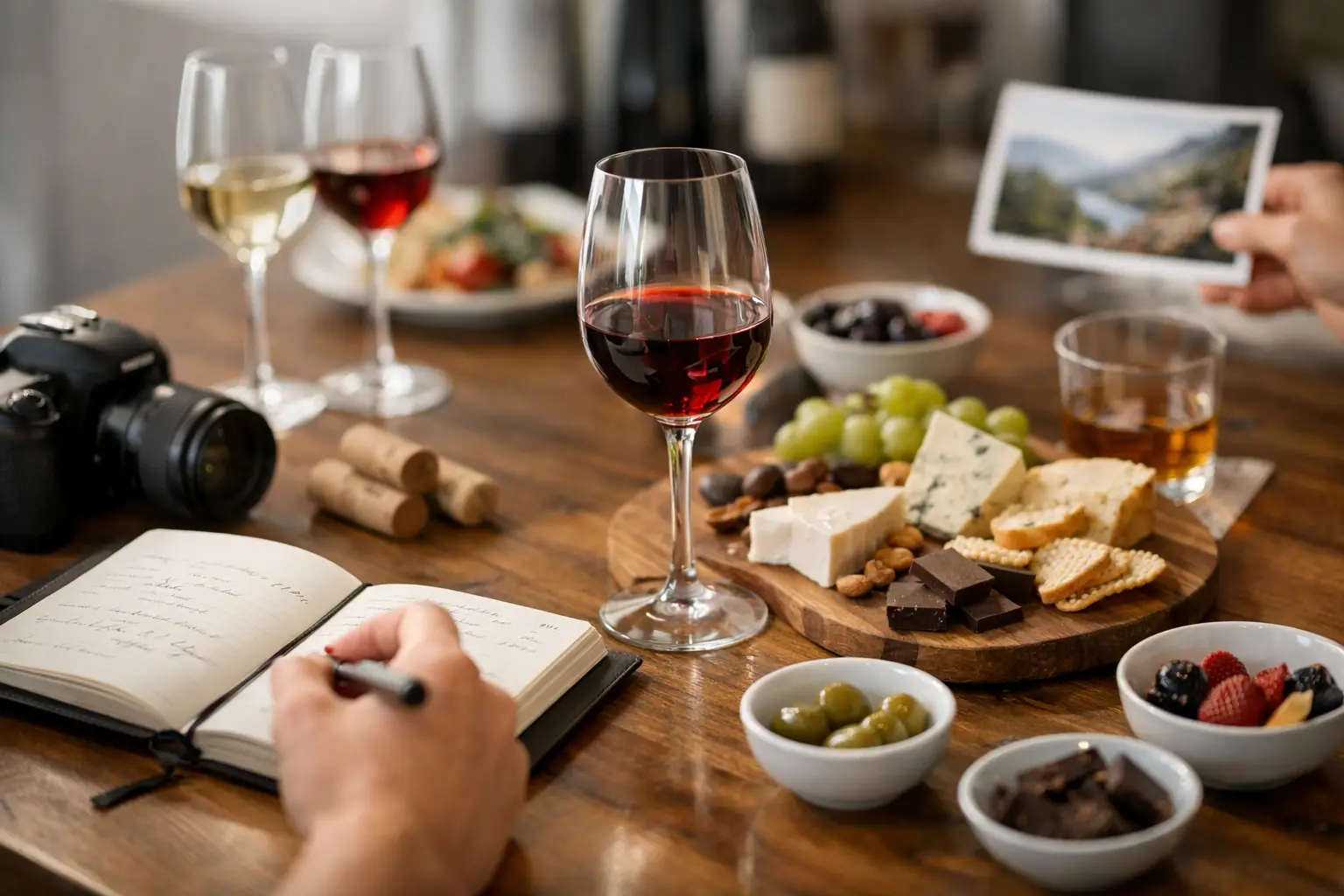
A bottle can be excellent and still disappear from memory by the following week. You may remember that you liked it, but not whether it was the smoky whisky you would buy again, the crisp white that suited dinner, or the beer with the soft citrus finish. Learning how to save tasting memories gives each glass a little more value. It helps you recognise your preferences, speak about flavour with greater ease and choose future bottles with confidence.
This does not require a cellar, an expert palate or long, formal tasting notes. A useful tasting memory is simply a clear record of what you noticed and how the drink made you feel in that moment. The aim is not to be right. It is to be specific enough that your future self can return to the experience.
Why tasting memories fade so quickly
Taste is closely tied to context. The same sparkling wine can feel lively at a birthday lunch, restrained at a quiet supper and completely different beside salty food. A whisky enjoyed after a long week may seem richer than it does during a focused comparison. Without a small prompt to anchor the experience, the bottle name and the details tend to blur together.
Labels do not solve this on their own. They can tell you the producer, region, age statement or grape variety, but they cannot tell you what you noticed. Perhaps a red wine felt velvety rather than heavy. Perhaps a gin was more lemon peel than juniper. Perhaps the finish on a stout was the part you enjoyed most. Those personal observations are what make a record useful.
There is also no need to capture everything. Trying to identify every aroma can turn a relaxed drink into an exam. A few honest details, recorded consistently, will teach you more than a page of uncertain descriptors.
How to save tasting memories in three simple moments
The easiest method follows the natural rhythm of a tasting: before the first sip, during the glass and shortly afterwards. Keep the process light enough that you will actually use it.
1. Save the bottle and the occasion
Start with the basic identity of what is in your glass: producer, bottle name, style and, where helpful, vintage or age. A photograph of the label can be especially useful for bottles with unfamiliar names or limited releases.
Then add one line of context. Note whether you were tasting alone, serving friends, cooking, celebrating or opening something on an ordinary Tuesday. Include the food if it mattered. “Bright rosé with grilled prawns on the patio” is far more memorable than “rosé, nice”.
Context is not just decoration. It helps explain why a drink worked. If you later buy the same bottle in winter and it feels less exciting, that does not mean your first note was wrong. It may simply be a bottle you enjoy most in warm weather or with a particular dish.
2. Record what your senses noticed
Use a few familiar sensory categories: aroma, taste, texture and finish. You do not need specialist vocabulary. Everyday references are often more accurate and more useful.
For aroma, ask what comes to mind before you sip. Fresh apple, toast, cut grass, vanilla, coffee, orange peel or damp earth are all valid. For taste, notice the broad shape first: dry, sweet, tart, bitter, savoury, fruity or warming. Texture might be light, creamy, crisp, silky, fizzy, oily or mouth-drying. The finish is simply what remains after you swallow: short, clean, peppery, smoky, lingering or gently sweet.
If your answer is “I am not sure”, start with contrast. Did it feel fresher or richer? Lighter or fuller? Softer or sharper than you expected? Comparison often gives beginners a more reliable route into better tasting language than trying to name a precise flavour immediately.
3. Add a clear verdict for your future self
A score can be useful, but it is rarely enough. Your future self needs to know why you would return to it. Finish each entry with a practical verdict, such as “buy again for seafood”, “interesting but too sweet for me”, or “best after ten minutes in the glass”.
It is also worth recording confidence. If you tasted a whisky after only a small pour and are unsure about it, say so. A note such as “first impression, revisit with water” is more valuable than forcing a final judgement. Your palate develops through repeat encounters, not instant certainty.
Keep your notes short enough to become a habit
The best format is the one you will use after a busy evening. For most home tastings, four short fields are enough: what it was, what you noticed, the setting or food, and whether you would choose it again.
For example:
> 2021 English sparkling wine. Lemon, green apple and brioche; fine bubbles, dry finish. Drank before roast chicken. Bright and food-friendly - buy again for a dinner party.
That note takes less than a minute to write, yet it holds the details that matter. Months later, it can guide a purchase far better than a vague memory of liking “that fizzy one”.
Longer notes suit comparative tastings, special bottles and drinks you genuinely want to study. For everyday pours, brevity wins. The trade-off is simple: detailed notes capture more nuance, while short notes create consistency. A regular record is more useful than a perfect system used twice.
Use prompts when words do not come easily
The blank page can be the hardest part, particularly when you are new to tasting. A few gentle prompts remove the pressure to sound knowledgeable. Ask yourself: what was the first thing I noticed? What changed after a second sip? What would I serve alongside it? Would I choose this over another bottle I have saved?
You can also use memory cues from ordinary life. A whisky may remind you of Christmas cake, a leather chair or a burnt match. A white wine may bring to mind orchard fruit, lemon curd or a sea breeze. These are not tests with a single correct answer. They are personal reference points that make flavour easier to retrieve later.
Over time, patterns will appear. You might find that you repeatedly enjoy high-acid whites, soft tannins in reds, malty beer, or spirits with a dry rather than sugary finish. That is the real benefit of saving notes: your preferences become visible rather than guessed.
Turn single notes into useful comparisons
One tasting note is a snapshot. Two or three notes on similar drinks become a lesson. Compare bottles by style, grape, region, strength, price point or occasion. You might place two peated whiskies side by side and notice that one is medicinal while the other is more like bonfire smoke. Or compare a lager and a pilsner to understand which kind of bitterness you prefer.
Keep comparisons fair where possible. Use similar glassware, taste at a comfortable temperature and avoid strongly flavoured food immediately beforehand. You do not need laboratory conditions, but a little consistency helps you notice the drink rather than the distractions around it.
There is no need to taste several drinks at once every time. You can build a comparison gradually from saved notes. A Smart Vault such as the one in Audio Sommelier is designed for this: save bottles and observations as you go, then build a Flight when you want to revisit a style or make a more considered choice.
Make room for changing tastes
Your notes should be a record, not a verdict carved in stone. Taste changes with season, mood, food and experience. A bold red that once felt too dry may become appealing after you have tried it with a richer meal. A liqueur that delighted you on holiday may feel overly sweet at home.
When you revisit a drink, add a new entry rather than overwriting the old one. Seeing both impressions is useful. It shows how serving temperature, glass shape, company or your developing palate may have influenced the experience. It also keeps you honest: a disappointing bottle is not always a bad bottle, and an expensive one is not automatically a personal favourite.
Privacy matters here too. Your tasting record is personal. Save only what serves you, whether that is a concise sensory note or a quiet reminder of a meal worth repeating.
A good tasting memory does not need poetic language or professional approval. It needs one attentive pause, a few words you genuinely mean and a place you can find them again. The next time a bottle surprises you, save the moment before the last sip is gone.