24 Jul 2026
7 Top Beginner Tasting Mistakes to Avoid
Avoid the top beginner tasting mistakes with calm, practical guidance on glassware, temperature, pacing and notes - so every bottle teaches you more.
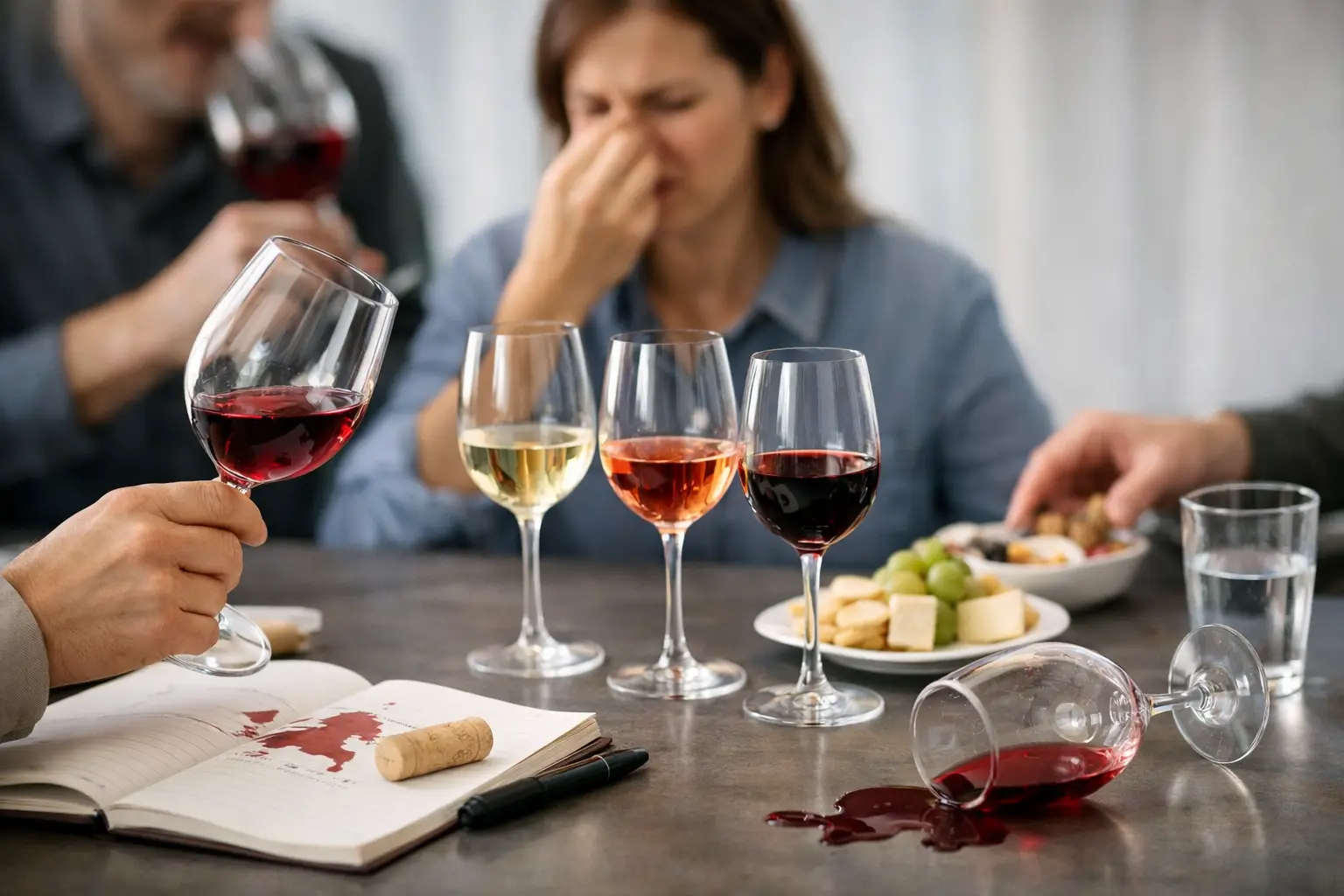
A bottle can be perfectly good and still feel disappointing when you taste it in the wrong conditions. That is why the top beginner tasting mistakes are rarely about having an untrained palate. More often, they come from rushing, serving a drink too cold or too warm, or assuming there is one correct thing to smell and say. Good tasting starts with attention, not expertise.
Whether you are opening a wine on a quiet evening, pouring a whisky after dinner, or trying a new beer with friends, the goal is not to perform. It is to notice what is actually in your glass, then remember what you enjoyed. These common mistakes are easy to correct, and each small adjustment can make your next pour more rewarding.
1. Tasting at the wrong temperature
Temperature changes what you can smell and taste. Serve a white wine straight from a very cold fridge and its aromas may seem muted, while sharp acidity can dominate. Let a full-bodied red become too warm and the alcohol may feel aggressive, hiding fruit, spice and texture. The same principle applies to beer, sparkling wine and spirits.
There is no need to chase laboratory precision. Start with a practical rule: take a chilled white wine or sparkling wine out of the fridge 10 to 15 minutes before pouring. Give a red wine a little time in a cooler room if it has been sitting near a radiator. For whisky and other spirits, room temperature is usually a helpful starting point.
Then return to the glass after a few minutes. Notice what has changed. A drink may become more expressive as it warms, but it can also lose freshness. Learning where your own preference sits is more useful than memorising a single prescribed temperature.
2. Pouring too much, too quickly
A large pour makes a glass harder to assess. You have less room to swirl, aromas are slower to gather, and the drink may warm before you have had time to notice it properly. A smaller serving gives you space to observe and lets the beverage evolve at a comfortable pace.
Start with enough for a few thoughtful sips rather than filling the glass. Look at the colour, take one gentle smell, then taste. Pause before deciding whether you like it. First impressions matter, but they are not always the whole story.
This also supports a more mindful approach to alcohol. Tasting is about concentration, not consumption. You can enjoy the learning without needing to finish every sample.
3. Using aroma as a test you can fail
Many beginners put their nose to a glass and immediately think, “I cannot smell anything.” Usually, they can. They simply expect a clear answer such as blackberry, vanilla or smoke to arrive on command.
Aroma is often less like a quiz and more like a memory. You might first notice something fresh, dark, creamy, herbal or warm. That is already useful information. From there, you may connect it to lemon peel, damp leaves, toast, black pepper or caramel. Or you may not, and that is fine.
Try two short sniffs rather than one long inhale. Keep your mouth slightly open and move the glass gently, not violently. If the aroma seems closed, give it a minute. Wines in particular can reveal more after air has reached them.
Your description does not need to match a tasting note on a label or a website. If a whisky reminds you of fruit cake and someone else says dried apricots, both observations can be valid. Tasting language is a tool for noticing, not a pass-or-fail vocabulary test.
4. Focusing only on flavour
Flavour matters, but it is only one part of the experience. Two drinks can share similar fruit notes yet feel completely different because of their texture, weight and finish. This is where tasting becomes more useful than simply deciding whether something is nice.
As you sip, ask a few plain questions. Does it feel light and crisp, or rounded and coating? Is the acidity lively? Are the tannins in a red wine soft, chalky or drying? Does a beer finish cleanly, or does bitterness linger? Does a spirit feel warming, silky, peppery or rich?
You do not need to ask every question with every drink. Choose one element to follow from beginning to end. For example, with a sparkling wine, notice the size and persistence of the bubbles. With whisky, pay attention to whether the finish fades quickly or remains smoky, sweet or spicy.
This gives you better tasting language because it connects words to your own physical experience. It also helps when choosing future bottles. You may discover that you enjoy bright acidity more than sweetness, or a long, savoury finish more than a powerful first sip.
5. Letting food, fragrance and surroundings take over
A strongly scented candle, fresh coffee, cooking aromas or perfume can flatten the subtler details in a glass. So can tasting immediately after very spicy food, chewing gum or a sweet dessert. Your palate is not broken - it is just busy.
When possible, taste in a neutral-smelling room before food. Keep water nearby, especially if you are comparing several drinks. Plain crackers can help reset your palate, although water and a short pause are often enough.
That said, tasting without food is not the only worthwhile way to drink. A wine may be more enjoyable with dinner than it is on its own, and that is valuable knowledge. Simply separate the two questions: what does this taste like by itself, and what does it do alongside the meal? Both answers belong in your tasting memory.
6. Trusting the first sip too much
The first sip is useful, but it can be misleading. Your palate is adjusting, your drink may still be opening up, and your expectation may be shaped by the price, label or grape variety. A second and third taste often offer a fairer picture.
Try a simple rhythm. Smell, sip, pause, then take another small sip. On the second taste, look for the shape of the drink: how it begins, what develops in the middle, and what remains after you swallow. This is particularly helpful with complex reds, cask-aged spirits and stronger beers, which can change noticeably over 15 or 20 minutes.
The trade-off is that not every bottle benefits from extended analysis. A delicate, refreshing lager or young sparkling wine may be at its best while bright and cold. Pay attention to change, but do not turn a relaxed drink into a chore.
7. Failing to record what you noticed
One of the most common beginner tasting mistakes happens after the glass is empty. You remember enjoying it, but cannot remember why. A few weeks later, you buy something similar and hope for the same experience, with little to guide you.
Your notes do not need to sound professional. Record the bottle, the occasion, two or three sensory impressions, and whether you would choose it again. “Crisp, lemony, slightly salty, great with fish” is far more helpful than a blank memory. So is “too sweet for me, but lovely aroma”.
Over time, patterns become clear. You may notice that you prefer lighter-bodied reds with savoury notes, whiskies with orchard-fruit character, or beers with citrus rather than heavy pine bitterness. This is the practical value of a tasting record: it turns isolated pours into personal knowledge.
Audio Sommelier can support that habit with guided audio prompts and a private tasting vault, but the principle is simple whichever method you use. Save enough detail that your future self can make a better choice.
A calmer way to taste with confidence
The best tasting sessions leave you more curious, not more self-conscious. Start with a smaller pour, give it a little time, and describe it in words that make sense to you. Some bottles will be immediately appealing; others may reveal themselves slowly, or simply not suit your taste.
That is not a mistake. It is how a personal palate takes shape - one attentive glass at a time.