24 Sep 2026
Tasting Ritual Trends Changing the Home Pour
Tasting ritual trends are making home drinking more intentional. Learn how guided sensory habits build confidence, memory and better conversations at home.
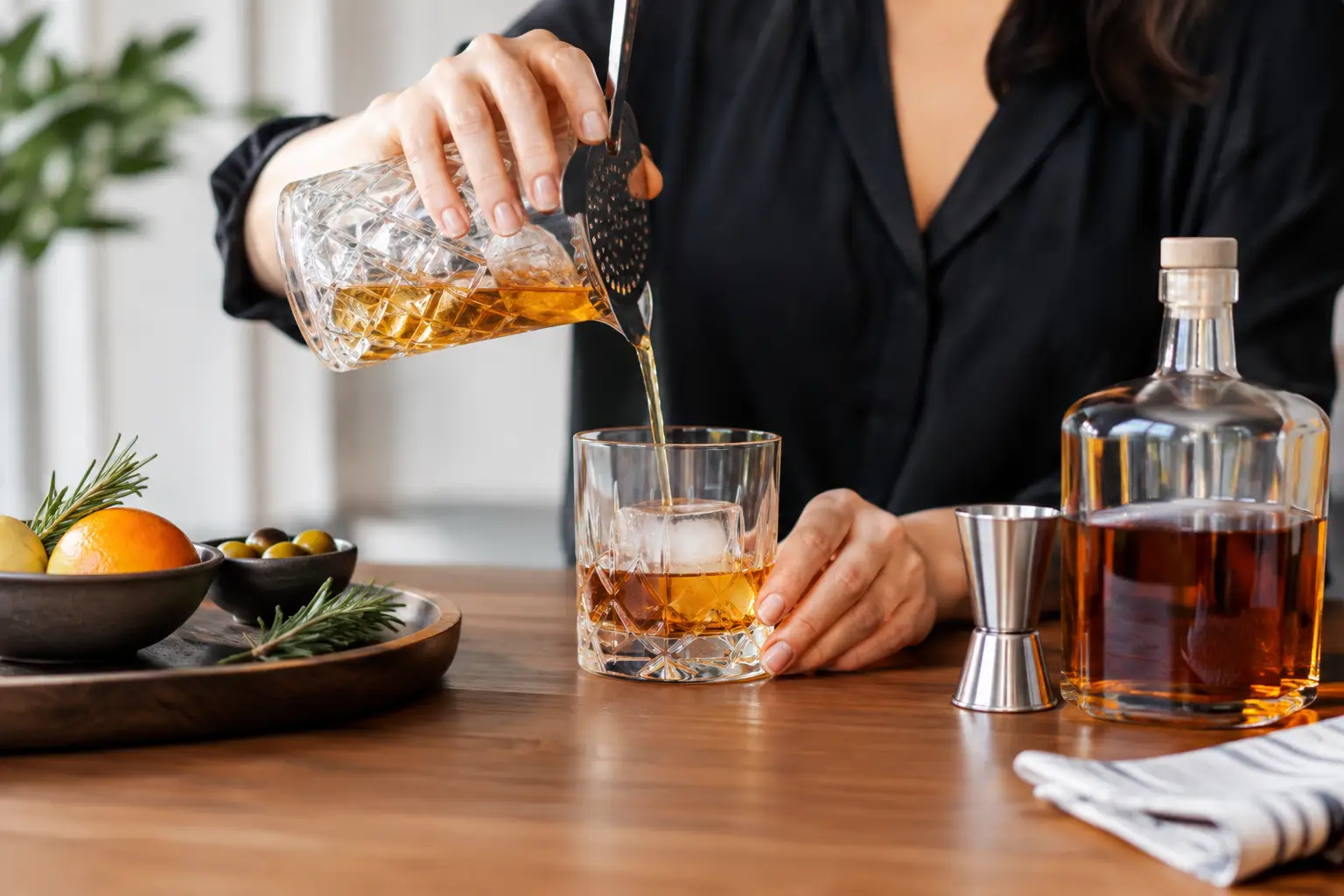
The bottle may be familiar, but the moment can feel entirely new. One of the most telling tasting ritual trends is the move away from drinking on autopilot towards giving a glass a little more attention: a slower pour, a proper look at the colour, a few seconds with the aroma, and a thought about what actually makes it enjoyable.
This is not about turning a relaxed Friday night into an exam. It is about getting more from bottles you already choose, whether that is a crisp white wine, a favourite single malt, a local beer or a celebratory sparkling wine. For legal-age adults who are curious but not keen on intimidating jargon, ritual offers a simple structure: notice more, say more, remember more.
Why tasting rituals are becoming part of home life
For a long time, formal tasting belonged to specialist spaces. There were tasting rooms, restaurant sommeliers and technical score sheets full of language that could make a newcomer feel they had already missed the first lesson. Home drinking was often the opposite: informal, quick and largely unrecorded.
That divide is narrowing. People are investing more care in at-home hospitality, from how they set the table to the playlists they choose for dinner. At the same time, many are drinking less often but choosing better when they do. A smaller measure, tasted with attention, can feel more satisfying than a large, forgettable glass.
The change is also practical. A bottle can offer several evenings of enjoyment, yet memory is unreliable. Was the red you loved last winter the one with black cherry and cedar, or the softer, plum-led one? Did that whisky feel silky because of its finish, or because you paired it with dark chocolate? A repeatable ritual turns these vague impressions into useful personal knowledge.
The tasting ritual trends worth noticing
The strongest trend is not a particular drink or a photogenic glass. It is guided attention. People want a clear prompt at the point of tasting, rather than a lecture beforehand or a generic flavour wheel afterwards. The best guidance gives the drinker something concrete to do: look, smell, sip, pause and reflect.
Smaller pours, fuller attention
Moderation and enjoyment are increasingly sitting together. Rather than treating a tasting as permission to consume more, many people use a modest pour and take their time. Water alongside the drink, food on the table and an unhurried pace all support a better experience.
This approach works particularly well with spirits, where a few millilitres can reveal plenty. It also suits sparkling wine, beer and wine, because temperature and time in the glass can change what you notice. The trade-off is simple: a ritual asks for a little more patience. In return, it makes the glass feel more considered.
Sensory language that sounds like real life
Technical language still has its place, but tasting culture is becoming more conversational. You do not need to identify an exact aroma molecule to say a beer reminds you of grapefruit peel, fresh bread or a damp woodland walk. You do not need to call a wine "medium-plus acidity" before you can recognise that it feels bright and mouth-watering.
Personal references are often more useful than supposedly perfect answers. The goal is not to pass a test. It is to build a vocabulary that helps you choose well next time and explain your preferences to friends, shop staff or hosts.
A helpful distinction is between aroma, flavour, texture and finish. Aroma is what you notice before sipping. Flavour develops on the palate. Texture is the feel: creamy, sharp, drying, light or weighty. Finish is what remains after swallowing. Separating these four ideas gives beginners a dependable starting point without making the process stiff.
Audio-led guidance over screen-led instruction
Another of the more practical tasting ritual trends is the rise of audio guidance. A phone can support the tasting without taking over the table. Instead of reading prompts while trying to hold a glass, listeners can be guided through the pace of the experience: take a breath, bring the glass closer, notice the first impression, then take a small sip.
Audio is particularly effective because tasting is physical. Your hands, nose and palate are already occupied. Calm spoken prompts leave your eyes free to look at the drink and your attention free to respond. It can also make a solo tasting feel less solitary without turning it into a performance.
Personal memory, not public scoring
Public ratings can be useful, but they cannot tell you whether a drink suits your palate, your meal or the mood of your evening. More drinkers are keeping private notes that are short, honest and tied to context. A note such as, “Lovely with roast chicken, too oaky on its own,” is more valuable to you than a score with no explanation.
Over time, these notes reveal patterns. Perhaps you enjoy peppery rye whisky more in cooler months, prefer low-bitterness beers with spicy food, or repeatedly return to whites with citrus and saline notes. A personal tasting memory makes buying decisions easier and reduces the chance of collecting bottles that sound impressive but do not suit you.
Comparative flights at home
A flight does not need to mean six glasses lined up like a competition. Comparing two saved bottles can be enough. Try two Sauvignon Blancs from different regions, two styles of gin with the same tonic, or a familiar whisky beside a new one. The contrast gives your palate something to hold on to.
Comparison is where many people gain confidence quickly. It is easier to spot that one drink is softer, smokier, sweeter or more drying when another sits beside it. The key is to change only one or two variables where possible. If everything differs at once, the experience can become confusing rather than revealing.
Build a ritual that fits your evening
The most useful ritual is the one you will repeat. It does not require a special tasting room, a collection of glassware or an encyclopaedic palate. Start by choosing a time when you are not rushing and a drink you are genuinely interested in.
Pour a modest amount and take a moment to look at it in good light. Colour can suggest age, style or concentration, but there is no need to diagnose the drink from appearance alone. Then smell gently before swirling, and again afterwards. Your first impression may be fruit, malt, citrus, herbs, vanilla, flowers or something less obvious. Let that be enough.
When you taste, take a small sip and let it move across your palate. Ask three plain questions: What does it remind me of? How does it feel? What stays after the sip? Those questions cover far more ground than they appear to, and they prevent the common mistake of focusing only on flavour.
Write one or two notes while the impression is fresh. Keep them useful rather than polished. You might record the occasion, food pairing, serving temperature, a standout aroma and whether you would choose it again. If you save bottles over time, build comparisons from your own history rather than chasing someone else’s ideal palate.
Audio Sommelier is designed around this kind of low-pressure practice, pairing guided audio tastings with a personal vault for notes and future comparisons. The point is not to make every pour ceremonial. It is to make better attention easy when you want it.
When ritual helps, and when to keep it simple
Not every drink needs a guided session. A lively gathering, a quick toast or a familiar pint after work may call for nothing more than enjoyment. Trying to analyse every glass can flatten spontaneity and make guests feel watched.
Ritual earns its place when you are opening something new, revisiting a bottle you want to understand, choosing drinks for a dinner, or simply hoping to slow the pace of an evening. It also helps when you are learning, because repetition builds sensory confidence far better than memorising descriptions.
For hosts, the most welcoming approach is to offer prompts, not corrections. Ask, “What do you notice first?” rather than, “Can you detect brioche?” Give guests permission to disagree. One person may find ripe peach; another may think of marmalade. Both responses can be useful, and neither needs defending.
A good tasting ritual leaves room for pleasure, curiosity and your own point of view. Pour a little less, pause a little longer, and let the next bottle teach you something you will genuinely remember.