20 Sep 2026
Tasting Journal vs Memory App: Which Is Better?
Tasting journal vs memory app: compare paper notes with digital tasting records, and choose the approach that helps you remember every bottle better.
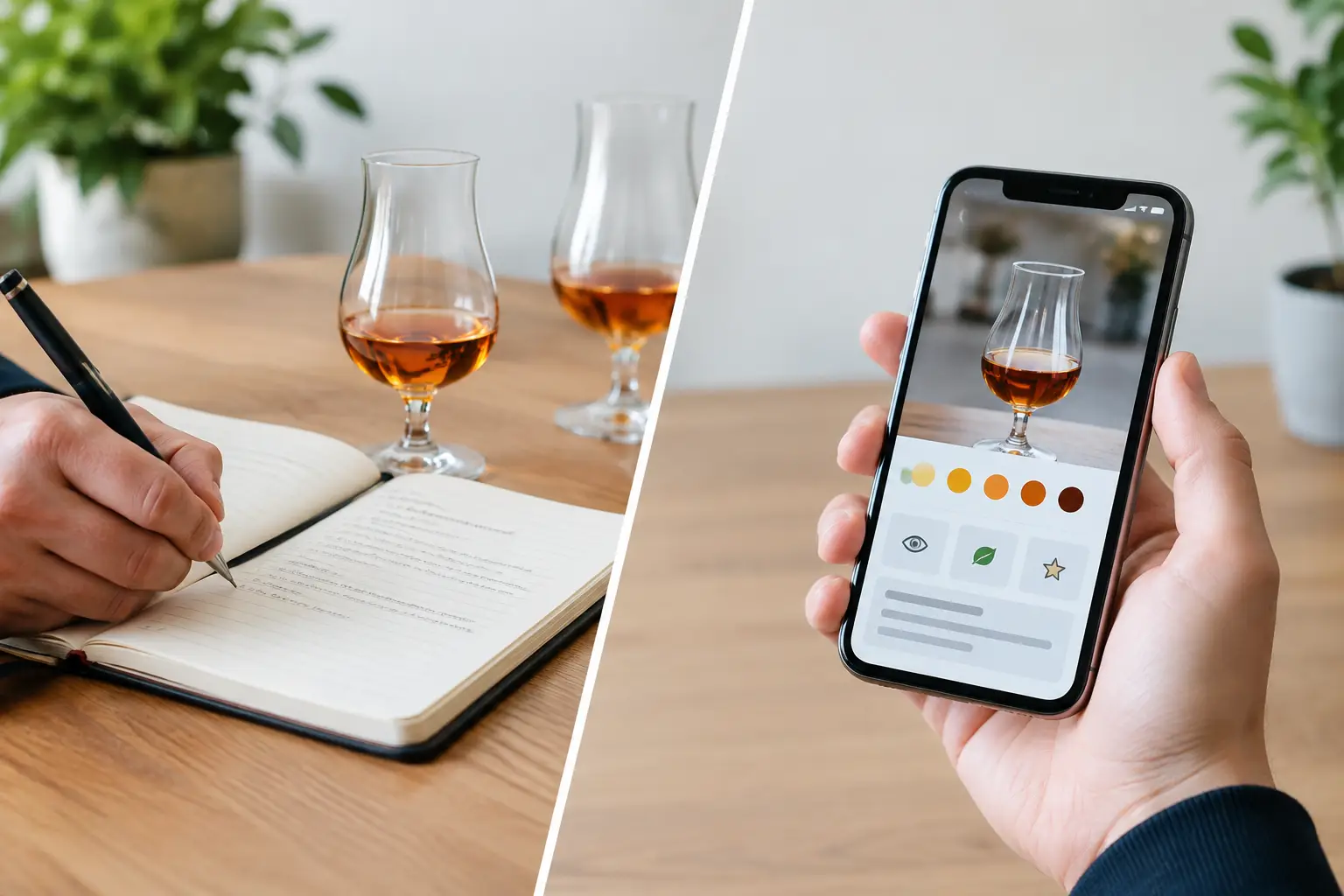
You finish a bottle you genuinely enjoyed, make a mental note to buy it again, then find yourself six months later staring at a shop shelf with no idea what made it memorable. That is the real question behind a tasting journal vs memory app: not whether paper or a screen is better, but which one helps you turn a pleasant glass into useful personal knowledge.
For wine, whisky, beer and spirits drinkers, a record is not about performing expertise. It is a simple way to notice patterns: the bright, dry white you reach for with dinner, the peated whisky you prefer on colder evenings, or the beer style that works best when friends come round. Both formats can work well. Their value depends on how, where and why you taste.
A tasting journal vs memory app at a glance
A tasting journal is a physical notebook or structured paper log where you record what you tasted and what you thought. It is tactile, quiet and deliberately slow. A memory app keeps those details digitally, often alongside bottle information, ratings, searchable notes and comparison tools.
The journal is strongest when tasting itself is the ritual. Sitting down with a bottle, writing a few words and returning to those pages later can make the experience feel more focused. There is no battery, no notification and no pressure to make the note perfect.
A memory app is strongest when you want your records to become useful over time. It can keep your tasting history in one place, make it easier to find a bottle again, and reveal connections that are hard to spot across several notebooks. If you are likely to taste at a restaurant, a friend’s home or while travelling, your mobile phone is usually already with you.
Neither choice makes someone a more serious taster. The better option is the one you will still use after the novelty has worn off.
What a paper tasting journal does well
A journal creates space to slow down. That matters because many tasting memories disappear when the glass is finished before you have had a chance to name what you noticed. Writing by hand can encourage a pause between sips: first the aroma, then the texture, then the flavour that lingers after swallowing.
It also gives you freedom. You can sketch a label, write a food pairing beside the wine, note the weather, or simply record, “better than expected”. For beginners, this lack of structure can feel reassuring. You do not need to know whether something is technically vanilla, oak or baking spice before you write down what comes to mind.
There are limits, though. Paper notes are only useful if you can find them. A notebook may contain thoughtful observations, but locating the one Rioja you loved two years ago can mean flicking through dozens of pages. Consistency can also be difficult. One entry may be detailed, the next just a score and a date, which makes comparison less reliable.
A journal is ideal for someone who enjoys the act of reflection and usually tastes at home. It is less convenient for building a practical reference library across many categories and occasions.
The hidden challenge: blank-page pressure
A blank page can make tasting feel more intimidating than it needs to be. When you are unsure what to write, it is easy to fall back on “nice” or “not for me”, then stop recording altogether.
A simple prompt helps. Start with the occasion and bottle, then add one aroma, one texture or flavour impression, and whether you would choose it again. “Lemon peel, light-bodied, crisp finish, good with grilled fish” is already a valuable note. Better tasting language grows from repeated attention, not from trying to sound like a professional on the first sip.
Where a tasting memory app earns its place
A good app removes some of the friction that prevents people from keeping records. You can save a bottle while it is in front of you, capture a short note before the memory fades, and return to it when you are choosing what to open next. Search is the obvious advantage: filter by style, producer, country, rating or your own descriptors rather than relying on memory alone.
Digital records also suit comparison. Perhaps you discover that you enjoy whiskies with orchard-fruit character more than heavily smoky ones, or that you rate traditional-method sparkling wine highly when it has a creamy texture. An app can help make those preferences visible without reducing them to a single score.
Structure is particularly useful for developing tasters. Guided fields for appearance, aroma, palate and finish offer a calm route through the glass. Instead of wondering what you are meant to notice, you have a few practical places to begin. The aim is not to force every drink into a rigid checklist. It is to give your memory enough detail to be helpful later.
Audio Sommelier takes this approach further through guided audio tastings and a personal Smart Vault, allowing members to save bottles, notes and impressions as they build their own reference point. It is built for trust, not hype: a private tasting record should support your enjoyment, not turn every glass into public content.
What to look for before trusting an app with your notes
Not every memory app is equally useful. The strongest ones make saving a tasting quick, but leave room for your own words. They should help you record the bottle accurately, organise entries clearly and retrieve them without fuss.
Privacy matters too. Your preferences are personal, and a tasting history can reveal habits you may not wish to share. Look for clear account controls, straightforward billing where relevant, and an approach that treats your data with care. A useful digital companion should feel calm and dependable, not designed to distract you with endless feeds or rankings.
The deciding factor is your tasting habit
Choose a journal if you want an analogue ritual, enjoy writing by hand and mainly want to deepen the moment you are already having. It can be especially satisfying for a dedicated weekly tasting or for recording bottles opened on special occasions.
Choose a memory app if you want to recognise preferences across time, often buy different bottles, or need your notes available beyond the kitchen table. It is also the more practical choice if you want to compare a few saved wines, beers or spirits before choosing what to buy next.
Many people benefit from a combination. A notebook can hold longer reflections from a relaxed evening, while an app captures the essential details of everyday bottles. The risk is duplication. If maintaining two systems feels like admin, choose one as your main record and let the other be occasional.
Make either system work with a three-minute routine
The format matters less than the habit. Give yourself three minutes before the glass is empty. Record the producer or bottle name, the category and date, then write what stood out. Focus on a few useful details: aroma, texture, flavour, finish, occasion and whether you would drink it again.
Avoid treating a score as the whole story. A wine rated seven out of ten might be perfect for a Tuesday supper but not compelling enough for a celebration. A whisky you admire may still be one you only want occasionally. Context gives a tasting memory its meaning.
Over time, revisit your entries before a purchase or when planning food. Notice the words that recur. Perhaps “saline”, “silky”, “bright” or “warming” appears more often than you realised. Those patterns are more valuable than memorising formal terminology because they describe your palate, not somebody else’s.
The best record is the one you revisit
A tasting journal offers presence. A memory app offers retrieval, organisation and comparison. Your choice should reflect the kind of support you need after the bottle is gone.
Start small, keep your notes honest and allow your preferences to change. The next time you find a bottle worth remembering, do not rely on a vague promise to yourself. Save one clear impression while it is still fresh, and give your future self a better place to begin.