17 Aug 2026
Tasting Flights for Beginners Made Simple
Try tasting flights for beginners at home with calm, practical steps to compare drinks, notice more, and build confident flavour language from the first sip.
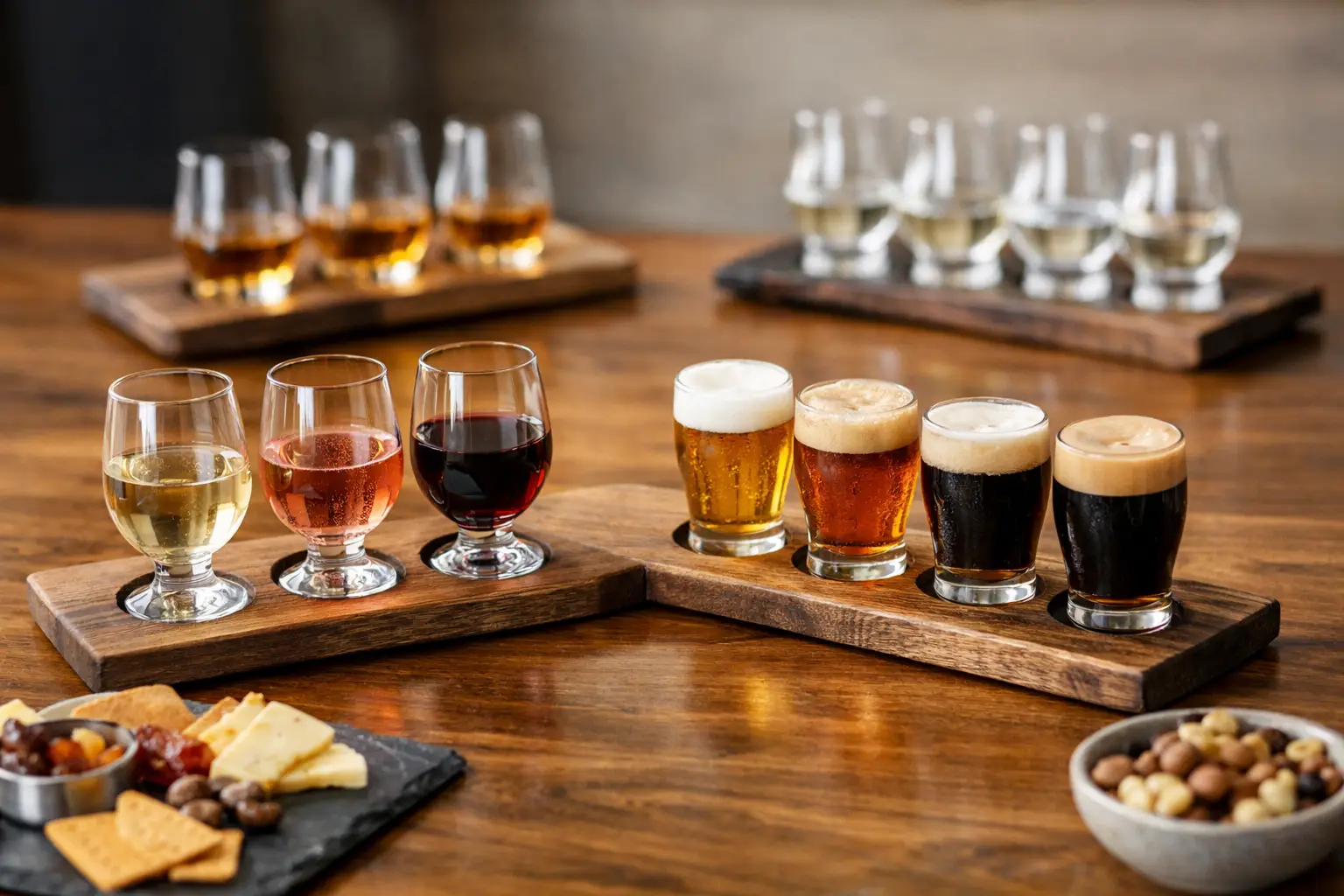
A tasting flight is not a test, and there is no prize for identifying every fruit, spice or hidden note in the glass. Tasting flights for beginners work best when they make one ordinary evening feel more considered: three small pours, a little curiosity, and permission to prefer what you prefer.
The aim is comparison. A single drink can be enjoyable, but it is difficult to know why you enjoy it until you place it beside another. When you taste side by side, differences in aroma, weight, sweetness and finish become clearer without needing specialist knowledge.
What is a tasting flight?
A tasting flight is a small selection of drinks tasted in a deliberate order. It might be three white wines made from different grapes, three whiskies with different cask styles, or three pale ales from different producers. The pours are modest because the focus is attention, not quantity.
For a first flight, keep one variable steady and change one other. Compare three wines of the same grape from different regions, for example, or three beers of a similar style at different strengths. This gives your palate a fair chance to notice what has changed.
A mixed flight of red wine, gin, stout and sparkling wine may sound entertaining, but it rarely teaches a beginner much. The flavours compete rather than reveal themselves. Start with a clear question instead: which is fresher, softer, richer or more aromatic?
How to set up tasting flights for beginners
You do not need matching glassware, a tasting room or a large collection of bottles. Three clean, reasonably similar glasses are enough. If you have only two glasses, compare two drinks first and taste the third afterwards. A simple flight is still a useful flight.
Choose a quiet space with good natural or neutral light. Strong candles, cooking smells and perfume can hide delicate aromas, particularly in wine and sparkling wine. Keep a glass of water nearby, and have plain crackers or bread available if you need to reset your palate. Avoid heavily flavoured snacks until the tasting is finished.
Serve each drink at a sensible temperature. Very cold drinks can seem muted; overly warm alcohol can feel sharp and dominant. You do not need to measure every degree. If a drink feels closed or flat, give it a few minutes in the glass before deciding it has nothing to say.
Pour around 25 to 50 ml of each drink, depending on its strength and the number of samples. With whisky, gin, rum and other spirits, smaller pours are more than enough. You may spit during a focused tasting or simply pace yourself, especially when sampling higher-strength drinks. Tasting is for legal-age adults and should always sit comfortably within your own limits.
Put the flight in a useful order
The usual order is light to full, dry to sweet, and lower alcohol to higher alcohol. This protects the quieter samples from being overwhelmed by richer or sweeter ones.
For wine, begin with sparkling or light white wine, move towards fuller whites or reds, then finish with sweet wine if you have it. For beer, start with a crisp lager or pale ale before a stronger, darker or more bitter style. For whisky, a lighter unpeated pour generally comes before a heavily sherried or smoky one.
There are exceptions. If your question is specifically about peat, sweetness or oak, arrange the flight to make that contrast obvious. The order serves the comparison, not a rulebook.
A calm way to taste each glass
Use the same short sequence for every sample. Repeating it builds confidence and makes your notes easier to compare later.
First, look. Notice the colour, depth and brightness, but do not worry about assigning meaning to every shade. A beer may be hazy, a whisky may be deep gold, and a wine may fade from ruby to garnet at the rim. These are observations, not marks on a scorecard.
Then smell. Give the glass a gentle swirl where appropriate and take two or three short sniffs rather than one deep breath. Ask yourself whether the aroma feels fresh, fruity, floral, savoury, spicy, creamy, smoky, herbal or woody. Broad categories are useful because they are honest. You can become more specific with experience.
Take a small sip and let it move around your mouth before swallowing or spitting. Focus on texture as much as flavour. Is it light or full? Crisp, smooth, creamy, drying, warming, fizzy or oily? Texture is often easier to identify than a precise flavour note, and it gives you valuable language straight away.
Finally, notice the finish. Does the flavour disappear quickly, linger gently, become bitter, turn warming, or leave a clean impression? A long finish is not automatically better. Some drinks are designed to be bright and brief; others are made to unfold slowly.
Use your own references, not borrowed ones
Beginners often hesitate because tasting notes can sound highly specific. You may read that a wine has quince, wet stone and white pepper, then smell only “wine”. That is normal. Professional language is a set of references developed over time, not a requirement for enjoying a glass.
Start with things you already know. A white wine might remind you of lemon peel, green apple sweets or cut grass after rain. A whisky may feel like toasted nuts, Christmas cake, bonfire smoke or vanilla custard. A stout could bring to mind coffee, dark chocolate or brown bread.
Your first impression is worth recording even if it seems plain. “Smells fresh and tastes warmer than expected” is more useful than copying a tasting note that does not match your experience. Over several flights, your descriptions will naturally become more detailed because you have created a personal frame of reference.
Make comparison the centre of the experience
Once you have tasted each sample on its own, return to the first glass. This is where the flight becomes especially revealing. The drink that seemed sweet at first may now feel dry beside another. A subtle spice note may become clear after a softer sample. Your palate learns through contrast.
Ask a few direct questions: Which drink has the brightest aroma? Which feels fullest in the mouth? Which has the driest finish? Which would you choose with food, and which would you enjoy on its own? You do not need to answer every question. One clear difference per glass is enough for a worthwhile session.
If you are tasting with friends, let everyone write a few words before discussing them. It prevents the most confident voice from setting the agenda. Different perceptions are not mistakes. One person may find pear where another finds melon, yet both may be responding to the same soft, ripe fruit character.
Keep notes you will actually revisit
Long tasting notes are rarely necessary. Record the drink, the date, three observations and one verdict. For example: “Citrus aroma, light body, saline finish. Best before dinner.” Or: “Raisin, vanilla, warming. Enjoyable, but too sweet for a second glass.”
The useful part is consistency. When you save notes over time, patterns begin to appear. Perhaps you repeatedly prefer high-acid white wines, softer smoky whiskies, or beers with a dry finish. That is more valuable than knowing whether you correctly named every aroma.
Audio Sommelier can support this process with guided sensory prompts and a personal tasting memory, helping you build flights from drinks you have already saved. The practical benefit is simple: less reliance on memory, and a clearer picture of what you genuinely enjoy.
Common first-flight mistakes
The most common mistake is choosing too many samples. Three is ideal for a first session; four can work if the drinks are light and clearly related. Beyond that, attention drops and the differences become harder to hold in mind.
Another is trying to taste after a heavily seasoned meal, or while drinking something strongly flavoured such as coffee. Give your palate a little space. It also helps to avoid rushing. Ten thoughtful minutes with three small pours can teach you more than an evening spent opening bottles without comparison.
Do not feel obliged to finish every sample. A tasting flight is an exercise in noticing, not an instruction to consume more. Pouring less and paying closer attention is often the better choice.
Your next flight does not need to be ambitious. Choose three related bottles you already have, set aside a quiet half-hour, and trust a few honest observations. The language will come, but the pleasure of noticing can begin with the very first comparison.