6 Oct 2026
Sensory Technology for Better Home Tastings
Sensory technology turns a familiar bottle into a guided tasting practice, helping you notice aroma, texture, flavour and finish with confidence at home.
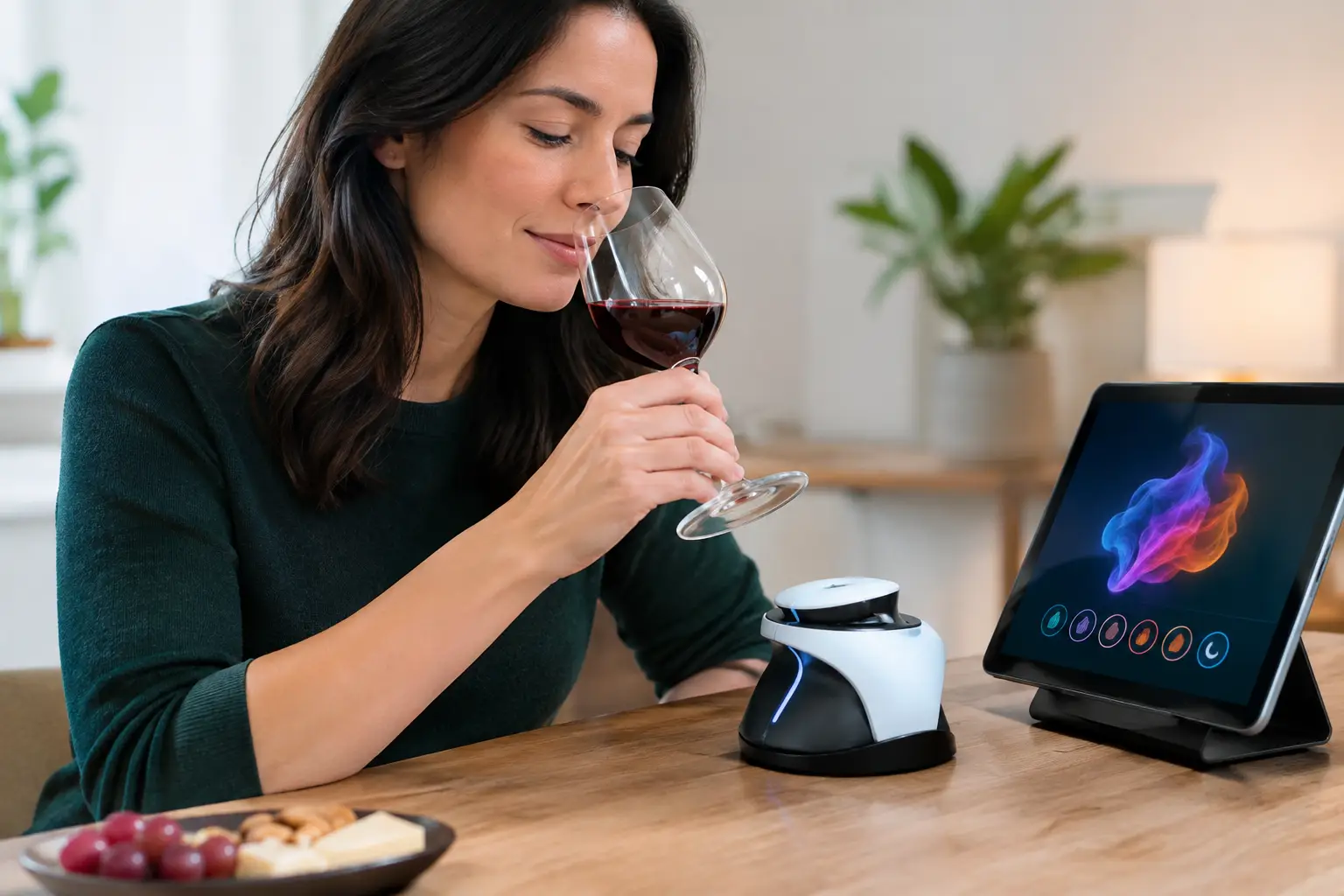
A bottle can be perfectly good and still feel difficult to describe. You may know that you enjoy it, yet struggle to say whether the pleasure comes from ripe fruit, soft texture, toasted spice or a long, dry finish. Sensory technology gives that moment some structure. It helps turn an instinctive reaction into a tasting experience you can follow, name and remember.
For home drinkers, this is not about replacing the ritual of pouring a glass with screens and jargon. Used well, it is a calm companion: a prompt at the right time, a useful question, and a place to keep the details that would otherwise disappear by the next bottle.
What sensory technology means in a tasting setting
Sensory technology is any digital tool that helps a person notice, interpret or record what they experience through the senses. In drinks tasting, it can include guided audio, interactive prompts, digital tasting notes, flavour references, comparison tools and AI-powered questions.
The distinction matters. A barcode scanner that identifies a bottle may be convenient, but it does not necessarily improve your tasting. Technology becomes genuinely useful when it helps you pay closer attention to aroma, flavour, texture and finish - and gives you language that feels like your own.
That is particularly valuable when tasting at home. There is no sommelier at the table and no need to perform expertise for anyone else. You can pause, revisit a prompt, disagree with a suggested note, or simply decide that a whisky feels warming and nutty rather than trying to find the most impressive description.
Why guidance changes what you notice
Most people taste in a rush. A first sip is often followed by a quick judgement: like it, do not like it, would buy it again. That response is valid, but it leaves much of the experience unexplored.
Guided tasting slows the sequence down. First, you look at the drink. Then you smell before sipping, allowing the aromas to settle. You take a small sip and notice where the flavour lands: does it feel bright at the front of the palate, rounded through the middle, or dry at the end? These are simple actions, but they make a surprising difference.
Audio works especially well here because it lets the glass remain the focus. Rather than reading a long list of prescribed tasting notes, you can listen, smell and respond in your own time. A measured voice can ask whether a red wine suggests blackcurrant, plum or dried herbs without insisting that one answer is correct. It encourages recognition, not obedience.
This approach is useful for beginners because it removes the fear of getting it wrong. It is also useful for enthusiasts because better questions reveal more detail. A person who has tasted dozens of bottles may still benefit from being asked to compare acidity with sweetness, or to separate the flavour of oak from the feeling of tannin.
Aroma, flavour and texture are different jobs
One reason tasting can feel confusing is that several sensations arrive at once. Aroma is what you smell before and after sipping. Flavour combines taste and retronasal aroma, which is why a beer can seem citrusy without containing citrus. Texture concerns weight and feel: creamy, lean, silky, oily, fizzy, grippy or warming.
A good sensory prompt keeps these ideas separate. If you are tasting a sparkling wine, for example, first notice whether the aroma is fresh apple, lemon peel, pastry or something else entirely. On the palate, ask whether the mousse feels delicate or energetic. Then consider the finish: does it fade cleanly, or does it leave a savoury, biscuity note?
The point is not to fill every category. One clear observation is more useful than ten borrowed descriptors.
From a one-off glass to a useful tasting memory
The strongest value of sensory technology is not only what it does during a tasting. It is what it allows you to remember afterwards.
Memory is unreliable, especially when several bottles are enjoyed across weeks or months. You might remember loving a particular Rioja at a dinner party, but not whether it was the blackberry fruit, cedar-like oak or supple texture that appealed. You may buy another bottle hoping to repeat the experience and find that it is not quite what you had in mind.
Saving a few personal notes changes this. Start with the bottle, the occasion and a simple reaction. Then add two or three observations: perhaps “dark cherry, vanilla, smooth tannins” or “bright lemon, fine bubbles, very dry”. Over time, patterns become visible. You may learn that you consistently enjoy high-acid whites, smoky whiskies with a softer finish, or richer stouts when the weather turns colder.
A personal tasting library is more useful than a generic score because it is built around your preferences. Scores flatten experience. A 90-point wine may not suit someone who dislikes pronounced oak, while an unassuming bottle can become a favourite because it feels fresh, balanced and easy to share.
This is where a Smart Vault and comparative Flights can earn their place. Instead of collecting disconnected notes, you can place two or three saved drinks side by side and ask a practical question: which Chardonnay felt more restrained? Which bourbon had the longer finish? Which lager worked best with a salty snack? Audio Sommelier is designed around this kind of gradual, personal learning, using the bottles already in your home.
A practical way to use sensory technology at home
The best tasting tools reduce friction. You should not need special glassware, a tasting qualification or an hour of free time. Begin with a drink you already know reasonably well, because familiarity gives you a useful reference point.
Pour a modest measure and remove obvious distractions for ten minutes. Avoid strongly scented candles, cooking smells and chewing gum if possible. A quiet setting helps, but it does not need to feel formal.
Start with three stages. First, take in the appearance and aroma without trying to identify everything. Next, taste slowly and focus on flavour plus texture. Finally, wait for the finish and notice what remains. A prompt-led audio session can pace these stages without making them feel like homework.
Then save a short note while the experience is fresh. It can be as brief as “ripe pear, soft and rounded, gentle spice at the end”. If you cannot find the exact word, write the comparison that comes naturally: “like toasted almonds” or “fresh after rain”. Your vocabulary grows through repetition, not by memorising a flavour wheel.
The following time you open something similar, compare rather than start from zero. Does this Sauvignon Blanc feel sharper or more tropical? Is this blended Scotch sweeter than the last one? Comparison is where tasting confidence starts to become judgment.
Where technology helps, and where it should step back
Not every tasting needs an app, an AI question or a guided session. Sometimes a drink is simply part of a relaxed meal, a celebration or a conversation. Trying to analyse every sip can make pleasure feel like a task.
There are practical limits, too. AI can suggest useful routes into a flavour profile, but it cannot taste your glass. It does not know whether the bottle has been open for three days, whether you have paired it with blue cheese, or whether a particular aroma reminds you of your grandmother’s kitchen. Your experience remains the authority.
Trust also matters. A service handling tasting histories and subscription details should be clear about what it stores, why it stores it and how billing works. For an adult-focused drinks education platform, privacy, lawful access and transparent pricing are not decorative assurances. They are part of the experience.
The right balance is simple: let technology direct your attention, not dictate your opinion. Use it to build a record, ask better questions and make better choices from the bottles you already enjoy.
Next time you pour a familiar favourite, give it an extra few minutes. Notice one aroma, one texture and one detail that stays after the sip. That small act of attention is often enough to make the glass feel new again.