28 Jul 2026
10 Questions to Ask When Tasting Wine Well
Use these questions to ask when tasting wine to notice aroma, texture and finish, build better tasting notes, and enjoy each bottle with confidence today.
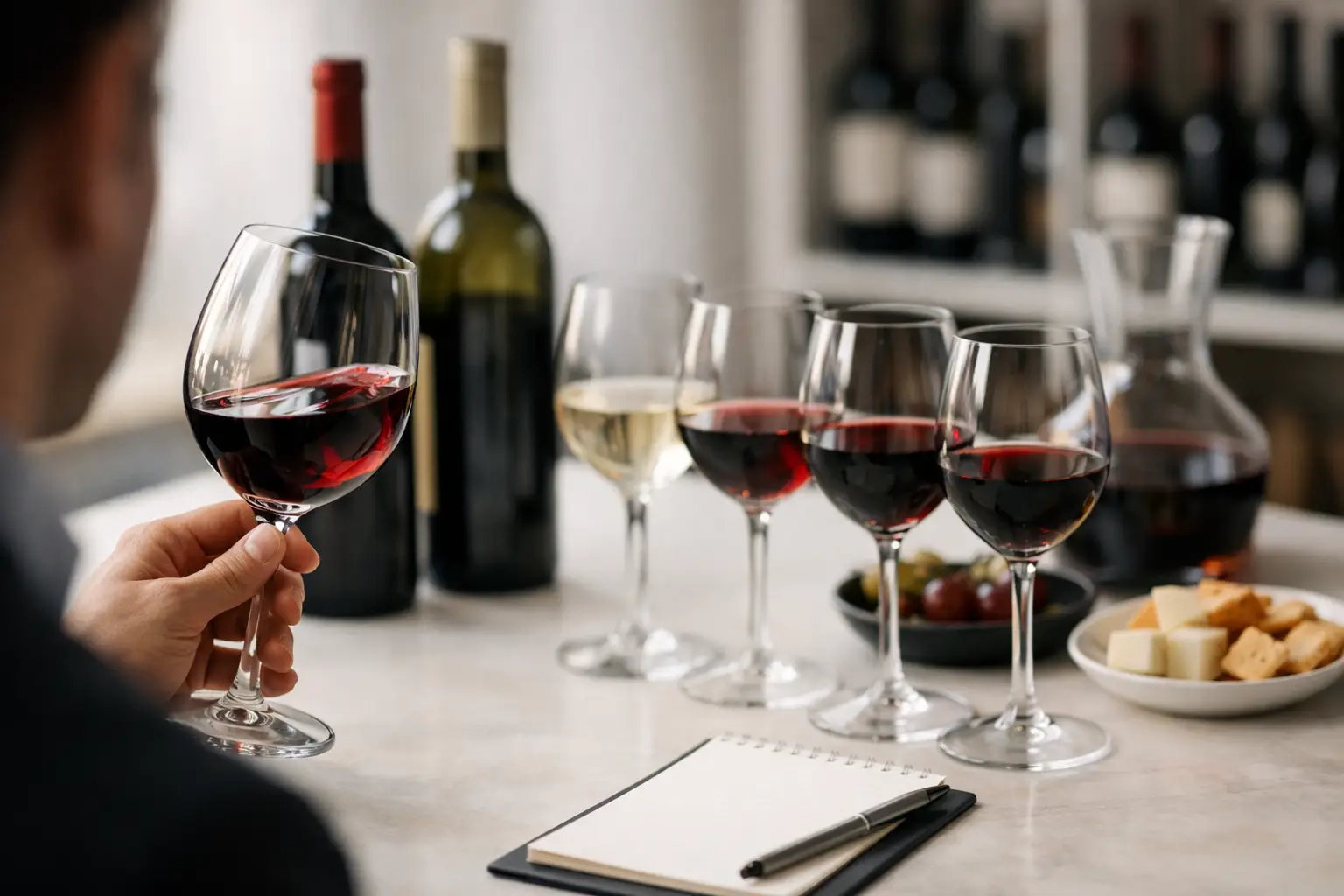
A bottle can be perfectly pleasant and still feel difficult to describe. You know you like it, but when someone asks why, the answer can shrink to “nice” or “fruity”. The right questions to ask when tasting wine give you something more useful: a calm sequence for noticing what is already in your glass, without needing to perform expertise.
You do not need to find every aroma or use specialist language. Tasting is not a test with one correct answer. It is a way of paying attention, then building a reliable memory of what you enjoyed and what you would choose differently next time.
Start with the glass, not the label
Before you smell or sip, look at the wine. Hold the glass against a pale background and ask: what colour is it, and how intense is that colour? A white wine might be pale lemon, golden or deep amber. A red may sit anywhere from translucent ruby to inky purple. These observations will not identify the wine on their own, but they create context.
Then ask: does the colour suggest youth, age or a particular style? Very pale colour can occur in a delicate wine, while a deeper tone may point towards riper fruit, extended skin contact, oak ageing or bottle development. There are exceptions, so treat this as a clue rather than a verdict.
If you gently tilt the glass and watch the wine run down the side, you may notice slow-moving streaks, often called legs. Ask: what do I actually see, and what might be influencing it? They can be linked with alcohol, sugar and viscosity, but they do not tell you whether a wine is good. This is a useful early reminder: observation comes before judgement.
Questions to ask when tasting wine through aroma
Smell does much of the work in wine tasting. Take one quiet sniff before swirling, then swirl gently and smell again. The first question is simple: is the aroma clean and inviting? Most wines should smell fresh and recognisable in some way, even if you cannot name every note.
Next, ask: what family of aromas do I notice first? Start broad. Is it fruit-led, floral, herbal, spicy, earthy, creamy or savoury? Broad categories are easier to trust than forcing yourself to identify a precise fruit straight away. “Ripe orchard fruit” is a strong note. You do not need to decide whether it is exactly yellow apple, quince or pear unless that distinction genuinely appears clear to you.
Then consider where the aromas may come from. Do they feel like fresh grape character, winemaking influence or bottle age? Citrus, berry, stone fruit and flowers often point towards the grape and growing season. Vanilla, toast, clove or smoke can suggest oak or fermentation choices. Leather, dried fruit, mushroom and nutty notes may develop as wine ages.
Finally, ask: are the aromas delicate, moderate or pronounced? Intensity is not a quality score. A subtle Muscadet can be beautifully made; a highly aromatic Gewürztraminer can be equally compelling. The question simply helps you remember the wine’s style.
What changes when you take the first sip?
Take a small sip and let it move across your mouth before swallowing. Ask: does the wine feel dry, off-dry or sweet? Dry means there is little or no noticeable sugar, not that the wine lacks fruit. A dry wine can smell richly of peach, blackberry or tropical fruit and still finish without sweetness.
Now ask: how fresh is it? Acidity is the mouth-watering sensation that makes you want another sip. Think of biting into a lemon or a crisp apple. High acidity can make a wine feel lively and refreshing, while lower acidity can make it feel rounder and softer. Neither is automatically better. On a warm evening, a sharp, zesty white may be exactly right; with a creamy dish, a softer style may feel more balanced.
For red wines, ask: can I feel tannin, and what is its texture? Tannin creates a drying or grippy sensation on the gums and tongue, similar to strong black tea. It may feel powdery, silky, firm or slightly coarse. Tannin is not bitterness, although the two can appear together. It often works particularly well with food because protein can soften its grip.
Also notice alcohol. Ask: does the warmth feel integrated or does it stand apart? A fuller-bodied wine may carry more alcohol and still feel balanced if fruit, acidity and texture support it. If warmth dominates the finish, you may prefer serving the wine a little cooler or pairing it with food.
Describe texture before chasing flavour
Many people jump straight to flavour notes and miss the physical shape of the wine. Asking about texture makes your descriptions more precise quickly.
Try this: is the wine light, medium or full-bodied? Body is the weight of the wine in your mouth. Skimmed milk, whole milk and single cream offer a useful everyday comparison. A light-bodied wine can be refreshing and detailed; a full-bodied one can feel generous and warming.
Then ask: is the texture crisp, smooth, creamy, grippy, juicy or oily? These words are not decorative. They explain why two wines with similar fruit flavours can feel completely different. A Chardonnay may show lemon and peach in a taut, mineral style or in a creamy, oak-influenced style. The flavour family overlaps, but the experience does not.
If you are unsure, compare rather than analyse in isolation. Pour two wines of a similar colour but different styles, or revisit a saved bottle beside a new one. Contrast makes acidity, tannin, body and oak far easier to spot.
Ask what the wine tastes like after you swallow
The finish is the impression that remains once the wine has gone. Ask: how long do the flavours last? A short finish may fade quickly. A longer finish keeps changing, perhaps moving from fresh fruit to spice, savoury notes or a gentle bitterness. Length often indicates concentration, but it is still only one part of pleasure.
Ask next: what is the final flavour or sensation? Perhaps it is citrus peel, blackcurrant, salt, cocoa, dried herbs or warming spice. Perhaps the wine finishes clean and simple. Write what you notice, not what you think a serious taster ought to notice.
One more question is especially helpful: does the finish make me want another sip? This captures balance in a human way. A wine with bright acidity, ripe fruit and moderate alcohol may feel harmonious. Another may be deliberately bold, rich or tannic, and become more enjoyable with a meal. Your response matters because your own preference is the point of keeping notes.
Put the wine in context
A bottle rarely tastes exactly the same in every setting. Before deciding whether you like it, ask: what is influencing my experience right now? Temperature matters. Whites served too cold can seem muted; reds served too warm can feel heavy and alcoholic. Glass shape, the food on the table, the time of day and even strong perfume nearby can shift your perception.
Ask: would I enjoy this differently with food? High-acid whites often come alive with salty or rich dishes. Tannic reds can feel smoother alongside roast meat, lentils or mature cheese. A sweet wine may need a dessert that is no sweeter than the wine itself, or it can suddenly taste thin.
It is also useful to ask: is this a wine for slow attention, easy drinking or a particular occasion? Not every bottle needs to be complex. A simple, crisp wine for a weekday supper has a different job from a structured bottle opened for a celebration. Judging each wine by its intended moment leads to fairer, more enjoyable tasting.
Turn answers into notes you can use
You do not need a formal tasting sheet. A helpful note can be three short lines: what you smelled, how the wine felt, and whether you would drink it again. For example: “Ripe cherry and dried herbs. Medium body, fresh acidity and soft tannin. Best with food; would buy for a relaxed dinner.”
Over time, patterns become visible. You may find that you consistently enjoy bright acidity, restrained oak or reds with softer tannins. You may discover that a grape you thought you disliked simply needed a different serving temperature or food pairing. Saving notes gives each glass a purpose beyond the moment.
Audio Sommelier can support that habit with guided prompts and a personal tasting record, but the essential skill remains simple: pause, ask, notice and save what feels true to your palate.
The next time you open a bottle, choose only three questions rather than trying to notice everything. A little focused attention is enough to turn an ordinary pour into a memory worth returning to.