1 Nov 2026
How to Cleanse Your Tasting Palate Properly
Learn how to cleanse tasting palate between wines, whiskies and beers with simple, practical resets that protect aroma, texture and finish with clarity.
A bright, citrus-led white can make the red wine that follows seem muted. A richly peated whisky can linger long enough to turn the next dram into a question mark. That is not a failure of your palate. It is simply sensory carry-over - and knowing how to cleanse your tasting palate gives each bottle a fairer chance to speak for itself.
A palate cleanser is not meant to erase every trace of flavour. It is a gentle reset between samples, helping you notice the aroma, texture and finish of what comes next with more clarity. The best approach is usually simple, quiet and consistent.
Why your palate needs a reset
Tasting is not only about the tongue. Aroma travels from your mouth to your nose as you breathe out, while texture, temperature, acidity, sweetness, bitterness and alcohol all shape the impression of a drink. Strong flavours can remain on the mouth and in the nose, influencing the next sip before it has had a proper chance.
This effect is especially noticeable when you move from sweet to dry, smoky to delicate, heavily oaked to fresh, or high-strength spirits to lower-alcohol drinks. A sweet liqueur can make a dry sparkling wine seem sharply austere. A pungent blue cheese can overwhelm a subtle lager. Even a strongly scented hand cream may distract from a glass of Pinot Noir.
A reset is useful, but it has limits. You cannot fully neutralise your senses after a powerful sample in a few seconds. Good tasting order still matters. Begin with lighter, drier and less aromatic drinks, then progress towards richer, sweeter, more tannic, smoky or higher-strength choices.
How to cleanse a tasting palate between sips
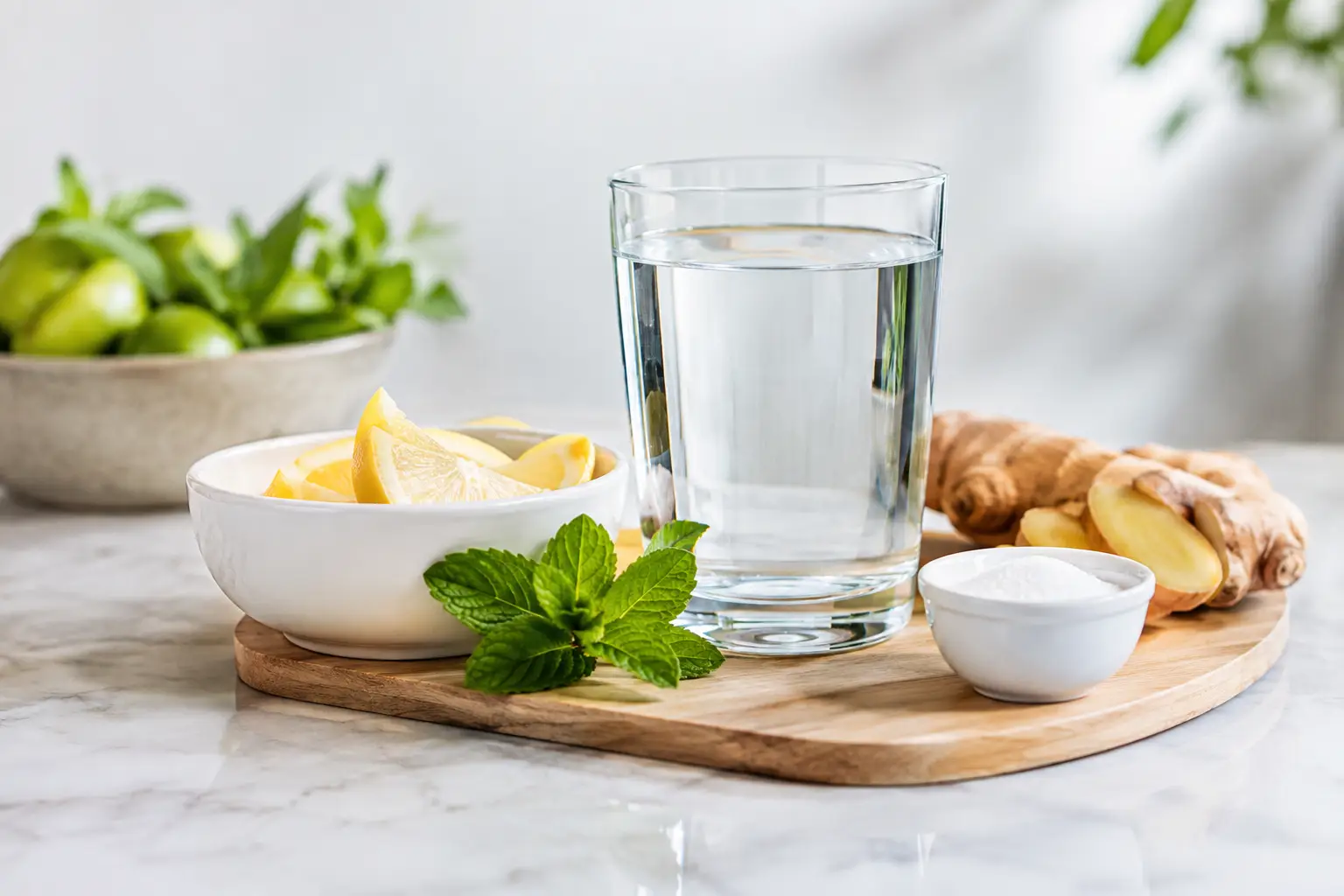
Start with still water at room temperature or lightly chilled. Take a small sip, move it gently around your mouth, swallow, and wait a moment before returning to the glass. Water hydrates the mouth and clears loose residue without adding another pronounced flavour. Sparkling water can feel refreshing, but its carbon dioxide and acidity may sharpen the mouth temporarily, so still water is the more reliable choice for close comparison.
When water alone is not enough, use a small bite of a plain, unsalted cracker or neutral bread. Choose something dry, mild and free from herbs, seeds, sugar or strong fats. The goal is not to fill up or mask flavour. It is to remove persistent residue, particularly after creamy, oily or tannic samples.
Then pause. This small step is often more effective than reaching for another food. Give your nose a few relaxed breaths away from the glass, preferably in fresh, unscented air. Your sensory attention needs a moment to settle, especially after whisky, aromatic beer or a heavily perfumed wine.
For a simple tasting flight, the rhythm can be: sip water, take a small neutral bite only if needed, wait 30 to 60 seconds, then smell the next drink before tasting it. Smelling first helps you notice whether the previous sample is still dominating your perception.
Choose the reset for the drink in front of you
Different drinks leave different kinds of impressions, so the most helpful palate cleanser depends on what you are comparing.
Wine and sparkling wine
Still water is the default. With dry wines, a plain cracker can help after a particularly tannic red or buttery, oak-aged white. If you are tasting sparkling wine, avoid repeatedly switching to fizzy water. It can make it harder to judge the wine's own mousse and acidity.
Bread is useful in moderation, but it is not a magic sponge. Too much can leave a starchy coating and dull your attention. A small piece is enough.
Whisky and other spirits
High-proof spirits can warm and dry the mouth, making the next sample harder to assess. Take a little still water and allow more time between pours. If the tasting permits, a few drops of water in the whisky itself may also reduce alcoholic intensity and reveal aroma - but that is dilution, not palate cleansing.
Avoid strong mints, coffee and chocolate between drams. They may be enjoyable alongside a spirit in another setting, but they introduce flavours of their own and can disguise subtle differences in grain, fruit, wood and smoke.
Beer
Beer presents a particular challenge because bitterness, carbonation and hop aroma can persist. Still water and a plain cracker work well, followed by a brief pause. If you are comparing several beers, taste lower-bitterness styles before highly hopped pale ales and IPAs, and leave dark, strong or sour beers until later where possible.
Sweet wines, liqueurs and dessert pours
Sweetness is one of the most difficult sensations to reset. Water helps, but time matters more. A neutral cracker may reduce stickiness, while a small sip of water can refresh the mouth. Do not move straight from a sweet dessert wine to a delicate dry white and expect a balanced comparison. Either taste the dry wine first or allow a longer break.
What not to use as a palate cleanser
Some familiar suggestions are less helpful than they sound. Coffee beans are often offered between fragrances, but coffee has a powerful aroma and flavour of its own. It is not a neutral reset for wine, beer or spirits.
Lemon, pickles and sharp fruit may feel cleansing because of their acidity, yet they can alter your perception of sweetness and acidity in the next drink. Cheese, cured meat, olives and chocolate are excellent companions when you are relaxing with a glass, but they are not suitable for a focused side-by-side tasting.
Mint gum, mouthwash and toothpaste are even more disruptive. Their cooling compounds can make alcohol, bitterness and acidity feel different, sometimes for several minutes. If you have just brushed your teeth, it is worth waiting before beginning a tasting.
Prepare your palate before the first pour
A clean tasting palate starts before the glass is poured. Avoid very spicy, garlicky, smoky or sweet food for at least an hour beforehand if you want to pay close attention to subtle bottles. You do not need to arrive hungry - in fact, tasting alcohol on an empty stomach is unwise - but choose a light, neutral meal if possible.
Fragrance matters too. Skip perfume, scented lip balm and strongly fragranced candles near the tasting area. Aroma is a major part of flavour, and a room filled with competing scent makes tasting needlessly difficult.
Serve drinks at sensible temperatures. A wine that is too cold can seem closed and muted; a spirit that is too warm can seem dominated by alcohol. No palate cleanser can compensate fully for a poorly served sample.
Build a tasting order that needs less cleansing
The easiest way to protect your palate is to avoid overwhelming it in the first place. Arrange a flight from light to rich, dry to sweet, and lower strength to higher strength. With wine, that might mean sparkling wine, fresh white, fuller white, light red, then fuller red. With whisky, a gentle unpeated style usually comes before sherried, heavily oaked or smoky expressions.
There are exceptions. A comparative flight may deliberately place two contrasting bottles together because the contrast is the lesson. In that case, slow down, use water, and make a brief note after each sample before moving on. Capturing your first impression is more useful than trying to recover it later.
Audio Sommelier is built around this kind of calm, guided attention: notice what is present, use clear language, and save the detail while it is still fresh. You do not need expert vocabulary to recognise that one finish feels drying, another creamy, and another bright with citrus.
Trust your own sensory signals
If every drink begins to taste similar, or the alcohol starts to feel more prominent than the flavour, your palate is asking for a longer break. Stop, drink water, have something neutral to eat, and return another time if needed. Tasting well is not a test of endurance.
A good palate cleanse creates space rather than forcing a result. Give each sip clean water, a quiet moment and your full attention, and familiar bottles can begin to reveal far more than you expected.