24 Oct 2026
Best Drinks Comparison Flights for Better Tasting
Learn how to build the best drinks comparison flights at home, with sensible pours and clear sensory prompts for more confident, memorable tasting today.
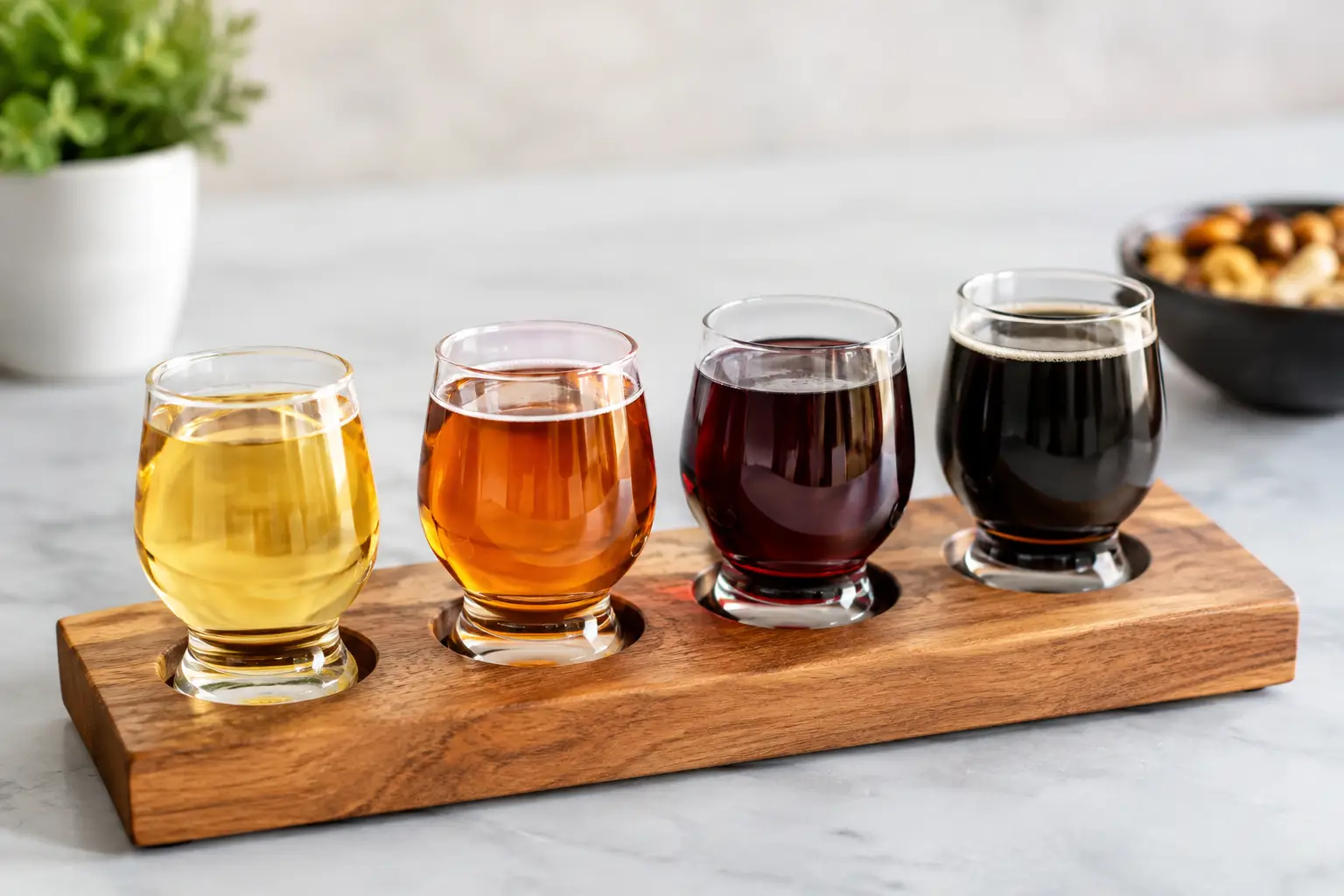
A good comparison flight can change the way a familiar bottle tastes. Place two whiskies side by side, for example, and the softer fruit in one or the dry smoke in the other becomes much easier to notice. The best drinks comparison flights do not require rare bottles, formal training or a perfectly stocked cabinet. They simply give your attention a useful direction.
For a relaxed evening at home, a flight is one of the most practical ways to build tasting confidence. You are not trying to identify every flavour with perfect precision. You are learning to spot differences, express a preference and remember why one drink suited you more than another.
What makes a drinks comparison flight worthwhile?
A flight is a small, intentional group of drinks tasted in sequence. The point is comparison: each pour gives context to the next. A single glass might seem simply pleasant, sharp or rich. With a second or third drink alongside it, you can start to describe what creates that impression - perhaps brighter acidity, a creamier texture, gentler oak or a longer, drier finish.
This is why flights work so well for beginners and developing enthusiasts. They remove the pressure to get an answer “right”. Instead of asking, “What am I meant to taste?”, ask, “Which is more floral?”, “Which feels fuller?”, or “Which finish stays with me longer?” Those are useful questions because the glasses in front of you provide the evidence.
The most effective flights have a clear comparison point. Three unrelated bottles may be enjoyable, but they can make it difficult to notice what has changed. A small theme gives the tasting a purpose without making it feel academic.
How to choose the best drinks comparison flights
Start with bottles you already own. The best comparison is rarely the most expensive one. It is the one that lets you isolate one or two meaningful differences.
Compare one variable at a time
For wine, try three Sauvignon Blancs from different regions, or compare an unoaked Chardonnay with an oaked Chardonnay. The grape stays relatively familiar while climate or winemaking becomes easier to sense. You may find one has citrus and cut-grass freshness, while another shows riper stone fruit, a rounder palate or a faint buttery note.
For whisky, compare two or three expressions by cask style, region or peat level. A bourbon-cask single malt beside a sherry-cask single malt can reveal how dried fruit, spice and richness develop. A lightly peated whisky alongside a more intensely smoky one helps you distinguish smoke from sweetness, saltiness and wood influence.
Beer flights can focus on style or strength. Put a pilsner, a pale ale and an IPA in order to notice the shift from crisp malt to greater hop aroma and bitterness. Alternatively, taste two stouts with different levels of roast, sweetness or alcohol. Keep the theme narrow enough that your palate has something clear to follow.
With gin, rum, liqueurs and other spirits, compare base ingredients or production styles. A classic London dry gin and a more contemporary botanical gin can show how citrus, juniper, spice and floral notes sit differently. Two rums, one lighter and one more oak-led, can highlight body, caramel character and length.
Keep the flight small
Three drinks is usually the sweet spot. Two creates a clean, direct contrast; three gives enough range to identify a pattern. Four can work when the pours are very small and the theme is focused. Beyond that, detail often becomes harder to retain, especially with higher-strength spirits.
A sensible home pour is around 50-75 ml for wine and beer, and 10-15 ml for whisky or other spirits. You do not need to finish every glass. Spitting is entirely acceptable if you want to stay focused, and water should always be part of the table.
Taste in a logical order
Begin with the lightest, driest or least intense drink, then move towards more aromatic, sweeter, oakier or smokier pours. This protects the quieter flavours. A heavily peated whisky can make a delicate fruit-forward whisky seem almost invisible afterwards; a sweet liqueur can flatten the freshness of a dry sparkling wine.
If the order is not obvious, smell each drink first. The least forceful aroma is often the best place to begin. For wine, a useful default is sparkling before still, white before rosé, rosé before red, and dry before sweet. Rules are not the point, though. Your flight should serve the comparison you want to make.
Set up a calm, useful tasting space
The setting does not need to be elaborate. Choose clean glasses, a quiet table and neutral lighting if possible. Strong candles, scented diffusers, cooking aromas and heavily perfumed hand cream can all compete with what is in the glass.
Label the pours clearly, particularly if you are tasting with friends. A simple A, B and C system can be helpful if you want to taste blind, but do not feel obliged to turn the evening into a test. Knowing the bottle can support learning, especially when you are connecting a flavour to a grape variety, cask type or beer style.
Avoid strongly flavoured snacks while you are actively comparing. Plain bread or neutral crackers can be useful between samples, but water and a short pause often do more. If you are serving food, taste first and eat afterwards. The flight deserves ten unhurried minutes before dinner takes over.
Temperature matters, too. Over-chilled wine and beer can hide aroma, while a spirit served too warm may seem dominated by alcohol. Let a chilled white wine sit briefly in the glass before judging it. For whisky, take a small initial sip neat, then add a few drops of water only if it helps the aromas open. Record what changes rather than assuming water is always required.
Use a simple sensory sequence
Professional language can be useful, but it is not a requirement. Start with your own words. “Fresh apple”, “wet stone”, “toasted nuts”, “soft”, “warming” and “short finish” are all clear observations. You can refine vocabulary later; the first task is noticing.
For each glass, move through four questions. What do you smell? How does it feel in the mouth? What flavours appear after the first sip? What remains once you have swallowed or spat? Give yourself a moment before moving on. Finish is often where the most revealing difference appears.
Then compare directly. Is B sweeter than A, or simply fruitier? Does C feel heavier because of alcohol, tannin, carbonation or oak? Does the aroma promise one thing while the palate delivers another? These comparisons are more valuable than a long list of disconnected tasting notes.
If you are hosting, invite each person to share an observation before naming the bottle or reading any label notes. This prevents the loudest voice at the table from deciding what everyone “should” taste. A good flight leaves room for different perceptions, while still helping people become more precise.
Make your preferences useful next time
The real benefit of a flight arrives after the last sip. Write down one or two details you want to retain: the drink you preferred, the occasion it would suit, and the feature that won you over. “Best with roast lamb”, “too sweet for me”, “loved the peppery finish” or “buy again for a relaxed Friday” are all valuable notes.
Over time, these small records become more reliable than trying to remember labels alone. You may discover that you do not dislike Chardonnay, but prefer the fresher, less oak-led examples. You may learn that a smoky whisky appeals when it has enough fruit beneath the peat, or that a lower-bitterness pale ale is your usual choice.
Audio Sommelier can support this process by helping you save bottles, capture tasting impressions and build future flights from your own tasting history. The aim is practical: less second-guessing at the shelf, and better language for the drinks already in your home.
Common mistakes that make comparison harder
The most common problem is choosing bottles that are too far apart. A sweet fortified wine, a delicate lager and a high-proof rye whisky may each be interesting, but they are unlikely to teach you much in one sitting. Save that kind of mixed selection for a social tasting, and build a tighter flight when learning is the priority.
Another mistake is rushing. Aroma changes in the glass, especially as wine warms slightly or a spirit has time to breathe. Return to the first sample after tasting the last. What seemed simple at the start may now appear bright, creamy, bitter or surprisingly complex.
Finally, do not mistake preference for quality. You may recognise that a drink is carefully made and still prefer another style. Your palate is not a scorecard. It is a record of what you notice and enjoy, shaped by context, food, mood and experience.
The next time you open two bottles, resist the urge to treat one as a backup. Pour a modest measure of each, give them a clear order, and let the contrast do the teaching. A better tasting vocabulary often begins with nothing more complicated than two glasses and a little more attention.