31 Aug 2026
A Practical Flavour Memory Guide for Drinkers
This flavour memory guide for drinkers helps you notice, name and save what you enjoy, so every bottle teaches you something useful at home over time.
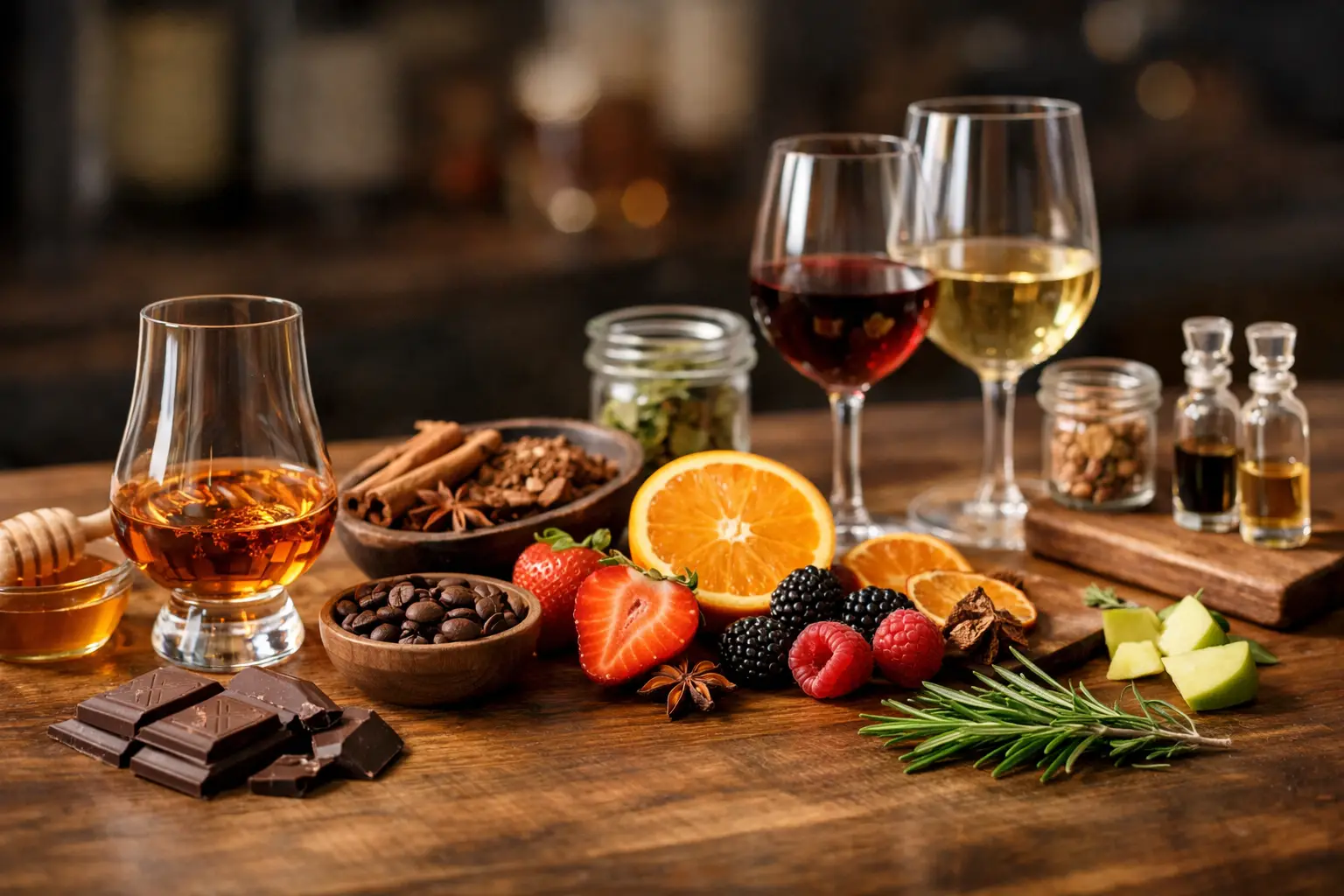
You finish a glass of something you genuinely enjoyed, make a mental note to buy it again, then find yourself in a shop weeks later unable to remember why. Was it the ripe cherry fruit, the dry finish, the creamy texture, or simply the occasion? A flavour memory guide for drinkers turns that vague positive feeling into a useful record you can return to.
This is not about learning a dictionary of impressive tasting terms. It is about giving your own palate a little structure. Once you can recognise a few repeatable details, choosing a bottle becomes less of a gamble and more of a conversation with what you already know you like.
Why flavour memory fades so quickly
Taste is closely tied to context. Music, food, company, temperature and even the shape of the glass can alter what you notice. A whisky enjoyed slowly after dinner may feel warming and rich; a small pour tasted in a rushed, noisy setting can seem sharper or flatter. Your memory may retain the pleasure without holding on to the details that created it.
There is also a simple sensory reason. Flavour is not one thing. It is the combined impression of aroma, sweetness, acidity, bitterness, alcohol, texture and finish. If you only ask, “Did I like it?”, the answer is useful but limited. If you capture two or three reasons, you create a pattern.
That pattern matters more than scoring bottles out of ten. You may discover that you repeatedly enjoy wines with bright acidity, beers with citrus aroma but restrained bitterness, or whiskies with a soft, orchard-fruit character. Equally, you may learn that a style admired by friends is not for you. Both are valuable findings.
A flavour memory guide for drinkers: start with four anchors
You do not need to write a long review after every glass. Begin with four anchors: aroma, flavour, feel and finish. They are broad enough for beginners and useful enough to develop as your experience grows.
1. Aroma: what reaches you before the sip
Give the drink a gentle swirl if appropriate, then take a short, unhurried smell. Do not force an answer. Think in familiar categories first: fruit, flowers, herbs, spice, toast, nuts, chocolate, smoke, coffee or something savoury.
Specificity can come later. “Red fruit and baking spice” is a far better memory cue than trying to decide whether you detected exactly raspberry or redcurrant. With a beer, “grapefruit peel and fresh bread” may be enough. With a liqueur, “orange, vanilla and warming spice” tells a clear story.
If the aroma seems quiet, check the temperature before deciding there is nothing to find. Very cold drinks often reveal less aroma. Letting a wine or spirit sit briefly can make the next smell more expressive.
2. Flavour: what changes on the palate
Take a small sip and let it move around your mouth. Notice the first clear impression, then what follows. Does it begin fruity and finish dry? Is there sweetness at the front, followed by bitterness? Does smoky character appear only after the fruit has faded?
Useful wording is direct wording: “lemon and green apple, then a saline note” or “dark chocolate, dried fruit and gentle pepper”. For a drink you do not enjoy, be equally plain: “too sweet for me”, “a bitter finish I found lingering”, or “the oak felt dominant”. A personal note does not need to be universally correct.
3. Feel: the texture and balance
Texture is often the missing part of a tasting memory. Yet it is regularly the reason one bottle feels more satisfying than another. Consider whether the drink is light, rounded, creamy, crisp, silky, oily, fizzy, grippy or warming.
For wine, tannin can feel drying or grippy, much like very strong tea. Acidity can make your mouth water and give the wine lift. In beer, carbonation may feel lively and prickly or soft and gentle. In spirits, alcohol may bring warmth, but the overall texture can still be smooth, rich or lean.
Balance is the relationship between these elements. A sweet wine with bright acidity may feel fresh rather than heavy. A high-strength whisky may feel surprisingly composed if fruit, oak and spice sit comfortably together. There is no single ideal balance - only what works for you in that moment.
4. Finish: what remains after the sip
Pause before taking another sip. What is still present? A finish might be short and clean, long and smoky, dry and nutty, or fresh with a lingering citrus note. It may also be the point at which a drink loses you.
Write down both length and character. “Medium finish, cocoa and orange peel” is practical. “Long, drying finish that overwhelmed the fruit” is just as practical. These details become particularly helpful when comparing similar bottles later.
Build a note you will actually use
The best tasting note is not the most detailed one. It is the one you can understand three months from now. A simple format keeps the process pleasant rather than turning it into homework.
Record the bottle, the date and where you were drinking it. Then add one phrase for aroma, one for flavour, one for feel and finish, plus a clear preference statement. For example: “White peach and citrus. Dry, crisp and lightly salty. Refreshing, with a clean finish. Would choose for a summer meal.”
The occasion belongs in the note because it gives your future self context. A rich stout that felt perfect beside a fire may not be your first choice on a warm afternoon. That does not make the original note less reliable. It makes it more honest.
Avoid copying a producer description before you taste. It can steer attention towards flavours you expect to find, rather than those you genuinely notice. Read it afterwards if you wish, then decide whether it adds a useful comparison.
Compare deliberately, not constantly
Comparison is how individual notes become a meaningful memory. You do not need a table full of glasses. In fact, too many samples can blur together and fatigue your palate. Two related drinks are often enough.
Try two Sauvignon Blancs from different regions, two peated whiskies at different intensity levels, or a pale ale and an IPA. Taste a small amount of the first, make a few notes, then taste the second. Return to the first if needed. The differences will usually reveal themselves more clearly than they do on separate evenings.
Ask one focused question: which has brighter acidity, softer texture, more smoke, more bitterness, or a longer finish? You are not trying to declare a winner for everyone. You are identifying your preference and learning the language that describes it.
Keep water nearby and pace the tasting. Taste is less reliable when you are thirsty, distracted or moving too quickly. If you are comparing alcoholic drinks, small pours and sensible limits protect both your palate and your judgement.
Let preferences become useful choices
After several notes, look for recurring words rather than isolated favourites. If “crisp”, “citrus”, “mineral” and “dry” appear often, those are helpful signals for a wine shop conversation. If your preferred whiskies repeatedly show “honey”, “apple”, “soft spice” and “little smoke”, you have a useful starting point for your next bottle.
It is worth tracking dislikes too, but frame them with care. “I dislike all Chardonnay” is usually less helpful than “I tend not to enjoy very buttery, heavily oaked Chardonnay.” Styles vary, and preferences change with food, season and experience. A note should guide curiosity, not close it down.
A personal digital record can make this easier to maintain. Audio Sommelier’s Smart Vault, for example, gives you a place to save bottles and tasting impressions, then build comparisons from what you have already tried. The goal is not to collect data for its own sake. It is to make your next choice more confident.
Give yourself permission to use ordinary words
Tasting language is often made to sound more exclusive than it is. If a wine reminds you of a strawberry sweet, say so. If a spirit smells like an old wooden cupboard, that may be a more memorable and honest note than a technical term. Familiar references are the foundation of a palate.
Over time, your vocabulary will naturally become more precise because you have more comparisons to draw on. Until then, “fresh”, “soft”, “sharp”, “jammy”, “toasty” and “not for me” are all valid starting points.
The next time a bottle catches your attention, slow down for one minute before the second sip. Notice one aroma, one texture and one lasting impression. Save those three details, and you will have given your future self something far more useful than a forgotten recommendation.