20 Oct 2026
Guided Tasting Versus Tasting Kit: Which Fits?
Guided tasting versus tasting kit: compare guidance, value and flexibility, then choose a confident, enjoyable way to taste at home with bottles you own.
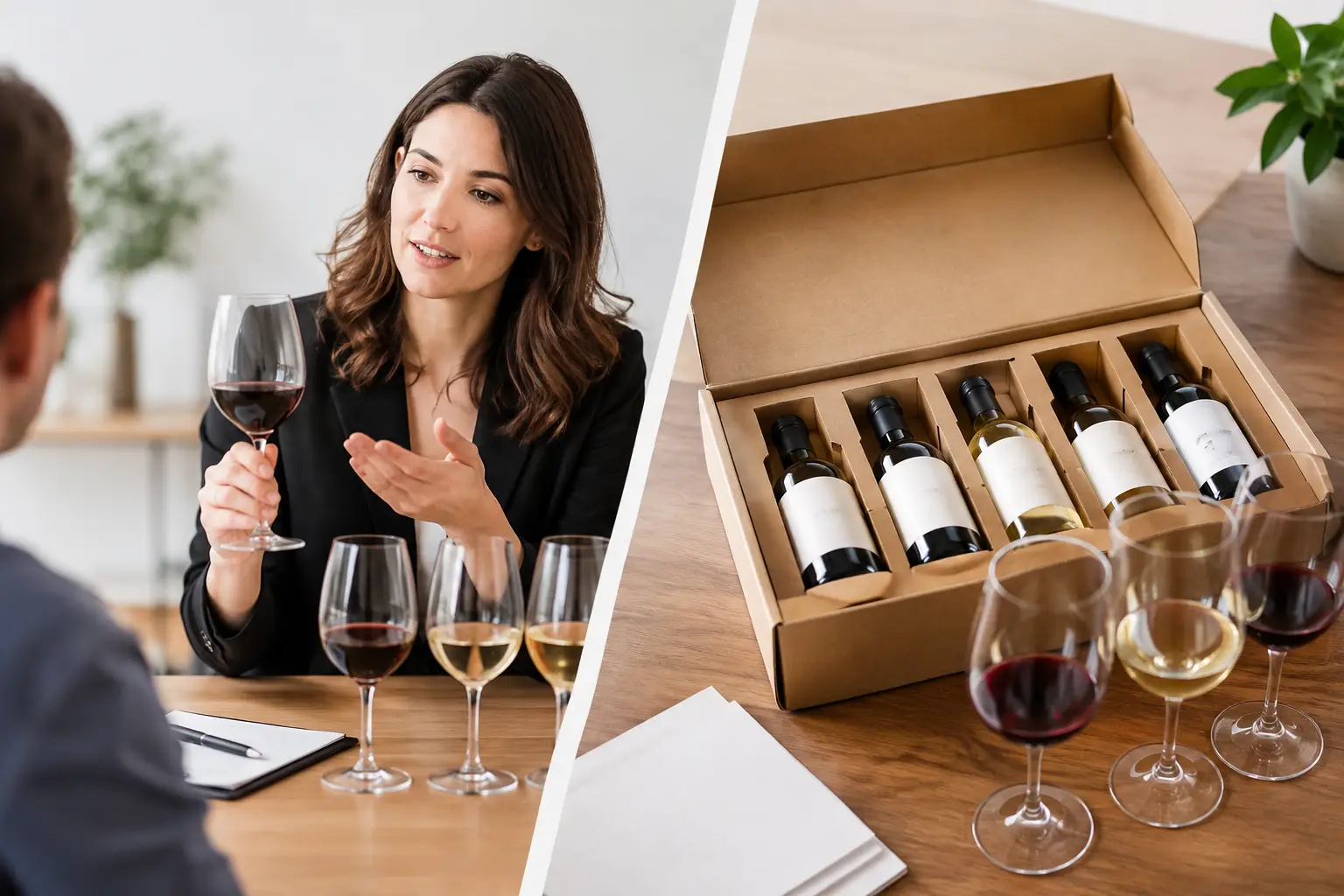
A bottle can be perfectly good and still leave you wondering what, exactly, you were meant to notice. Is that warmth spice or alcohol? Is the finish short, or are you simply not sure when to stop paying attention? The choice between guided tasting versus tasting kit often comes down to that moment of uncertainty: do you need bottles chosen for you, or better guidance for the bottles already on your shelf?
Both formats can make a quiet evening, dinner party or weekend catch-up feel more considered. They are not interchangeable, though. A tasting kit gives you a curated starting point. A guided tasting gives you a repeatable way to pay attention, describe what you find and remember it later. The right choice depends on how you like to buy, drink and learn.
What a tasting kit does well
A tasting kit usually arrives with a small selection of drinks, often chosen to show a theme: whisky regions, styles of sparkling wine, craft beer varieties or a set of spirits. Some include tasting cards, background notes and suggested food pairings. Its main appeal is convenience. You do not have to choose the bottles, research the category or work out whether the comparison makes sense.
For a gift, a first introduction to a category or a one-off event, that can be ideal. The selection creates a clear occasion. If you have never compared a peated Scotch with a fruit-forward Irish whiskey, for example, a kit can put both in front of you with very little planning.
A good kit also gives you a controlled comparison. The samples are typically chosen to make differences easier to spot. You may notice that one beer feels crisp and dry while another is fuller and more bitter, or that two gins share juniper but move in different directions through citrus, herbs and spice. This can build confidence quickly.
There are limits, however. A kit is only as useful as the bottles it contains and the notes that come with it. Once it is finished, the learning can finish with it. You may also find that the samples are not the styles you usually enjoy, or that the quantity is too small to revisit a glass after reading the notes. For people who already buy drinks they are curious about, a kit can sometimes duplicate rather than deepen the experience.
Guided tasting versus tasting kit: the practical difference
The clearest distinction is simple. A tasting kit supplies the drinks and usually a light framework. Guided tasting supplies the framework and lets you choose the drinks.
With guided tasting, the bottle you already opened for Friday night becomes the starting point. Instead of being told that you should find vanilla, blackberry or toasted oak, you are prompted to slow down and notice what is genuinely present for you. You begin with appearance and aroma, then move through flavour, texture, balance and finish in a calm order.
That order matters. Newer tasters often try to identify every flavour at once, which can feel like a test with no correct answers. A thoughtful guide narrows the focus. First, ask whether the aroma is fresh, rich, floral, fruity, savoury or spicy. Then consider intensity. On the palate, notice whether the drink feels light, creamy, crisp, warming, drying or rounded. Specific words tend to come more easily once the broader shape is clear.
This makes guided tasting especially useful for people who want lasting rather than occasional confidence. The same approach can work with a supermarket wine, a special-occasion Champagne, a favourite pale ale or a new bottle of rum. You are not waiting for the next themed box to practise.
There is a trade-off. Guided tasting does not remove every decision. You still choose and purchase the drink, and the quality of the experience depends partly on serving temperature, glassware and setting. It also asks for attention. If all you want is a ready-made activity with samples on the table, a kit is more immediate.
Consider what you are really buying
It is easy to compare a kit and a digital guide only by their price. A more useful question is where the value continues after the first session.
A tasting kit is a product and an occasion. Its value sits in the selection, the presentation and the ease of opening it with friends. This is often worth paying for when you want a planned evening without preparation. It can be particularly appealing for someone exploring a category for the first time, provided the kit explains enough to make the comparison meaningful.
Guided tasting is a skill-building tool. Its value grows when you use it repeatedly across bottles and categories. The language you develop with one Rioja can help you describe the next red wine more clearly. The habit of noticing texture in a stout can sharpen how you assess mouthfeel in whisky or liqueur. Over time, you spend less money on bottles that do not suit your preferences because you can identify what you liked and why.
This is where recording notes becomes more than a nice extra. Memory is unreliable after a few weeks, particularly when labels, vintages and bottle shapes begin to blur together. Saving a few honest observations - perhaps “bright citrus, light body, pleasantly saline finish” - gives future you something practical to return to. It is not about writing like a critic. It is about making your own preferences easier to recognise.
When a kit is the better choice
Choose a tasting kit when the physical selection is the point. Perhaps you are giving a present, arranging a birthday evening, or trying a category you would not normally buy. A themed kit can turn unfamiliarity into a simple, sociable activity.
It also works well when your group needs a shared starting line. Everyone can pour the same sample and react to it together. For hosts, this removes the uncertainty of buying several full-size bottles that may not be finished.
Look for kits that are transparent about sample size, ingredients or allergens where relevant, alcohol strength and serving guidance. Good presentation is enjoyable, but practical information matters more. Avoid treating printed flavour notes as a verdict. They are useful prompts, not a list you must agree with.
When guided tasting is likely to suit you better
Guided tasting is a strong fit if your drinks cupboard already contains bottles you want to understand more fully. Maybe you keep returning to the same style of wine because it feels safe, or perhaps you have received a whisky that seems interesting but difficult to describe. Guidance helps turn hesitation into a clear next step: pour, listen, notice and save what you learned.
It is also better suited to a flexible routine. You can taste alone after work, compare two bottles over a relaxed weekend, or use the same structure when friends visit. There is no requirement to finish a themed selection in one sitting. For responsible enjoyment, that flexibility is useful: tasting can be unhurried, with small pours and plenty of water.
Audio-led guidance has a particular advantage here. Reading notes while holding a glass can pull your attention away from the sensory experience. A calm voice can leave space for pauses, reflection and your own conclusions. Audio Sommelier is designed around that kind of at-home practice, pairing guided sessions with a personal tasting memory so that a bottle does not become a forgotten label once it is empty.
A useful middle ground: use both with intention
This does not have to be an either-or decision. A kit can provide an enjoyable first comparison, while guided tasting can help you get more from it. Rather than rushing through samples, use guidance to identify the differences in aroma, weight and finish. Then save the bottles or styles you preferred as a reference for future purchases.
Equally, you can create your own mini tasting kit from drinks you already own. Choose two or three items with one clear contrast: an unoaked and oaked Chardonnay, a lager and a pale ale, or two gins with different botanical profiles. Keep the comparison modest. The aim is not to prove expertise, but to give your senses a fair chance to notice a difference.
Keep the first tasting simple
You do not need specialist knowledge or a table covered in tasting mats. Use a clean glass, avoid strong perfume or cooking smells, and give yourself enough time to revisit the drink after the first sip. If you are comparing bottles, pour small measures and taste from lighter to richer styles where possible.
Most importantly, trust your own observations. “I like this because it feels fresher and less drying” is a useful tasting note. It tells you far more about what to choose next than an impressive-sounding descriptor you do not really mean.
The best format is the one that makes you more curious the next time you pour a glass. Choose a tasting kit when you want a ready-made occasion; choose guided tasting when you want every bottle you buy to teach you something worth remembering.