8 Oct 2026
A Guide to Sensory Tasting Rituals at Home
A guide to sensory tasting rituals that helps you notice aroma, texture, flavour and finish with calm, practical steps for better at-home tasting now.
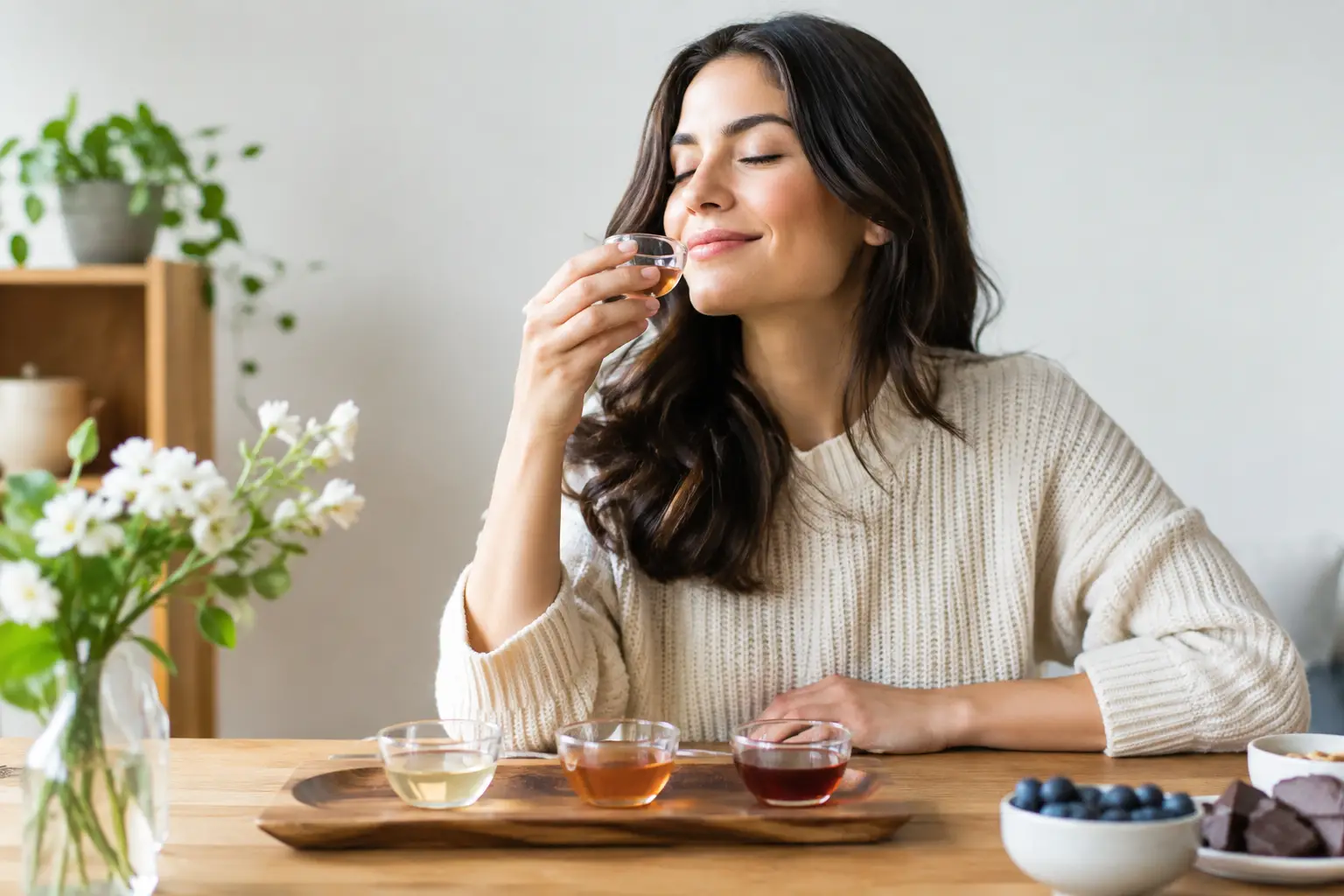
The first useful thing you can do with a glass is not sip it. Put it down for thirty seconds. Notice its colour, let the temperature settle, and give your attention a single job: finding one detail you had not expected. That small pause is the heart of a guide to sensory tasting rituals. It turns a familiar bottle into an experience you can understand, describe and remember.
A tasting ritual is not a performance, and it does not require a collection of specialist glassware or a trained palate. It is simply a repeatable sequence that gives your senses enough time to catch up. Whether you are opening a weekday beer, sharing sparkling wine with friends, or trying a whisky you received as a gift, a little structure makes the bottle feel more rewarding.
Why a sensory ritual changes the taste
Most of us drink while doing something else: cooking, talking, watching a programme or scrolling. There is nothing wrong with that. But when attention is divided, the brain tends to register broad impressions only: nice, too sweet, strong, smooth.
A ritual slows the process just enough to reveal the layers inside those impressions. You may notice that a red wine feels drying rather than bitter, that a lager smells faintly of fresh bread, or that a liqueur’s sweetness arrives late rather than immediately. These are not expert-only observations. They are ordinary sensory signals, given a moment to become clear.
The benefit is not about finding the ‘correct’ answer. It is about building your own reference points. Over time, you begin to know what you enjoy and why. That makes choosing, serving and sharing drinks less intimidating.
Set the conditions, not a perfect scene
The best tasting environment is comfortable and reasonably free from distraction. Strong cooking smells, scented candles and heavy perfume can mask aroma, so move away from them where possible. Natural light helps when looking at colour, though a plain pale surface behind the glass is often enough.
Serve the drink at a sensible temperature, but do not let precision become a barrier. Very cold drinks hide aroma and texture, while overly warm ones can make alcohol feel more forceful. If a bottle has come straight from the fridge, give it a few minutes in the glass. If it has been sitting near a radiator, cool it gently before you begin.
Keep water nearby and avoid tasting when you are very hungry or rushing out the door. A neutral cracker or a piece of plain bread can reset your palate between samples, particularly if you are comparing more than one drink. If you are tasting alcohol, keep pours modest and take your time. A good ritual is built around attention, not consumption.
A guide to sensory tasting rituals in five moments
You do not need to make every tasting long. A five-minute ritual can be more useful than a distracted hour. Follow these moments in order, allowing yourself to linger where something catches your interest.
1. Look before you judge
Hold the glass against a light background and observe the appearance. With wine, consider depth of colour and whether it looks bright, cloudy, pale or deep. With beer, notice the foam, bubbles and clarity. With spirits, look at the viscosity as you gently turn the glass.
Appearance will not tell you whether you will like a drink, but it prepares your expectations. A pale, delicate colour may suggest lightness. A dense, dark hue may suggest concentration or roast character. Treat these as invitations to investigate, not conclusions.
2. Smell in short, calm passes
Aroma is where many people lose confidence because they think they should recognise a precise list of notes. Start wider. Does it smell fresh, fruity, floral, earthy, spicy, creamy, smoky or savoury? One broad family is enough.
Take two or three short sniffs rather than one long inhale. Then move the glass gently and smell again. The first aroma may be obvious fruit, grain or oak. The second may reveal something more specific, such as lemon peel, black pepper, vanilla, toasted nuts or damp leaves.
If nothing comes to mind, compare the smell to familiar places and objects. Does it remind you of a bakery, a garden after rain, jam, a bonfire or a bowl of citrus? Personal associations are valid tasting language. The goal is clarity, not a textbook answer.
3. Take a small sip and map the shape
Let a small sip travel across your mouth before swallowing. Ask how it feels, not just how it tastes. Is it light and crisp, round and creamy, warming, prickly, oily, drying or mouth-watering?
Texture is often the missing piece of a tasting note. In wine, acidity can create a fresh, saliva-inducing sensation, while tannin can feel drying along the gums and tongue. In beer, carbonation may feel soft or lively. In whisky or other spirits, the alcohol can feel warming, silky or sharp depending on strength, serving temperature and style.
There is a useful trade-off here. Adding a few drops of water to a spirit can soften the alcohol and open its aroma, but it may also change the texture you enjoy. Chilling a white wine can make it refreshing, yet too much cold can mute its character. Try one adjustment at a time, then notice the difference.
4. Name the flavour without overreaching
Now return to flavour. Begin with categories: fruit, citrus, stone fruit, berries, malt, herbs, chocolate, pepper, smoke, caramel or nuts. Then, if it feels natural, become more specific.
You might describe a whisky as having dried fruit and baking spice before deciding whether it is closer to raisins and cinnamon. A Sauvignon Blanc might feel citrus-led before you settle on grapefruit. Precision is useful only when it makes the memory easier to retrieve later.
Notice balance, too. Is sweetness held in check by acidity? Does bitterness bring useful contrast? Is the alcohol integrated, or does it dominate? A drink does not need to be perfectly balanced to be enjoyable. Some people actively prefer bright acidity, firm bitterness or rich sweetness. Your response matters as much as the structure.
5. Stay with the finish
After swallowing, pause before speaking or taking another sip. What remains, and for how long? The finish might be clean, short, warm, dry, sweet, smoky, bitter or unexpectedly fresh.
This final moment often explains why a drink feels satisfying or tiring. A long finish is not automatically better, but it gives you more information. If the aftertaste is pleasant, ask what made it so. If it feels harsh or cloying, identify where that sensation sits and how quickly it fades.
Turn a pleasant drink into a useful memory
A ritual becomes more valuable when you save a few observations. You do not need a formal review. Three short prompts are enough: what did I notice first, how did it feel, and would I choose it again?
For example: “Smelt of ripe pear and flowers. Light, fizzy and very fresh. Best before dinner.” That note will be more useful in six months than a score out of ten. It captures context as well as character.
If you revisit the same bottle, compare your notes rather than trying to be consistent. Your experience can shift with food, glassware, temperature, mood and time of day. That is not a failure of your palate. It is part of how sensory perception works.
A saved tasting history also makes comparisons more meaningful. Perhaps you discover that the whiskies you return to share a nutty, rounded texture, or that your favourite sparkling wines are less about sweetness and more about a dry, citrus finish. Patterns like these make future choices easier.
Use comparison carefully
Tasting two drinks side by side is one of the quickest ways to develop confidence. Choose drinks with one clear point of difference: two beers in different styles, two wines made from different grapes, or the same spirit tasted neat and with a little water.
Keep the comparison small. Four or more samples can be enjoyable with friends, but it becomes harder to remember the early pours and easier to tire your palate. If you do create a flight, move from lighter to fuller styles, take breaks and use water between samples.
Audio Sommelier can be useful here because guided audio creates a calm pace while a personal tasting record helps you return to comparisons later. The point is not to borrow someone else’s opinion. It is to give your own senses a clearer route through the glass.
When the ritual should be simpler
Not every bottle needs a full examination. A celebratory toast, a relaxed supper or a familiar favourite may call for nothing more than a brief smell and a grateful first sip. Ritual should add pleasure, not turn leisure into homework.
Use the full sequence when you are curious, trying something new or hoping to learn from a bottle. Use a shorter version when the occasion matters more than the analysis. With practice, the habit becomes natural: pause, notice, name one thing, remember it.
The next time you pour a drink you already own, give it five quiet minutes before the evening moves on. You may find that better tasting language begins not with more knowledge, but with permission to notice what is already there.