16 Jun 2026
Food Pairing with Sparkling Wine Made Simple
Food pairing with sparkling wine is easier than it seems. Learn what works with salty, creamy, fried and sweet dishes at home.
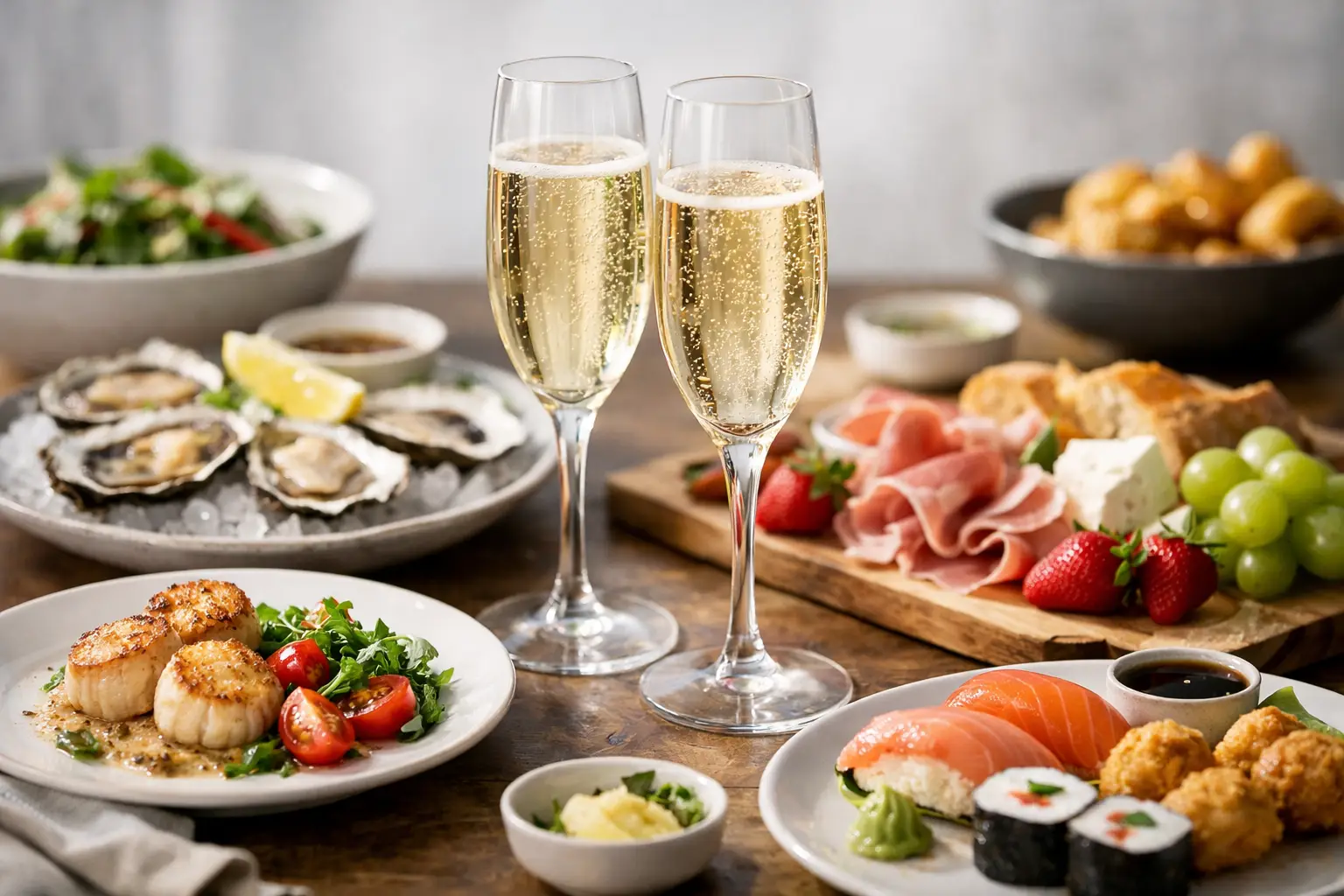
A glass of sparkling wine can rescue a meal that feels slightly too rich, slightly too salty, or simply a bit flat. That is why food pairing with sparkling wine is one of the most useful skills to build at home. You do not need restaurant training or a cellar full of bottles. You just need to know what the bubbles, acidity and sweetness are doing on the palate.
Sparkling wine is unusually forgiving with food, but not infinitely so. Some pairings feel effortless because the wine lifts texture and refreshes the mouth between bites. Others fail because the dish overwhelms the wine or makes it seem harsh. Once you understand those interactions, choosing what to serve becomes much easier and far less intimidating.
Why sparkling wine works so well with food
Sparkling wine has three advantages at the table. First, acidity cuts through richness. Second, bubbles add a cleansing effect that helps after fatty, oily or creamy foods. Third, many sparkling wines are moderate in alcohol, which can make them easier to enjoy across a full meal.
This is why sparkling wine often succeeds where still wine becomes fussy. Fried chicken, fish and chips, salty crisps, triple-cream cheeses and canapés can all feel more balanced with fizz. The wine does not need to dominate the plate. Its job is often to reset the palate and keep each bite tasting fresh.
That said, style matters. A bone-dry Blanc de Blancs will behave differently from a fruitier Prosecco or a sweeter demi-sec sparkling wine. If you ignore sweetness, body and flavour intensity, even good ingredients can feel mismatched.
Food pairing with sparkling wine starts with style
Before choosing the dish, take a moment to notice the wine in the glass. Is it lean and citrus-led, or soft and peachy? Does it feel chalky and taut, or rounder and creamier? Is it very dry, or does it have a touch of sweetness?
A dry, high-acid sparkling wine such as Brut Champagne, many Cavas, or some English sparkling wines tends to suit salty and fried foods brilliantly. The crisp structure keeps richness in check.
A fruit-forward style such as Prosecco often works well with lighter nibbles, cured meats, fruit-led salads and mildly spiced dishes. It can feel more relaxed and less severe than a sharper, drier sparkling wine.
Rosé sparkling wine brings red berry notes and can handle a little more savoury depth. Think charcuterie, smoked salmon, beetroot tart or even duck canapés.
Sweeter sparkling wines deserve more attention than they usually get. Off-dry and demi-sec styles can be excellent with spicy food, fruit desserts and salty blue cheese. Sweetness is not a flaw here. It is a tool.
The best textures to match
If you remember one principle, make it this one: sparkling wine loves contrast.
Rich, creamy and fried textures are often ideal because the wine provides relief. A buttery tart, tempura vegetables, seafood with aioli, arancini or soft cheese all benefit from that cleansing lift. The pairing works because the food brings weight and the wine brings energy.
Salt is another friend of sparkling wine. Salty foods can make the fruit in the wine feel more expressive and the whole pairing feel livelier. This is why potato crisps with Champagne is not a gimmick. It is a genuinely effective match.
Delicate dishes can also work, but then the wine must be equally restrained. Oysters, simple white fish and lightly dressed seafood usually need a fine, dry style rather than something broad or sweet.
The most difficult textures are often those with too much heat, too much bitterness or too much sweetness for the wine. Chilli can make dry sparkling wine seem sharper. Bitter greens can make it feel austere. Very sweet desserts can leave the wine tasting thin and sour unless the wine itself carries enough sweetness.
Easy pairings that rarely disappoint
For relaxed entertaining, there are a few combinations worth keeping in regular rotation because they work across many sparkling styles.
Fried food is the obvious winner. Fish goujons, tempura prawns, calamari and even good oven chips are all lifted by crisp bubbles and acidity. The same applies to pastry-based bites such as cheese straws, gougères and sausage rolls, especially with drier sparkling wines.
Soft, salty cheeses are another safe direction. Brie, Chaource, young goat's cheese and Parmesan shards all pair comfortably with fizz. Hard, nutty cheeses can be especially good with mature sparkling wines that show toasty, bready notes.
Seafood is classic for a reason. Oysters, smoked salmon blinis, crab tartlets and simply grilled prawns all have the freshness and delicacy that sparkling wine respects. Rosé sparkling wine can be especially useful when the seafood is smoked or accompanied by richer garnishes.
For brunch or lighter lunches, sparkling wine also handles eggs better than many still wines. Quiche, smoked salmon with scrambled eggs and savoury tarts can all work well, provided the wine is not too aggressive.
When sweetness matters more than people expect
One of the most common pairing mistakes is serving a very dry sparkling wine with a sweet pudding. The dessert wins instantly, and the wine can taste severe.
If the dish contains fruit, pastry cream, almond, honey or meringue, look for a sparkling wine with some sweetness of its own. Moscato-style sparkling wines, demi-sec Champagne and similar off-dry styles can be far more satisfying here than a Brut wine forced into the wrong role.
Sweetness also helps with spice. Thai dishes, sticky glazed appetisers and food with a gentle chilli kick often pair better with slightly sweeter sparkling wine than with very dry styles. The sugar softens the heat and prevents the wine from feeling angular.
This is where tasting without assumptions helps. Many people think drier always means more sophisticated. At the table, that is simply not true. The right level of sweetness is often what makes a pairing feel calm and complete.
Food pairing with sparkling wine for real meals at home
At home, pairings need to be practical, not theatrical. You are not building a tasting menu. You are trying to make tonight's bottle and supper feel better together.
If you are ordering a takeaway, sparkling wine can still be useful. Dry styles often suit fried chicken, battered fish and salty chips. A fruitier sparkling wine can be surprisingly good with sushi, especially where there is a little sweetness in the rice or a creamy element in the roll.
For simple suppers, think in terms of weight. A light sparkling wine with a plate of grilled prawns and lemon is coherent. A richer traditional-method sparkling wine with roast chicken, mushroom tart or creamy pasta can also work, especially if the dish is not too garlicky.
If you are serving a mixed table of nibbles, sparkling wine is often the safest single bottle because it can move across olives, crisps, cheese, smoked fish and pastry snacks without collapsing. That versatility is part of its charm.
How to taste the pairing, not just the wine
A good pairing changes your perception in both directions. The food should make the wine seem more inviting, and the wine should make the food seem cleaner, brighter or more complete.
Take a sip of the wine first and notice the acidity, bubbles and finish. Then take a bite of food and another sip. Ask yourself a few quiet questions. Did the wine refresh the palate or fight the dish? Did the fruit become clearer, or did the wine suddenly taste thin? Did the food feel lighter after the sip?
This method sounds simple because it is. If you want to build more confidence, use the same bottle with two or three foods side by side. Salted crisps, goat's cheese and smoked salmon will teach you more in ten minutes than memorising a chart. It is one of the easiest ways to build tasting language that actually stays with you. Audio Sommelier approaches tasting in exactly this practical spirit - guided, structured and built for trust, not hype.
A few pairings to treat with caution
Sparkling wine is flexible, but there are limits. Very smoky barbecue sauce can overpower delicate fizz. Heavy chocolate desserts are often better with something sweeter and still, or with a richer fortified style. Sharp vinegar dressings can clash with already high-acid sparkling wines.
That does not mean these pairings are impossible. It means they depend on the exact bottle and recipe. A richer rosé sparkling wine may manage duck with cherry glaze. A demi-sec style may cope with spicy sticky wings. The useful habit is not to look for rules that never bend, but to notice what the wine is doing and adjust.
The best pairing is often not the most expensive or the most traditional. It is the one that makes the next bite and the next sip feel easy. Start there, trust your palate, and let the bottle teach you something worth remembering.