18 Oct 2026
A Flavour Notes Tracker for Better Tasting
Use a flavour notes tracker to capture aroma, taste, texture and finish, then remember, compare and enjoy every bottle with more confidence at home.
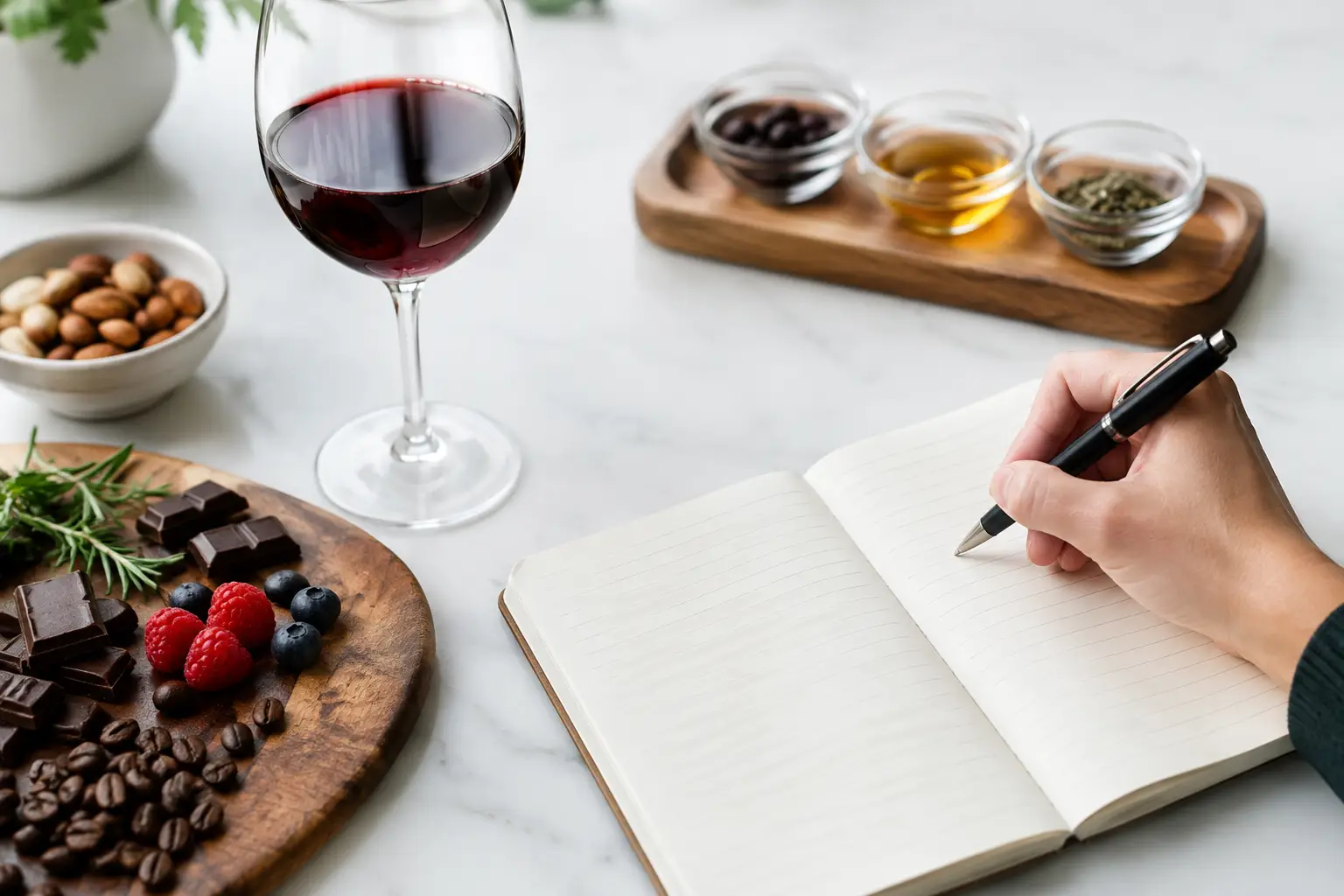
That bottle you enjoyed at a friend’s dinner, the whisky that surprised you with orange peel, the beer you meant to buy again - these moments are easy to lose. A flavour notes tracker gives them a place to stay. Rather than relying on a vague memory of liking something, you can build a useful record of what you noticed, what suited your palate and what you would choose next time.
This is not about writing a critic’s review or finding the perfect descriptor on your first attempt. It is about paying a little more attention to what is already in your glass. With a simple structure, tasting becomes less intimidating and much more rewarding.
What a flavour notes tracker is really for
A tracker turns one-off drinks into a personal reference point. You record the bottle, but also the experience: its aroma, flavour, texture, finish and the setting in which you enjoyed it. Over a handful of entries, small patterns begin to appear.
Perhaps you consistently enjoy wines with bright acidity and citrus fruit. Perhaps smoky whiskies appeal in winter, while softer, honeyed styles suit a quiet evening. You may find that you like a particular beer style only with food, or that a sparkling wine you thought was too dry became more balanced after it warmed slightly in the glass.
Those details are more useful than a score alone. A five out of five tells you that a drink worked. A short note explaining why helps you choose with confidence when you are standing in front of a wine list, planning a gift or picking up a bottle for the weekend.
A good tracker also removes pressure. You do not need to identify every aroma precisely. “Red berries”, “fresh bread”, “warming spice” or even “reminds me of a pear sweet” are all valid starting points. Your tasting language develops through repetition, not performance.
What to record after each pour
The most useful notes are brief enough that you will genuinely keep making them. Aim for observations, not an inventory. A practical entry starts with the essentials: producer or bottle name, category, vintage where relevant, and when you tasted it.
Then move through the glass in a natural order. First, record the aroma. This might be lemon zest, black cherry, vanilla, toasted nuts, fresh herbs, cocoa or simply “clean and floral”. Next, note what happens on the palate. Is the flavour similar to the nose, or does it change? Does it taste ripe, savoury, sweet, bitter, peppery or mineral?
Texture deserves its own line because it is often the feature people remember without having a word for it. A wine can feel light and crisp, rounded and creamy, or grippy and drying. A spirit might feel silky, oily, warming or sharp. Beer may be soft, fizzy, dense or refreshing. These are not minor details - they often explain why one bottle feels more enjoyable than another.
Finally, consider the finish. Did the flavour disappear quickly, stay pleasantly, or leave a note you did not enjoy? A long finish is not automatically better, but it is worth noticing. If you add a simple overall reaction, such as “would buy again for roast chicken” or “interesting, but too sweet for me”, your future self will thank you.
Start with your own words
Many people stop taking notes because they assume their language is not technical enough. In practice, personal language is often more memorable. “Like walking past a bakery” may help you recall a sparkling wine more clearly than “autolytic character”. “Campfire and orange chocolate” can be a perfectly useful whisky note.
Technical terms have their place when they make tasting clearer. Acidity, tannin, body and sweetness are helpful because they describe sensations you can compare across bottles. But they should support your experience, not replace it. If a word feels forced, leave it out.
A useful approach is to pair one sensory observation with one emotional or practical one. For example: “Plum and black pepper, firm texture, excellent with a lamb supper.” Or: “Fresh apple and biscuit, lively bubbles, ideal for a birthday toast.” These notes are specific, accessible and easy to revisit.
Build a repeatable tasting routine
Consistency makes a flavour notes tracker far more valuable. You do not need a formal tasting every time you open a bottle, but a short pause before the first sip can change the experience. Look, smell, taste, then write one or two honest impressions.
Try to taste before food if possible, especially with wine or spirits, as strong flavours can make subtler notes harder to notice. Use a clean glass, give the drink a moment to settle, and return to it after a few minutes. Temperature, air and food can all shift the profile.
This is where a guided audio tasting can be particularly helpful for beginners. A calm prompt gives you something concrete to notice without telling you what you are supposed to taste. Audio Sommelier is designed around this kind of practical guidance, helping you save your observations while building confidence at your own pace.
The routine should fit your life. On a busy weeknight, a three-line entry is enough. For a special bottle or a tasting with friends, you may want to capture more detail, including food pairings, comparisons and how the drink evolved over an hour.
Compare bottles, not just individual scores
A tracker becomes most interesting when you use it to compare. Looking at two bottles side by side reveals preferences that are hard to see in isolation. You might compare a lighter and fuller-bodied red, two different single malts, or a familiar lager against a craft pale ale.
Keep the comparison focused. Ask which one is fruitier, drier, more textured or longer on the finish. Consider which you would reach for with food, which suits a particular occasion, and which offers better value for your own tastes. There is no universal winner. A bold, oak-aged wine may impress at dinner but feel too heavy for a warm afternoon.
Over time, comparative notes become a personal map. Instead of searching for a bottle that someone else says is excellent, you can look for the qualities you already know you enjoy. That is a more dependable way to buy well.
Do not let scoring do all the work
A score can be useful, especially if you want to sort a growing collection of notes. The drawback is that numbers compress too much. Two bottles can both earn an eight out of ten for completely different reasons: one may be elegant and subtle, the other rich and generous.
If you use scores, pair them with a reason. “8/10 - bright, dry and refreshing, but better with food” is far more useful than “8/10” on its own. You may also prefer simple labels such as favourite, would revisit, good for guests or not for me. The best system is the one you will continue using.
Be kind to changing preferences, too. What feels overly bitter or dry now may become appealing later. A flavour notes tracker is a record of your palate developing, not a permanent judgement on any bottle or style.
Make your notes useful when buying and hosting
Before buying something new, glance back at your recent entries. If you have enjoyed high-acid whites with citrus and herbal notes, ask for something in that direction. If your favourite whiskies share dried fruit, gentle spice and a rounded mouthfeel, you have a clearer brief than simply asking for something “smooth”.
For guests, your notes can help you choose thoughtfully without overthinking it. You might remember that one friend enjoys lighter reds served slightly cool, while another prefers richer, sweeter styles. The point is not to curate a perfect performance. It is to make sharing a bottle feel more considered.
Keep the tracker private, honest and low-pressure. A tasting note is not an exam answer. It is a small act of attention that makes the next glass easier to understand. The more faithfully you record what you notice, the more confidently your own taste will begin to speak.