13 Aug 2026
Can Beginners Learn Tasting Online? Yes, Here’s How
Can beginners learn tasting online? Yes. Build confidence with a calm, practical method for noticing aroma, flavour, texture and finish at home easily.
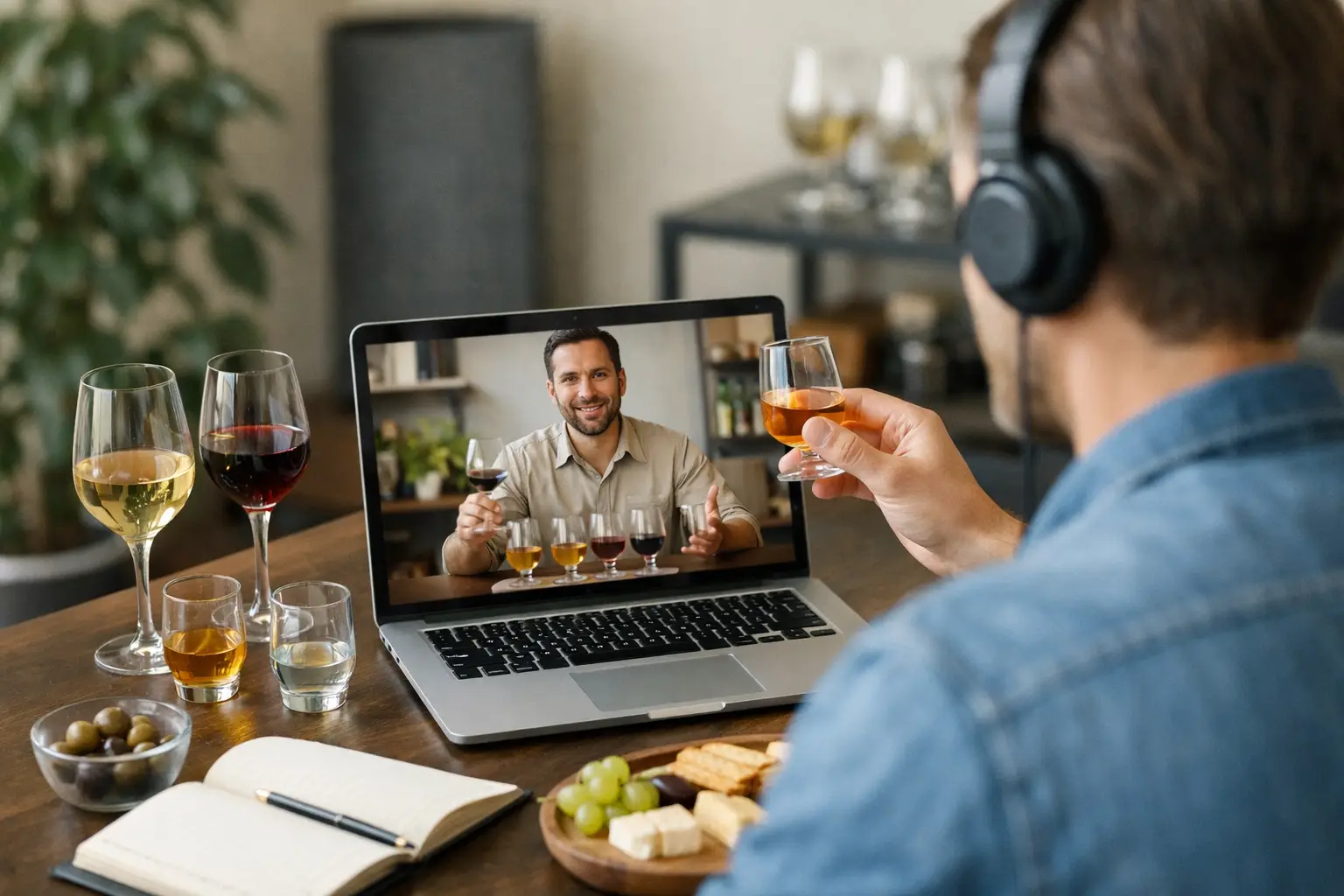
The first time you try to describe a wine or whisky, it is easy to think everyone else has been given a secret vocabulary. You may know that you like the drink in your glass, yet struggle to say why. So, can beginners learn tasting online? Absolutely - provided the experience gives you a clear process, enough time to notice what is there, and permission not to get every answer ‘right’.
Tasting is not a test of a gifted palate. It is a learnable habit of attention. A good online guide can turn a familiar bottle at home into a useful lesson, helping you notice aroma, flavour, texture and finish one step at a time.
Why online tasting works for beginners
Beginners often assume they need a classroom, a tasting room, or a collection of expensive bottles before they can learn. In practice, the most useful place to begin is often your own kitchen table, with a drink you have chosen and enough quiet to focus.
Online learning works because tasting is sensory and repeatable. You do not need to memorise a long list of aromas before taking your first sip. You need prompts that slow the moment down: look at the colour, notice the first scent, take a small sip, then ask what changes as the flavour settles.
A guided audio format can be especially helpful here. Instead of reading ahead and trying to translate technical language, you can listen, pause, smell, sip and reflect at your own pace. That feels closer to having a calm companion beside you than attending a lecture.
There are limits, of course. An online guide cannot smell or taste your specific bottle, and it cannot replace the social side of tasting with a knowledgeable host. But for building personal confidence and a stronger sensory memory, learning at home has a major advantage: you can repeat the process whenever you like, without feeling watched or rushed.
What beginners should learn first
The aim is not to identify every note correctly. Two people can notice different things in the same glass, particularly where memory and association are involved. One person may find lemon peel; another may think of a clean cupboard or a citrus sweet. Both observations can be useful if they are honest and specific.
Start with four simple areas:
- Appearance: colour, clarity and, where relevant, bubbles or viscosity.
- Aroma: what you notice before tasting, from fruit and flowers to spice, grain, herbs or oak.
- Palate: the flavour, sweetness, acidity, bitterness, warmth and body you feel in the mouth.
- Finish: what remains after swallowing or spitting, and how long it lasts.
These are not rules for sounding impressive. They give your attention somewhere to go. If you can say, “This feels light, smells of apple, has a fresh edge and finishes quite dry,” you are already tasting with more clarity than someone who only says they like it.
Build language from real life, not a flavour wheel
Professional tasting terms can be useful, but they should come after your own reaction, not before it. Trying to force a drink into a list of descriptors can make a beginner second-guess every impression.
Begin with familiar references. Does a beer smell like fresh bread, grapefruit, pine needles or toffee? Does a red wine remind you of blackberries, dried herbs, black tea or a wooden pencil box? Does a whisky feel silky, oily, peppery or warming? Your language will become more precise through repetition.
It also helps to separate aroma from flavour. Much of what we call taste is sensed through smell, especially after you swallow. If a note only appears once the liquid is in your mouth, that is normal. Give yourself a few seconds before deciding what you notice.
A practical online tasting routine
You do not need special glassware or a perfectly arranged tasting bench to begin. Use a clean glass that allows you to smell the drink, avoid strong cooking smells or scented candles, and keep water nearby. If you are tasting more than one drink, small pours help you stay focused and responsible.
First, set the scene. Give yourself ten or fifteen unhurried minutes. A wine tasted straight from a very cold fridge, or a spirit served in a glass that smells of washing-up liquid, will be harder to read. Small details make a genuine difference.
Next, look before you smell. Notice whether the drink is pale or deep in colour, still or sparkling, clear or hazy. Appearance will not tell you whether you will enjoy it, but it prepares your attention.
Then smell twice. Take one gentle sniff without swirling. If the drink is wine, swirling can release more aroma; with whisky, beer and other spirits, a gentle movement may be enough. Keep your mouth slightly open as you smell. Ask yourself whether the first impression is fresh, rich, fruity, floral, savoury, malty, spicy or woody.
Take a small sip. Let it move around your mouth rather than swallowing immediately. Notice its weight. Is it crisp and light, creamy and rounded, or dense and warming? Look for the balance: sweetness against acidity, bitterness, spice, alcohol warmth or tannin. You do not have to name everything. A clear observation about texture is often more valuable than a guessed flavour note.
Finally, pause for the finish. Does the flavour disappear quickly, or does it linger? Does it become drier, sweeter, more bitter or more spicy? This final moment often reveals what you remember most about a drink.
The skill that makes online learning stick: keeping notes
Your palate improves when you create a record of what you experienced. Without notes, it is surprisingly difficult to remember why one bottle became a favourite while another did not. A label and a vague memory of a pleasant evening are rarely enough when you are choosing your next bottle.
Keep notes short at first. Record the name of the drink, the occasion, three sensory observations and whether you would buy it again. You might write: “Friday supper. Peach and white flowers on the nose. Light-bodied, zesty, slightly saline finish. Better with food than on its own.” That is a meaningful tasting memory.
Over time, compare those notes. Perhaps you discover that you enjoy dry Riesling more than heavily oaked Chardonnay, or that your preferred whiskies share a soft honeyed character rather than a smoky one. This is where tasting becomes practical, not performative. You are learning your preferences and making more confident choices.
Audio Sommelier is designed around this kind of progress: guided audio helps you stay present with the glass, while a personal tasting record lets you save what you noticed and compare drinks later. The goal is not to make every sip serious. It is to make the enjoyable ones easier to remember.
Common beginner worries, answered honestly
“What if I cannot smell anything?”
Start smaller. Strong perfume, a busy room, allergies, a cold or an over-chilled drink can all mute aroma. Let the drink sit for a few minutes, take gentle short sniffs, and look for broad categories before specific notes. “Fruity” or “spicy” is a perfectly useful starting point.
“What if my tasting notes are wrong?”
There is a difference between an inaccurate claim about production and a personal sensory impression. If a drink reminds you of orange peel, you are describing your experience, not taking an exam. Guidance can help you learn common patterns, but your own response still matters.
“Do I need expensive bottles?”
No. A more expensive bottle may offer more complexity, but complexity is not required for learning. A modest, familiar drink can teach you plenty, especially when you taste it alongside another style. Compare a crisp white with a fuller one, or a light lager with a hop-forward pale ale, and the differences become easier to notice.
“Is online tasting only for wine?”
Not at all. The same attention works across whisky, beer, sparkling wine, liqueurs and other spirits, although the details vary. With beer, freshness and carbonation deserve extra attention. With whisky, dilution, glass shape and alcohol strength can affect what you perceive. With sparkling wine, bubbles and temperature play a larger part in texture.
Give yourself permission to improve slowly
The quickest way to lose confidence is to treat tasting as a performance. You do not need to recognise ten aromas, own specialist equipment or agree with someone else’s notes. You only need to notice a little more than you noticed last time.
Choose one bottle you already have, pour a modest measure, and give it your full attention for a few minutes. The next glass will not taste identical, because you will not be the identical taster. That is the quiet, rewarding point of learning: each considered sip gives you a little more language, a little more memory and a little more confidence.