20 Jul 2026
A Beginner Guide to Tasting Wine at Home
Use this beginner guide to tasting wine to notice aroma, flavour, texture and finish, with calm practical steps and no need for expert language at home today.
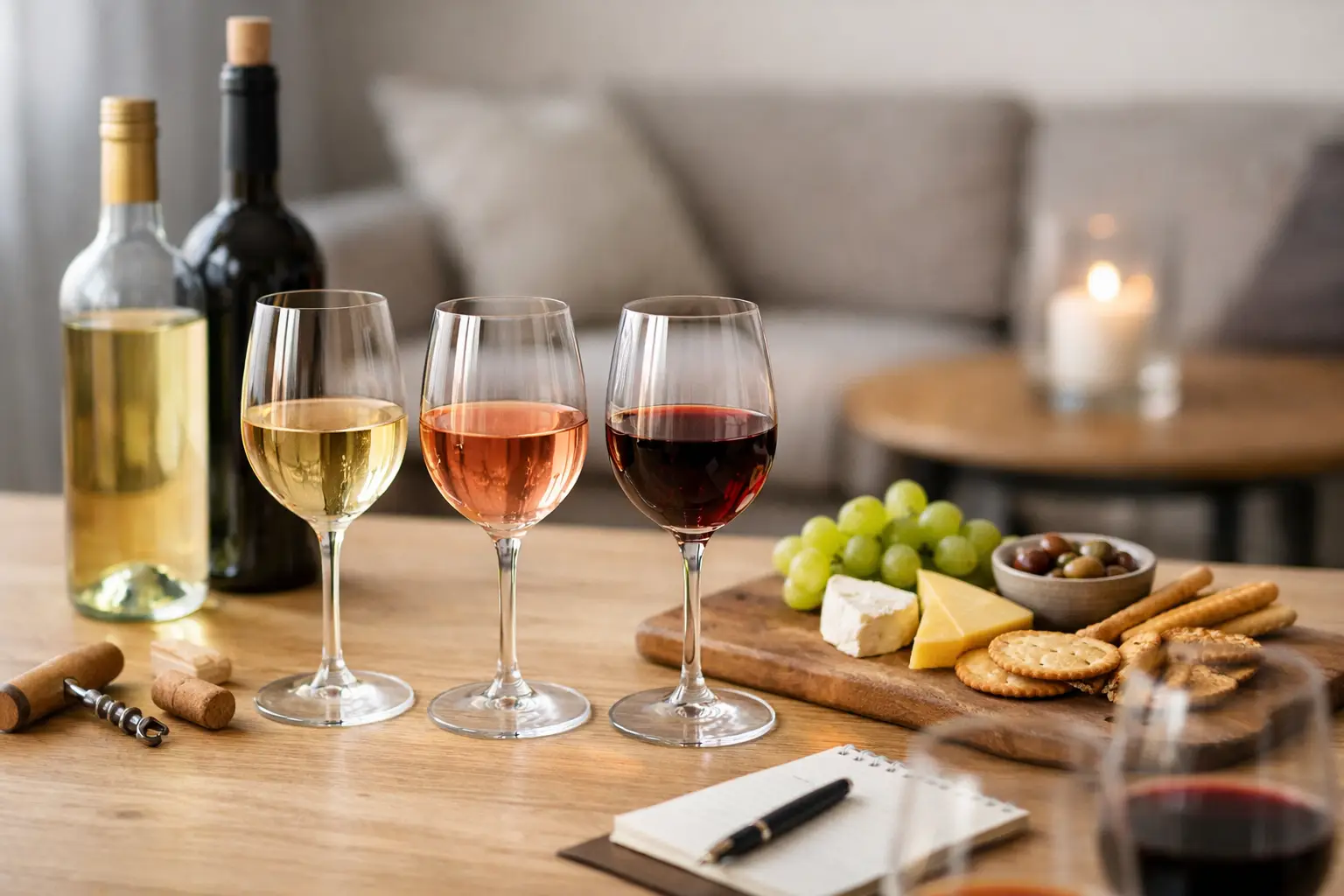
The first useful thing to know is that you do not need a gifted nose, a cellar, or a shelf of wine books to taste well. This beginner guide to tasting wine starts with a simpler idea: pause long enough to notice what is already in your glass. A good tasting is not about finding the one correct answer. It is about recognising what you enjoy, putting a few honest words to it, and remembering it for next time.
Set up for first-sip confidence
Choose a quiet moment when you are not cooking, wearing strong perfume, or eating something very spicy. A clean, clear wine glass with a reasonably wide bowl helps, but perfection is not required. Pour a small measure, around a third of the glass or less, so there is space to swirl without spills.
If possible, taste in natural light or under a neutral lamp. The colour can offer clues, but it is not a quality test. A pale lemon white may feel fresh and zesty; a deeper gold can suggest more ripeness, age, or oak influence. With reds, purple tones often point towards youth, while brick or garnet edges can appear as a wine matures. Notice, then move on. Aroma and taste will tell you far more.
Temperature matters, although the usual advice is often too rigid. Very cold wine can hide aromas and make texture feel thinner. Very warm wine can make alcohol seem more obvious. If a white tastes muted straight from the fridge, leave it for ten minutes. If a red feels hot or heavy, give it a short chill. Your glass is the guide.
A beginner guide to tasting wine in four moments
Look without overthinking it
Hold the glass against a pale background and take in the wine’s appearance. Is it clear or hazy? Light or deep in colour? Does it look watery at the rim or dense at the centre? These observations help you slow down and become present, rather than needing to identify a grape variety from sight alone.
When you gently tilt the glass back upright, you may see droplets running down the inside. These are sometimes called legs or tears. They can relate to alcohol and sugar, but they do not tell you whether the wine is good. Treat them as an interesting detail, not a score.
Smell in two passes
Before swirling, take a small sniff. Then place the glass on a flat surface, hold the stem, and make one or two gentle circles. Swirling releases more aroma into the bowl. Smell again with your nose just inside the rim.
Do not force yourself to name exact fruits. Begin broadly. Does it feel fresh or ripe? Fruity, floral, herbal, earthy, spicy, creamy, smoky, or savoury? If “blackberry” does not come to mind but “dark fruit” does, that is useful. If you think it smells like a wet pavement after rain, cedar, lemon peel, yoghurt, or jam, that is useful too.
Aroma is personal, but it should still be grounded in what you genuinely sense. The aim is not to perform expertise. It is to build a vocabulary you can return to. You might say, “This smells like red berries with a dry leaf note,” or, “I get ripe pear and something buttery.” That is clear tasting language.
Sip, then let the wine travel
Take a modest sip and hold it in your mouth for a moment before swallowing or spitting. Let it reach the front, sides, and back of your tongue. You are looking for balance and sensation, not just flavour.
Ask yourself a few calm questions. Is the wine dry, or can you feel sweetness? Does it make your mouth water? That is acidity, and it often creates freshness and lift. Does it leave your gums feeling grippy or your mouth slightly dry? That is tannin, most common in red wines. Does it feel light like skimmed milk, rounded like cream, or somewhere between? That is body and texture.
Flavour may echo the aromas, but it can change on the palate. A white that smelled of lemon may taste more like apple, peach, or preserved citrus. A red with juicy berry aromas may become peppery, earthy, or cocoa-like once you sip. There is no need to catch every note. Two or three observations are enough for a meaningful first tasting.
Stay with the finish
After swallowing, notice what remains. Does the flavour disappear quickly, or does it linger? Does it end cleanly, warmly, bitterly, softly, or with a fresh lift? This is the finish.
A longer finish is often associated with more concentration, but short does not mean bad. Some wines are made to be bright, simple, and easy to drink with supper. What matters is whether the ending feels pleasant and in balance with the rest of the wine. If the finish turns sharply bitter, hot, or overly sweet for your taste, make a note. That is valuable information for future choices.
Learn the building blocks without memorising a textbook
Most wine impressions can be understood through a small set of elements: sweetness, acidity, tannin, alcohol, body, flavour intensity, and finish. You do not need to assess them all every time. Pick one or two that stand out.
Acidity is especially helpful for beginners to recognise. It is the mouth-watering quality you might associate with lemon juice, green apple, or a crisp bite of fruit. High-acid wines often feel lively and work well with food. Tannin, by contrast, is a drying sensation similar to strong black tea or the skin of a walnut. It can be smooth and fine, or firm and assertive.
Oak is another common source of confusion. Oak ageing may bring notes such as vanilla, toast, clove, coconut, smoke, or a creamy texture. But not every round or rich wine is oaked, and not every oaked wine tastes obviously woody. If you are unsure, describe the sensation rather than guessing the winemaking method.
Make notes you will actually use
A tasting note should help the person you will be when you are choosing a bottle again. It does not need to read like a critic’s review. Start with the wine name, vintage if shown, and where you drank it. Then capture a few details: what you smelled, how it felt, what you tasted, and whether you would buy it again.
A practical note might read: “Bright, dry white. Lemon, pear and a little white flower. Light-bodied, high acidity, very refreshing. Better with food than on its own. Would choose for fish or a warm evening.” That is far more useful than writing “nice”.
It also helps to include context. A wine can seem more enjoyable after a long week, alongside salty food, or shared with friends. That does not make your impression less valid. It makes it more complete. Over time, patterns appear: perhaps you prefer crisp whites over soft ones, or reds with lower tannin and savoury flavours rather than very ripe, sweet-fruited styles.
Taste comparatively when you can
One wine can teach you something. Two wines can make the differences clearer. Pour small measures of two whites or two reds and compare them side by side. Keep the styles reasonably close at first, such as two Sauvignon Blancs from different regions, or a lighter red beside a fuller red.
Taste the lighter or drier wine first, then return to it after the second. Suddenly, acidity, body, fruit ripeness, and tannin are easier to spot because you have a reference point. This is where tasting becomes less about remembering instructions and more about trusting your own palate.
There are trade-offs. A side-by-side tasting can be more revealing, but it can also become tiring if you open too many bottles or choose dramatically different styles. Two wines are plenty for a relaxed evening. If you are tasting more, use small pours, drink water, eat something plain between samples, and pace yourself.
Give yourself permission to have preferences
Wine language can sometimes make beginners feel that they must admire whatever is expensive, fashionable, or highly rated. You do not. A complex, tannic red may be impressive but not enjoyable for you. A straightforward, citrus-led white may be exactly what you want. Preference and quality overlap sometimes, but they are not the same thing.
The most useful question is not “Is this wine good?” It is “What do I like about it, and when would I want to drink it?” That question turns tasting into a practical skill. It helps you order with more confidence, shop with more purpose, and choose bottles that suit the meal or moment.
If you would like a little structure while you practise, Audio Sommelier offers guided, audio-led tastings and a place to save your own notes, so each bottle can add to a personal tasting memory. No wine knowledge is needed before you begin.
Next time you open a bottle, give it five unhurried minutes before the conversation carries on. Notice one aroma, one texture, and one feeling it leaves behind. That small ritual is enough to make the glass more memorable.