23 Aug 2026
Beer Tasting Notes Examples You Can Actually Use
Use these beer tasting notes examples to describe aroma, flavour, mouthfeel and finish with confidence, whether you are trying lager, stout or IPA at home.
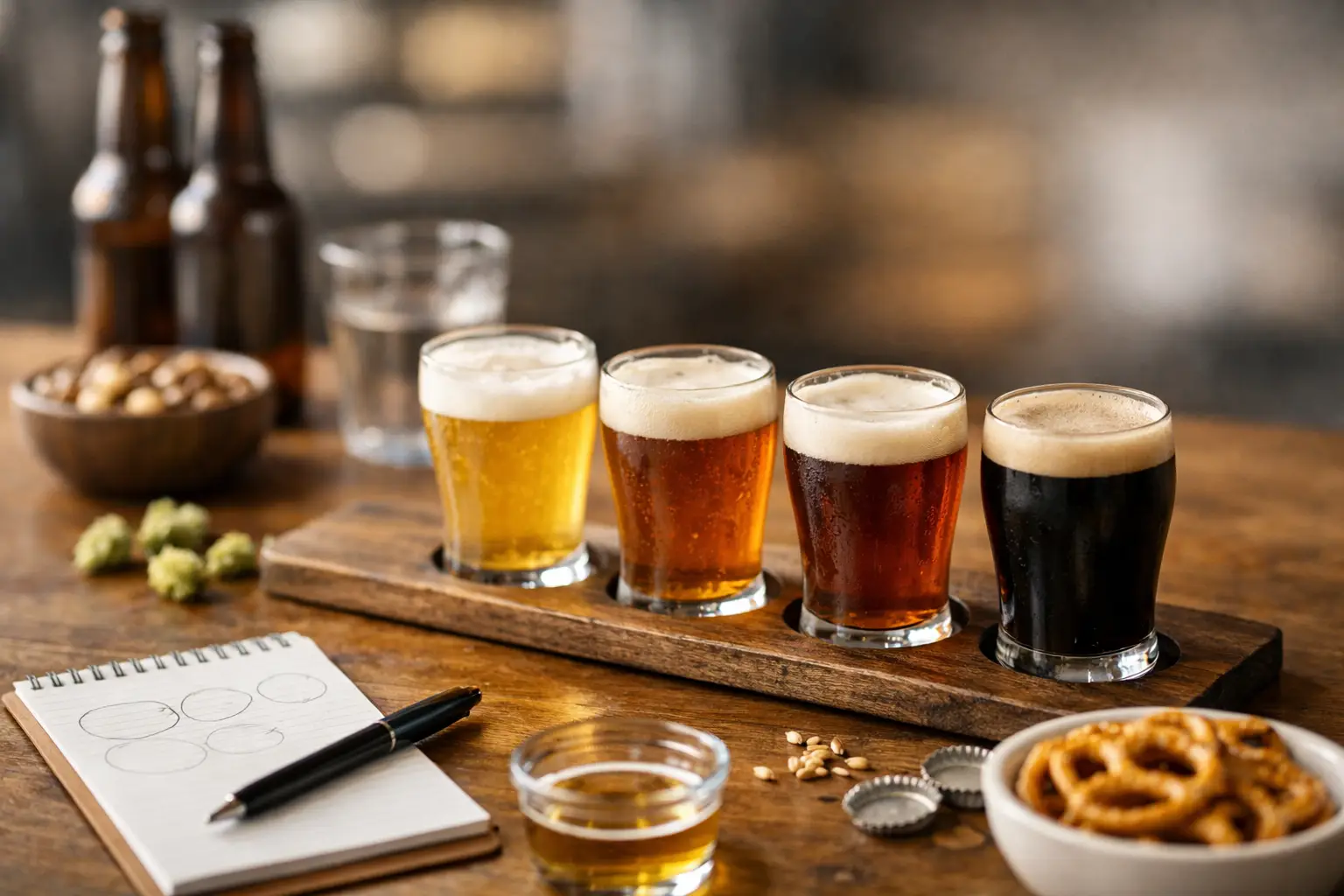
A good beer note does not need to sound like it belongs on a brewery judge’s scoresheet. It only needs to help you remember what was in the glass and why you enjoyed it. These beer tasting notes examples give you practical language for the next bottle, can or pint you open at home.
Start with a small pour in a clean glass, ideally at a temperature that suits the style. Notice what happens before you sip, then take two or three unhurried tastes. The aim is not to identify every flavour. It is to build a reliable picture: what you saw, smelt, tasted and felt, plus what lingered afterwards.
The simple structure behind useful beer notes
The clearest notes usually follow four moments of the tasting. First, look at the beer’s appearance: its colour, clarity, head and carbonation. Next, smell it. Aroma often reveals fruit, malt, hop character, spice, roast or fermentation notes before the first sip.
Then consider flavour and mouthfeel together. Is the beer dry, sweet, bitter, tart or balanced? Does it feel light and crisp, smooth and creamy, soft, sticky or warming? Finally, pause after swallowing. The finish may be short and clean, pleasantly bitter, roasted, sweet, dry or gently spicy.
You do not need to write every category every time. A short note such as “Fresh lemon and cut grass aroma, crisp malt, firm bitterness, very clean finish” is already specific enough to remember. As your confidence grows, you can add more detail.
A useful distinction is between observation and preference. “Medium-bodied with a dry, bitter finish” describes the beer. “A little too bitter for me” records your reaction. Both matter, especially if you want to choose better beers in future.
Beer tasting notes examples by style
Pilsner
Appearance: Pale gold and bright, with a white head that settles slowly.
Aroma: Fresh bread, light honey and herbal hops, with a faint floral edge.
Palate: Crisp and light-bodied. Soft biscuit malt arrives first, followed by a clean, grassy bitterness.
Finish: Dry, snappy and refreshing, with a mild herbal bitterness that encourages another sip.
Personal note: Ideal before dinner or alongside salty food. I liked the clean finish more than the gentle sweetness at the start.
This is a helpful model for lager because it avoids calling the beer “just light”. A well-made pilsner may be delicate, but delicate still has shape. Look for the relationship between malt sweetness, carbonation and bitterness.
Hazy IPA
Appearance: Deep yellow with a cloudy, almost opaque look and a dense white head.
Aroma: Ripe mango, orange zest, pineapple and a soft suggestion of peach.
Palate: Juicy fruit character leads, with low to moderate bitterness. The texture is rounded and smooth rather than sharp, with a gentle oat-like softness.
Finish: Fruity and lightly sweet at first, then softly bitter, without much lingering bite.
Personal note: Enjoyable for its tropical aroma and pillowy texture. Best drunk fresh, when the fruit character feels most vivid.
“Hazy” does not automatically mean sweet, and “juicy” does not mean the beer contains juice. These are sensory shortcuts. If the beer feels thick, creamy or almost smoothie-like, say so. If it is cloudy but finishes dry and bitter, that contrast is worth recording too.
West Coast IPA
Appearance: Clear copper-gold with a lively white head.
Aroma: Grapefruit peel, pine needles, resin and a touch of orange marmalade.
Palate: Leaner and drier than a hazy IPA, with a firm bitterness that builds through the sip. Light caramel malt gives the hops a little support without making the beer feel sweet.
Finish: Long, dry and distinctly bitter, with grapefruit pith and pine lingering on the tongue.
Personal note: A good choice when I want a more direct, bitter hop profile rather than soft tropical fruit.
This example shows why “bitter” is not a criticism on its own. In one beer it can feel harsh, while in another it may be clean, refreshing and exactly what gives the beer its structure. Describe where the bitterness appears and how long it stays.
Pale Ale
Appearance: Golden amber, lightly hazy, with a loose off-white head.
Aroma: Orange, grapefruit and biscuit, with a faint floral note.
Palate: Balanced between bready malt and citrus-led hops. Medium-light body, gentle carbonation and a bitterness that is noticeable but not dominant.
Finish: Clean and moderately dry, with soft citrus returning after the malt fades.
Personal note: Easy to return to over a meal. The balance makes it more versatile than a stronger IPA.
Pale ale is often a useful place to practise tasting because its components are easier to separate. You may notice the malt in the middle of the sip and the hops more clearly at the end. Try taking a sip after smelling the glass again. The aroma can make the same flavour seem more citrusy or more floral.
Stout
Appearance: Near-black with a tan head that leaves a fine lace on the glass.
Aroma: Fresh coffee, cocoa powder, toasted bread and a light earthy note.
Palate: Medium-bodied and smooth. Dark chocolate and roast coffee lead, balanced by a restrained sweetness and a gentle roasted bitterness.
Finish: Dry, lightly smoky and cocoa-like, with roast lingering rather than hop bitterness.
Personal note: Comforting without being heavy. I would drink this slowly, especially if the coffee note remains clear as it warms.
Do not assume a dark beer is automatically strong, sweet or thick. A dry stout can be surprisingly light on the palate, while an imperial stout can be dense, warming and rich. The useful note explains the experience rather than relying on the colour.
Belgian-style witbier
Appearance: Pale straw and naturally hazy, with an airy white head.
Aroma: Lemon peel, coriander, soft wheat and a subtle peppery yeast character.
Palate: Light and softly textured, with bright citrus, gentle spice and a faint bready wheat flavour. Carbonation lifts the beer and keeps it refreshing.
Finish: Clean, lightly tart and delicately spiced, with lemon lingering briefly.
Personal note: Fresh and easy-going. The spice feels integrated rather than separate, which makes it especially good for warm afternoons.
With wheat beers and Belgian styles, it can help to name the source of a flavour when you can. Citrus may come from hops, added peel or fermentation. Pepper and clove notes may come from yeast. You do not need to be certain. Phrases such as “a clove-like spice” or “lemon-peel character” are accurate and honest.
How to make your own notes sound natural
Avoid reaching for grand language when a plain description will do. “Smells of orange, tastes lightly bitter, finishes dry” tells you more than “complex and luxurious”. Specific words make future comparisons easier.
If you are unsure, compare the sensation with something familiar. Think fresh bread rather than “malt”; grapefruit peel rather than “citrus”; cold brew coffee rather than “roast”. There is no prize for identifying an aroma no one else can recognise.
It also helps to record context. Was the beer freshly opened? Was it paired with food? Did it become more bitter as it warmed? A note made during a crowded dinner may be short, and that is fine. A quiet tasting can be more detailed. The right level of detail depends on what you want to remember.
For a repeatable entry, record the beer name and style, then add one sentence for aroma, one for flavour and texture, and one for the finish and your preference. Over time, your saved notes become more useful than a generic rating. You may find that you repeatedly enjoy dry finishes, softer carbonation, roasted malt or citrus-forward hops.
Audio Sommelier can support that habit by guiding the tasting in the moment and keeping your observations together, so a beer you loved six months ago is more than a vague memory.
The next time a beer tastes “nice” but you cannot quite say why, give yourself thirty extra seconds. Notice the first aroma, the texture at the centre of the sip and the flavour left behind. That small pause is where better tasting language begins.