12 Oct 2026
Beer Flavour Vocabulary for Better Tastings
Build your beer flavour vocabulary with simple sensory terms for aroma, taste, mouthfeel and finish, so every tasting feels clearer and more useful at home
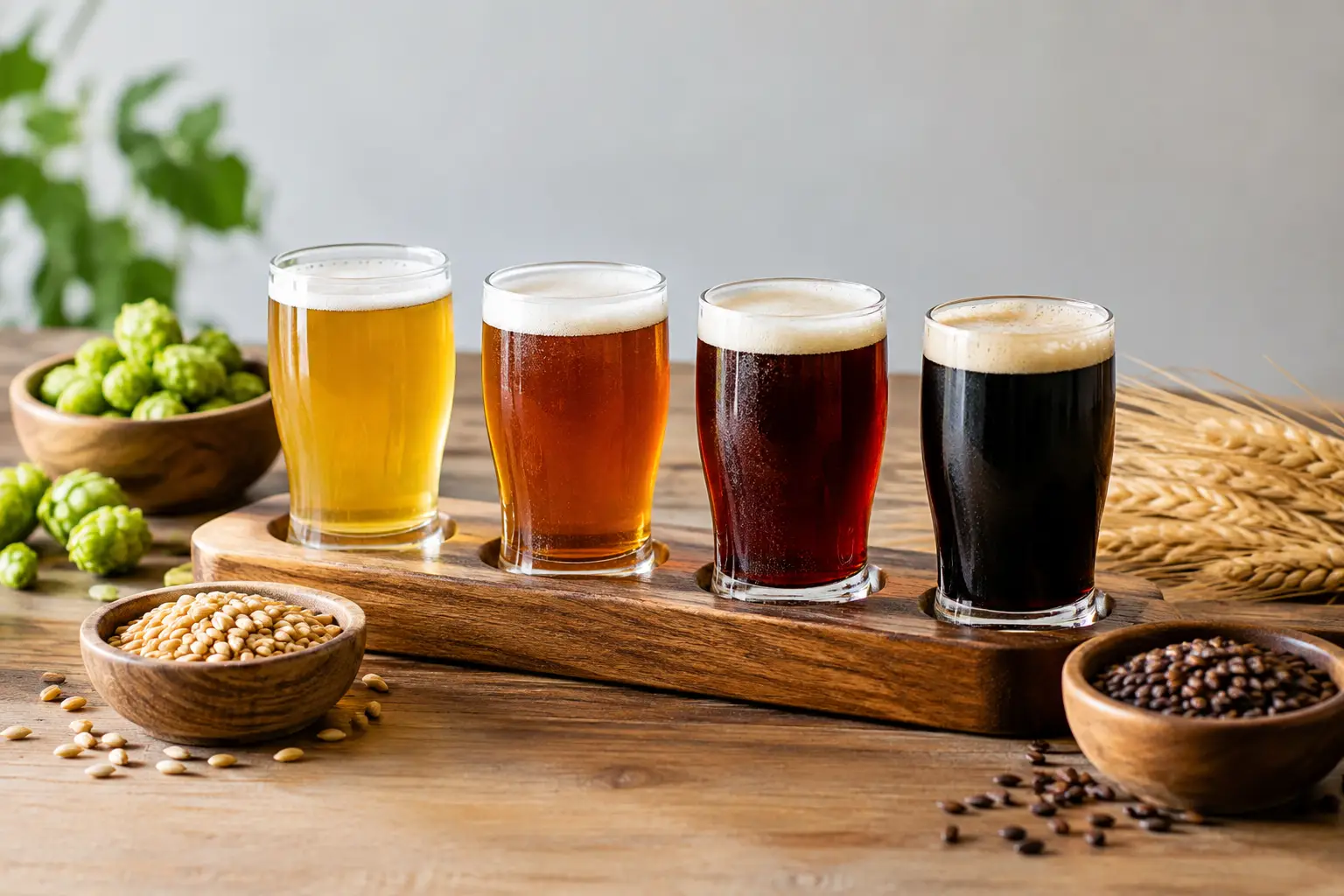
A beer can taste bright, bready, sharp, creamy, juicy or pleasantly bitter - yet many people stop at “nice” because they are unsure what else to say. A useful beer flavour vocabulary changes that. It gives you simple, honest words for what is already happening in your glass, without turning a relaxed drink into an exam.
You do not need to identify every ingredient or make dramatic claims about a single sip. The aim is more practical: notice a little more, describe it with confidence, and remember what you enjoyed. Start with what feels obvious. Precision develops through comparison, not pressure.
Beer flavour vocabulary starts with four places to notice
Beer is experienced in stages. Separating those stages makes tasting feel calmer and gives your notes a natural structure.
First, notice the aroma before you drink. Then consider flavour as the beer moves across your palate. Pay attention to mouthfeel, which is its texture and weight. Finally, pause for the finish: what remains after you swallow, and for how long.
These categories overlap, and that is normal. A citrus-like hop aroma may carry into the taste; a dry finish may make the bitterness seem firmer. You are not trying to place every impression in a perfect box. You are giving yourself a few reliable places to look.
Describe aroma without guessing too hard
Aroma is often the easiest place to begin because it arrives before the first sip. Hold the glass still for a moment, then take a gentle smell. A vigorous swirl is rarely necessary for beer and can release too much carbonation.
Rather than searching for a highly specific answer, begin with a broad family. Does it feel citrusy, tropical, floral, herbal, spicy, malty, toasty, roasted, fruity or yeasty? From there, you can narrow it down if it helps.
For example, a pale ale might smell of grapefruit, lemon peel, mango, pine or freshly cut grass. A lager may suggest bread dough, crackers, grain or a light floral note. In darker beers, look for cocoa, coffee, toast, caramel, dried fruit or a subtle nuttiness.
Words such as “fresh”, “restrained”, “lifted” and “expressive” are useful too. They describe intensity without pretending you can name every aroma. Saying, “The aroma is soft and bready with a little lemon” is a strong tasting observation.
Malt, hops and fermentation character
A simple way to make sense of aroma is to think about where it may come from. Malt often brings cereal, biscuit, honey, caramel, toast and roast. Hops commonly bring citrus, tropical fruit, pine, flowers, herbs and spice. Yeast can contribute notes such as banana, clove, pear, pepper or bread dough.
This is a guide, not a rulebook. A beer may be deliberately hazy and fruit-forward, clean and crisp, or layered with both roast and hop character. Describe what you notice first; save the technical explanation for later, if it adds value.
Use flavour words that say something useful
On the palate, start by asking whether the beer leans towards sweetness, bitterness, acidity or savouriness. Most beers contain more than one of these, but one may lead.
Sweetness can read as honeyed, caramelised, biscuit-like, toffee-like, chocolatey or ripe-fruited. In beer, “sweet” does not always mean sugary. A malty brown ale can seem sweet because of its rich cereal and caramel character, even when it finishes fairly dry.
Bitterness is usually associated with hops. It may be gentle, clean, brisk, firm, assertive or lingering. Avoid treating bitter as a criticism. A dry pilsner may have a neat, refreshing bitterness; an India pale ale may offer a fuller, resinous bitterness that balances ripe fruit notes. Whether it feels enjoyable depends on the style, the serving temperature and your own preference.
Acidity can make beer feel zesty, tart, tangy or crisp. It is especially noticeable in sour styles and some wheat beers, but a light freshness can appear elsewhere too. Savoury impressions might include bread crust, nuts, herbs, earth, umami or a faint mineral quality.
When a specific comparison comes naturally, use it. “Orange zest” is clearer than “citrus”. But broad language is still valuable. “Bright citrus with a dry, bitter edge” tells you far more than a list of uncertain fruit names.
Mouthfeel is the part many notes miss
Mouthfeel describes how beer feels, not just how it tastes. It is one of the most helpful areas of beer flavour vocabulary because it explains why two similarly flavoured beers can feel completely different.
Consider the body first. Is it light-bodied, medium-bodied or full-bodied? A light lager may feel delicate and quick across the palate. A stout might feel rounded and fuller, while a strong Belgian-style ale can feel rich without being heavy.
Then notice carbonation. It can be soft, fine, lively, fizzy, prickly, creamy or gently sparkling. High carbonation can sharpen a beer’s refreshment and lift its aroma. Lower carbonation can make malt flavours feel broader and smoother.
Other useful texture words include silky, crisp, smooth, velvety, creamy, chewy, oily, drying and warming. “Drying” often describes the sensation left by bitterness, roast, tannin-like grain character or alcohol. “Warming” is common in stronger beers, where alcohol creates gentle heat in the finish.
There is no need to force a texture description for every beer. But when a beer surprises you, mouthfeel is often the reason. A note such as “soft and pillowy, with fine carbonation” can explain exactly why a hazy pale ale felt more inviting than a sharper example.
The finish tells you what lasts
The finish begins after the swallow. Ask three questions: what remains, how intense is it, and how long does it last?
A finish may be clean, dry, crisp, bitter, warming, roasty, sweet, fruity, spicy or lingering. A “clean finish” means the flavours fade neatly rather than leaving a heavy or muddled impression. A “long finish” means a flavour persists, not necessarily that it is stronger.
Try to distinguish between a finish you enjoy and one you merely notice. A lingering roasted bitterness may be exactly right in a stout but distracting in a delicate lager. Context matters. The most useful note is not “good” or “bad”, but why the finish worked for you.
A practical sentence for any beer
If a blank tasting note feels intimidating, use this simple shape: The beer smells like [aroma], tastes [main flavour], feels [texture], and finishes [final impression].
For example: “The beer smells lightly of grapefruit and pine, tastes bright and biscuit-like, feels lean with lively carbonation, and finishes dry with a firm bitterness.” This is clear, personal and detailed enough to remember later.
As you gain confidence, add one preference-based observation: “I would choose this with grilled food,” or “I preferred it once it had warmed slightly.” Temperature, glassware, food and mood all influence perception, so your own context belongs in the note.
Words to use carefully
Some terms can be useful but need a little care. “Hoppy” simply means hop character is noticeable; it does not automatically mean bitter. “Crisp” usually suggests light body, refreshing carbonation and a dry or clean finish, but people use it differently. “Smooth” is positive for many drinkers, yet it can refer to low bitterness, soft carbonation, a creamy texture or all three.
Be careful with flavour words that may signal a fault. Cardboard-like, papery or stale can suggest oxidation. Vinegar-like sharpness, buttery notes in an unexpected beer, medicinal character, or an overtly sulphurous smell may be unwanted. Even here, context matters: some traditional styles deliberately show earthy, funky, smoky or spicy notes that a newcomer might initially find unusual.
If you are unsure, record the sensation rather than diagnosing it. “A slightly papery finish” is more useful and more accurate than declaring that the beer is faulty.
Build a tasting memory, one comparison at a time
The fastest way to make sensory language stick is to compare two beers with one clear difference. Try a crisp lager beside a hazy pale ale, or a porter beside a stout. Notice body, carbonation, bitterness and finish before looking for obscure tasting notes.
Keep notes short enough that you will actually revisit them. Saving the beer name, style, a few sensory words and one line about whether you would drink it again is plenty. Over time, patterns emerge: perhaps you prefer a dry finish, fine carbonation or toasted malt over sweeter caramel notes.
Audio Sommelier can help turn those small observations into a personal tasting record, with guided prompts that keep the process clear and unpretentious. The goal is not to sound like somebody else at a tasting table. It is to recognise your own preferences with more confidence, one thoughtful glass at a time.