15 Jun 2026
Beer Flavour Wheel Explained Simply
Beer flavour wheel explained in clear, practical terms. Learn how to spot aroma, taste and mouthfeel notes with more confidence at home.
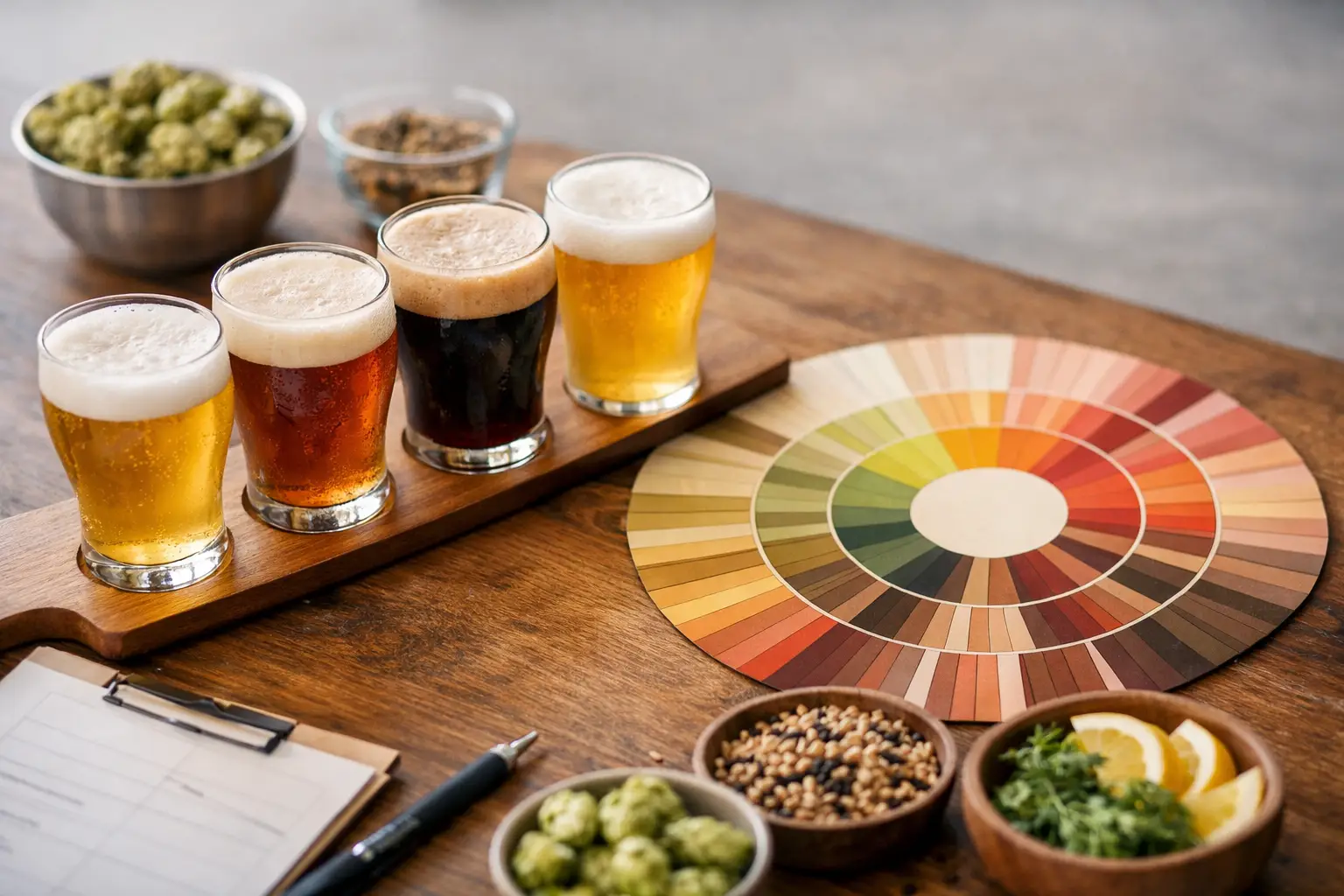
You take a sip, pause, and know you like it - but the words don’t quite arrive. Is it citrusy, floral, bready, bitter, crisp, or something slightly toasted that feels familiar but hard to name? That is exactly where a beer flavour wheel explained properly becomes useful. It gives structure to what you are already noticing, so tasting feels less vague and far more confident.
For most people, the challenge is not having an untrained palate. It is having no clear system. A flavour wheel helps you move from a broad impression to a more precise description, without turning a relaxed pint into an exam.
What is a beer flavour wheel?
A beer flavour wheel is a visual tasting tool that groups beer aromas and flavours into categories, then breaks those categories into more specific descriptors. You usually start in the centre with a broad family such as fruity, spicy, malt, hop, roasted, sour, or sulphury. From there, you move outwards to more detailed terms like grapefruit, clove, biscuit, pine, coffee, lemon, or hay.
Think of it as a prompt rather than a verdict. It does not tell you what you must taste. It helps you find language for what is already in the glass.
That matters because beer can be surprisingly layered. Even a straightforward lager may show grain, herbal hop character, light bitterness and a clean mineral finish. A stout might bring cocoa, roast, toast and a faint dried fruit note. Without a framework, those details often stay blurred together.
Beer flavour wheel explained: how to read it
Most flavour wheels work from general to specific. The centre contains the largest flavour families. The outer rings narrow those families into individual notes. If you are tasting a pale ale and sense something bright and lifted on the nose, you might start with fruity or hop-derived aromas. Then you ask what kind of fruit it suggests - citrus, tropical, stone fruit, orchard fruit, or something greener and more herbal.
This sequence is useful because the brain tends to identify patterns before specifics. You often notice that a beer smells fresh and zesty before deciding whether that means lemon peel, grapefruit, or lime. The wheel follows that natural process.
It also helps prevent overreaching. If you are unsure whether a beer smells exactly like apricot, saying stone fruit is still accurate and helpful. Better tasting language does not mean forcing precision that is not there. It means choosing the clearest honest description available.
The main sections of a beer flavour wheel
Different versions vary slightly, but most beer flavour wheels include a few core areas.
Malt and grain notes
These descriptors come from the grain bill and the way malts are kilned or roasted. In lighter beers, malt notes can suggest bread, cracker, cereal, biscuit or honey. In darker styles, they move towards toast, caramel, toffee, chocolate, coffee or burnt sugar.
This is one of the easiest sections for beginners because many of the references are familiar. If a beer reminds you of crusty bread, digestive biscuit or cold brew coffee, that is useful tasting language. It does not need to sound more technical than that.
Hop-driven flavours and aromas
Hops can bring bitterness, but they also contribute a wide range of aromas. Common descriptors include floral, herbal, resinous, grassy, citrus, tropical fruit and pine. A modern IPA may show mango, passion fruit and orange zest, while a traditional bitter might lean more earthy, woody or hedgerow-like.
It depends on hop variety, freshness and the brewing style. A highly aromatic beer can smell intensely fruity without containing any fruit at all. That catches many people out at first.
Yeast and fermentation character
Yeast does more than produce alcohol. It creates flavour compounds that can shape the whole character of the beer. In some Belgian styles, yeast may bring clove, pepper, banana or bubblegum notes. In cleaner lagers, fermentation character is often more restrained, allowing malt and hops to lead.
This is where a flavour wheel can sharpen your attention. If a beer feels gently spicy or estery, the source may not be hops or adjunct ingredients but fermentation itself.
Roast, smoke and savoury notes
Darker or more specialised styles can show espresso, cocoa, ash, char, smoke, leather, liquorice or even subtle soy-like savoury notes. These flavours are not faults by default. In the right style and at the right intensity, they add depth.
The trade-off is balance. A hint of roast can feel pleasingly dry and warming. Too much can tip into acrid or burnt territory, especially if the beer lacks enough body to support it.
Sour, wild and funky notes
In sours, saisons and mixed-fermentation beers, the wheel may include lactic, acetic, funky, earthy, barnyard, lemony or yoghurt-like descriptors. These can sound odd on paper, but in the glass they often translate into freshness, complexity and lift.
This is one area where context matters a great deal. A sharp acidic note in a gueuze may be exactly right. The same note in a standard lager would feel out of place.
Aroma, flavour and mouthfeel are not the same thing
One reason people struggle with tasting language is that they mix these categories together. The beer flavour wheel mostly focuses on aroma and flavour, but mouthfeel changes the experience too.
A beer can smell of caramel and still feel dry. It can taste citrusy while having a soft, creamy texture. It can seem bitter not only because of hops, but because high carbonation makes the finish feel sharper.
When tasting, it helps to separate your observations. First notice what you smell. Then what you taste on the palate. Then how it feels in the mouth - light, full, silky, prickly, smooth, astringent. Finally, pay attention to the finish. Does the bitterness linger? Does the fruit fade quickly? Does a roasted note stay behind?
That simple sequence often gives more clarity than chasing the perfect descriptor straight away.
How to use the wheel without overthinking it
A practical approach works best. Pour the beer into a glass, give it a moment, and smell before your first sip. Start broad. Does it feel malt-led, hop-led, yeast-led, roast-led, or sour-led? Then move one level more specific.
You do not need five descriptors. Two or three honest ones are enough. For example, you might describe a pilsner as crisp, herbal and bready. A hazy IPA might be soft, tropical and slightly bitter. A porter could be roasted, chocolatey and dry.
If you are tasting with someone else, compare language rather than trying to agree on a single correct answer. One person’s orange peel may be another person’s marmalade. Those are not necessarily contradictions. They may be different ways of naming a similar impression.
This is also where guided tasting can help. If you regularly enjoy beer at home but find it difficult to remember what you liked, using a structured tasting flow and saving notes over time makes patterns much easier to spot. You begin to notice, for instance, that you consistently prefer floral pilsners over resinous pale ales, or dry stouts over sweeter milk stouts.
What the flavour wheel cannot do
A flavour wheel is helpful, but it is not magic. It cannot replace context, freshness or style knowledge. A heavily chilled beer will reveal less aroma. A tired can may show muted hop character. Glassware, temperature and even what you ate beforehand can affect what you notice.
It also cannot decide whether a note is desirable in that style. Buttery diacetyl may suit some traditional beers in small amounts, but feel distracting in others. Sulphur can be acceptable in certain lagers and unpleasantly eggy in the wrong setting. The wheel gives vocabulary. Judgement comes with experience.
That is why confidence in tasting should be built on observation, not performance. You are not trying to sound impressive. You are trying to notice more clearly.
Beer flavour wheel explained for beginners at home
If you are just starting, choose beers with distinct profiles rather than subtle ones. A classic IPA, a wheat beer, a stout and a lager will teach you more quickly than four similar pale lagers. Taste slowly, keep your descriptors simple, and revisit styles you think you already know.
It helps to anchor flavours to everyday references. Freshly cut grass, orange zest, toast, black coffee, clove, lemon curd, crusty bread - these are easier to recall than abstract tasting terms. Over time, your vocabulary grows because your memory grows.
The most useful habit is consistency. Use the same order each time: look, smell, sip, feel, finish. Then write down a few notes. If you use a tool such as Audio Sommelier to guide that process, the value is not in being told what to think. It is in having a calm structure that helps you trust your own senses.
A beer flavour wheel is not there to make beer more complicated. It is there to make your enjoyment more deliberate, your language more precise, and your next bottle a little easier to choose.