10 Oct 2026
Audio Tasting Platforms: A Better Way to Learn
Audio tasting platforms bring calm, guided structure to wine and spirits at home, helping you notice more, build tasting language and remember each bottle.
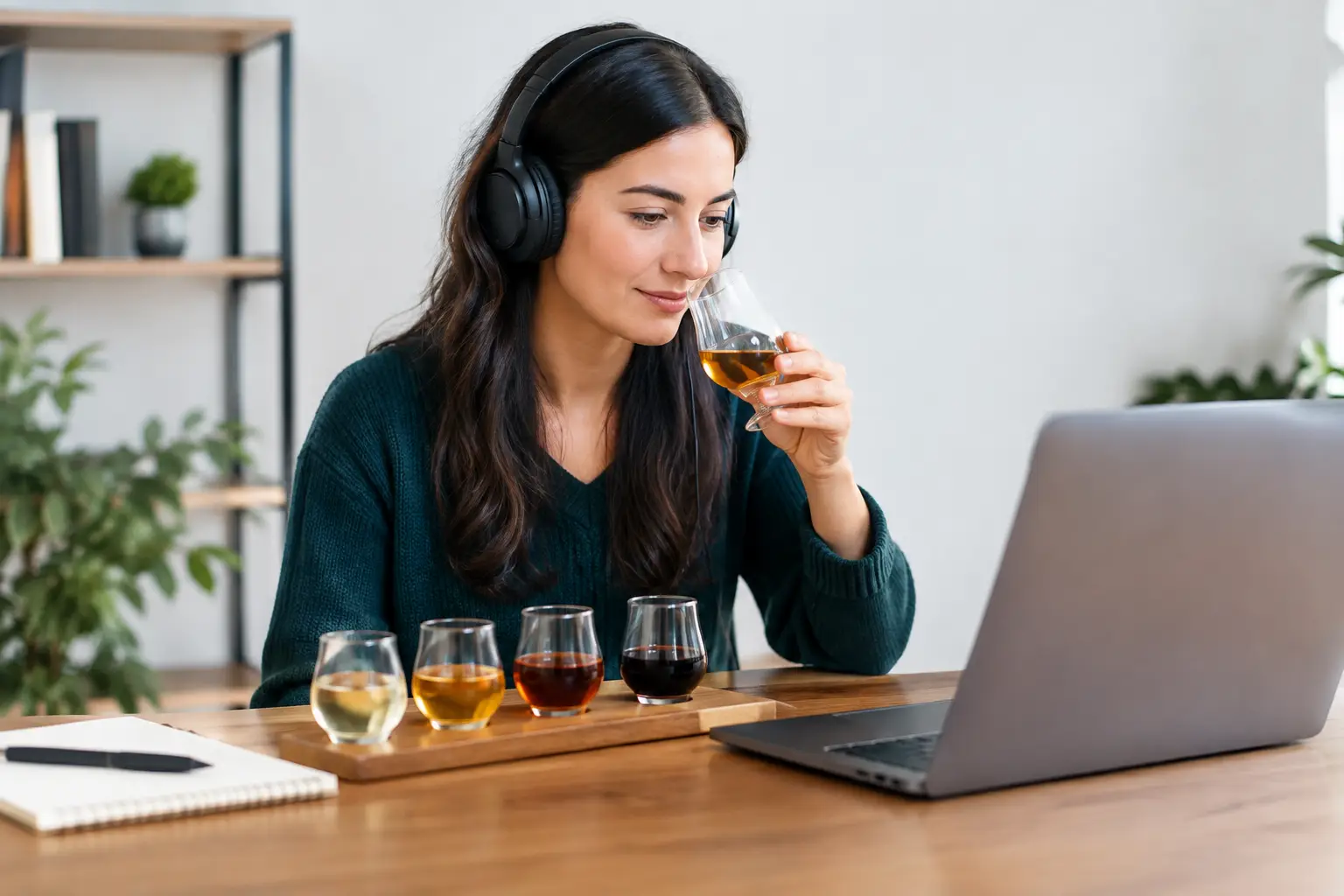
A bottle can be excellent and still feel slightly anonymous after the first glass. You may know that you enjoyed it, but not whether it was the ripe fruit, the gentle warmth, the creamy texture or the dry finish that made you reach for a second pour. Audio tasting platforms are designed to close that gap, giving you a calm voice to follow while the drink is in front of you.
They are not a replacement for your own taste. They are a way to pay closer attention to it. For adults who enjoy wine, whisky, beer or spirits at home, that distinction matters. Better tasting is not about reciting professional jargon. It is about becoming more confident in what you notice and more able to choose bottles you will genuinely enjoy.
What are audio tasting platforms?
Audio tasting platforms provide spoken guidance for tasting alcoholic drinks. Rather than reading a long tasting note before you start, you listen as the session moves through the glass: appearance, aroma, texture, flavour and finish. The pace gives you time to smell, sip and reflect before being prompted to put a name to what you are experiencing.
This format is especially useful when you are still developing your sensory vocabulary. A written descriptor such as “stone fruit” can be helpful, but it may not tell you what to do next. A well-designed audio guide can ask you to take a gentle smell, notice whether the aroma feels fresh or rich, and consider whether it reminds you of pear, peach, citrus peel or something else entirely. There is room for your own answer.
The best platforms do more than play an audio track. They help you save bottles, record impressions and return to those memories later. Over time, a tasting stops being a one-off moment and becomes part of a personal reference library.
Why guided listening changes the tasting experience
At home, most people taste quickly. They may pour a glass while making dinner, catching up with friends or settling in at the end of the week. There is nothing wrong with that. But when every bottle is approached at the same speed, it is easy to miss the details that make one Chardonnay feel generous and rounded while another feels bright and lean.
Audio changes the rhythm without making it formal. It gives each stage a little more space. You look before sipping. You smell before deciding. You notice the feeling of the drink on the palate, then the flavour that remains after swallowing.
That small amount of structure can make tasting far less intimidating. A beginner does not have to wonder whether they are doing it correctly. They simply follow a clear prompt. A more experienced drinker can slow down and spot patterns they might otherwise overlook.
There is also a practical advantage to listening rather than reading. Your hands are free to hold the glass, and your attention stays with the drink rather than a screen full of descriptors. The guidance should feel like a knowledgeable host at the table: present, precise and never overbearing.
The value is in the pause
The most useful moment in a guided tasting is often the pause after a question. “Does the finish disappear quickly, or does it stay with you?” is not a test with a right answer. It helps you connect a physical sensation with language you can use again.
That is how tasting confidence grows. Not by memorising hundreds of flavour terms, but by noticing a few things clearly and building from there. You might begin with sweet, dry, light and rich. Later, you may naturally distinguish vanilla from toasted oak, or black pepper from warming alcohol.
From vague preferences to useful tasting memory
“I like red wine” is a starting point, not much of a buying guide. The same is true of saying you enjoy whisky, beer or sparkling wine. Each category is broad, and personal preferences are usually more specific than we realise.
A saved tasting record gives shape to those preferences. Perhaps you discover that you enjoy reds with soft tannins and dark berry fruit, but not those that feel heavily drying. Perhaps you prefer a whisky with orchard fruit and gentle spice over a smoky, medicinal style. Maybe a particular lager appeals because it is crisp and herbal rather than bitter and weighty.
When those observations are stored in one place, choosing your next bottle becomes easier. You are no longer relying on a half-remembered label or trying to recreate a recommendation from months ago. You have your own notes, in your own words, built from drinks you actually tasted.
This matters for value as well as enjoyment. A £15 bottle that teaches you something about your taste can be more rewarding than an expensive bottle you drink without noticing. Intentional tasting helps you get more from what you already buy, rather than pushing you towards more purchases.
What to look for in an audio tasting platform
Not every guided tasting experience will suit every drinker. The right choice depends on whether you want a quick introduction, a growing catalogue of sessions, or a longer-term way to organise your tasting life. Still, a few qualities make a meaningful difference.
First, look for guidance that is clear without being prescriptive. Good prompts offer possibilities rather than telling you what you must detect. If you cannot smell blackberry, that does not mean you have failed. You may notice plum, dried herbs or simply a darker, fuller aroma. Your response is valid because it is your sensory experience.
Second, consider whether the platform supports the bottles you already own. The most practical service works with real life: a supermarket wine opened on a Tuesday, a gift bottle of single malt, a favourite local beer, or a sparkling wine saved for a celebration. You should not need to buy a particular product simply to use the guidance.
Third, think about memory and comparison. Saving a tasting is useful. Being able to compare several saved bottles is more powerful. A flight view can reveal why two similar-looking wines feel completely different, or help you identify the style of gin you return to most often.
Finally, trust matters. A tasting platform should be clear about what it is: a digital guidance service for legal-age adults, not a seller of alcohol or a source of pressure to consume more. Privacy, transparent membership terms and practical support are part of a good experience, not an afterthought.
A simple way to start at home
You do not need special glassware, a tasting room or an encyclopaedic palate. Choose a bottle you already have, pour a modest measure and give yourself ten unhurried minutes. Avoid strong cooking smells, scented candles and heavily flavoured snacks if you can, as they can distract from aroma and flavour.
Start with appearance. Is the drink pale or deep in colour? Still or sparkling? Then smell it twice: once with a gentle sniff, then again after a swirl if the drink suits it. Take a small sip and let it move around the mouth. Does it feel light, silky, creamy, sharp, warming or drying? Finally, notice what remains after you swallow.
Write down only a few observations. A useful note could be: “Bright and citrusy, light-bodied, with a dry finish. Better with food than on its own.” That is far more valuable than trying to produce a polished review. The note will make sense when you revisit it later.
Audio Sommelier brings this process together through guided audio sessions, a personal Smart Vault and comparative Flights. The aim is straightforward: add the bottle, save it, and start tasting with more first-sip confidence.
The trade-off: guidance should not become noise
More information is not always better. Some tasting content overwhelms people with technical production details before they have had the chance to enjoy the glass. Others reduce a drink to a score, which can make personal preference seem less important than an expert verdict.
Audio guidance works best when it stays focused on what is in the glass and what you can sense now. Background knowledge has its place, particularly when you become curious about grape varieties, regions, cask ageing or brewing methods. But it should support the tasting, not crowd it out.
The same applies to session length. A detailed whisky tasting may deserve twenty minutes, while a refreshing beer after work may call for a shorter prompt. A useful platform respects both occasions. It helps you make the experience more intentional without turning every drink into homework.
Tasting is a skill you can make your own
There is no need to wait for a special bottle or a formal occasion to taste with more care. Start with something familiar. Notice one new detail. Save one honest thought about it. The next time you pour a glass, you will have a little more language, a little more memory and a clearer sense of what makes a drink worth returning to.