11 Aug 2026
AI Sommelier App Review for Better Tasting
Our AI sommelier app review explains guided audio tastings, tasting notes, saved bottles and flights, so you can decide if Premium suits you at home today.
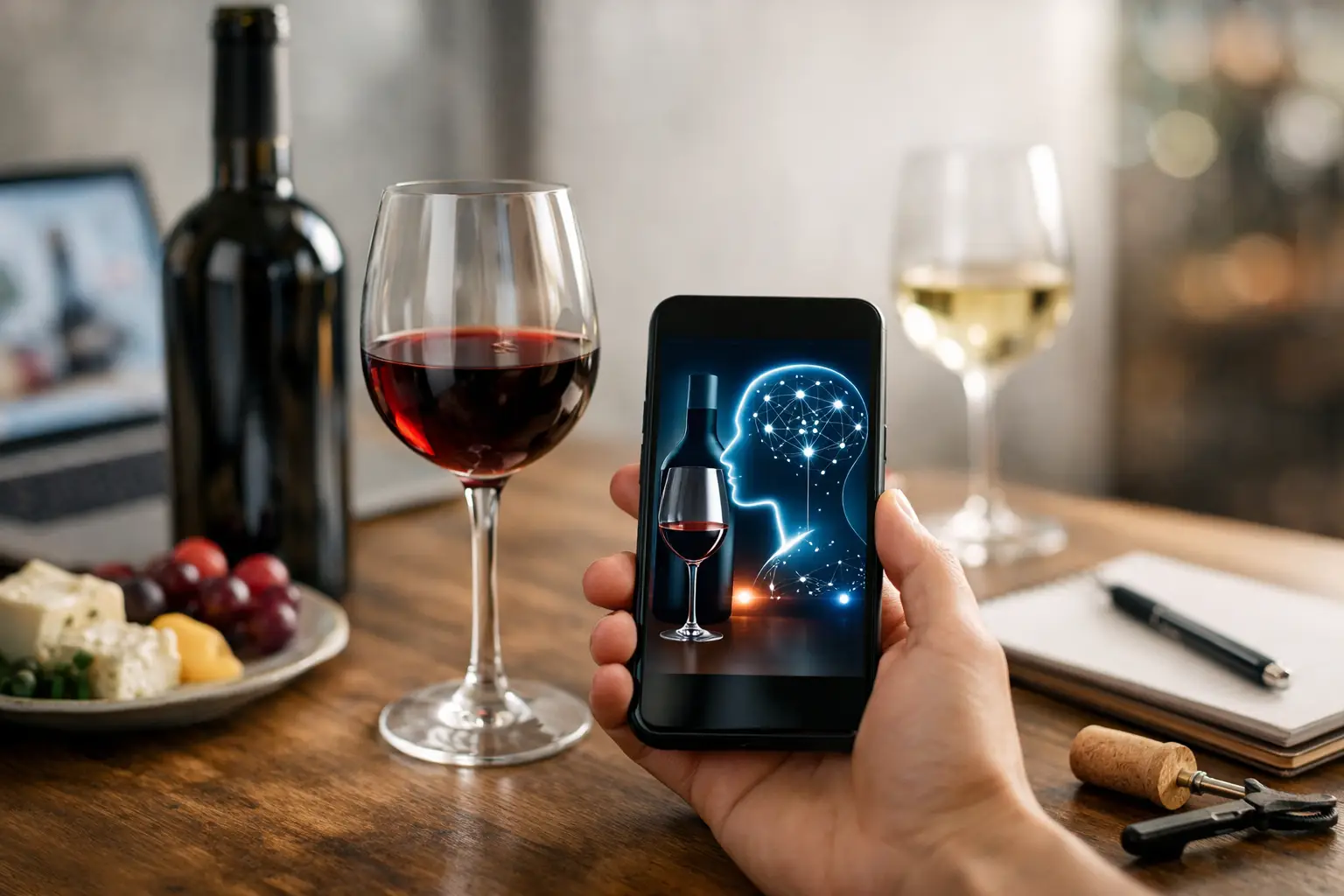
A bottle can be enjoyable without being memorable. You may know that you liked it, but struggle to say whether it was the ripe blackberry fruit, the soft tannins, the peppery finish or simply the occasion. This AI sommelier app review looks at whether digital tasting guidance can turn that uncertainty into a more confident home ritual.
The short answer is that the best AI sommelier apps are not trying to replace your own palate. They give you a calm structure for paying attention: what to smell first, what the texture feels like, what changes after a few seconds, and how to record the details worth remembering. For curious beginners and developing enthusiasts, that can make the bottles already in the cupboard far more rewarding.
What should an AI sommelier app actually do?
An app earns its place only if it is useful at the moment you have a glass in hand. A long database of scores and producer facts may be interesting, but it does not necessarily help you recognise a lemon-zest aroma in a sparkling wine or explain why a whisky feels warming rather than harsh.
A good AI sommelier should guide rather than lecture. It should use plain sensory prompts, answer follow-up questions in context and leave room for a personal response. There is no correct answer to whether a beer reminds you of toasted bread or biscuit, for example. The value lies in learning to notice what is present and finding language that feels honest to you.
That distinction matters because tasting culture can feel needlessly intimidating. Technical terms have their place, yet they are most useful when they clarify an experience rather than test your knowledge. No wine knowledge should be needed before you begin.
AI sommelier app review: the features that matter
When comparing apps, look beyond the promise of artificial intelligence. The experience is shaped by the guidance, the quality of the questions and what happens to your tasting notes afterwards.
Guided tasting versus a generic chat box
A question-and-answer feature can be helpful when you want to ask, “Why does this red feel dry?” or “What food might suit this liqueur?” But chat alone is rarely enough for someone learning to taste. Open questions can leave a beginner staring at the glass, unsure where to start.
Guided tastings provide the missing sequence. They invite you to look, smell, sip and reflect, often with prompts around aroma, sweetness, acidity, body, texture and finish. Audio-led guidance is particularly practical because it lets you keep your hands free and your attention on the drink rather than on a screen. It also creates a gentler pace. You are less likely to rush past the aroma and more likely to notice how the finish develops.
The trade-off is that guidance should not become rigid. A useful app offers structure without pretending every bottle will behave in the same way. A light red, a heavily peated whisky and a traditional-method sparkling wine need different prompts and different expectations.
A memory that becomes more useful over time
Most people have had the same frustrating moment: trying to remember the wine they enjoyed at a dinner a few months ago, with only a vague recollection of the label. A personal tasting record solves a practical problem, but it can do more than store a score.
The strongest systems let you save the bottle, add your own notes and return to them later. Over time, patterns emerge. You may find that you prefer brighter acidity in white wine, softer oak in whisky, or beers with citrus hop character rather than a heavy bitter finish. That is more meaningful than relying on a universal rating because it is based on your taste, your occasions and your own vocabulary.
A Smart Vault approach is especially valuable for regular drinkers who want to build a private, useful record rather than post every glass publicly. Privacy and clarity matter here. Your notes should feel like a personal reference, not content you are expected to perform for others.
Comparative flights, not isolated scores
A single tasting teaches you something. Two or three related pours can teach you much more. Comparing a crisp Sauvignon Blanc with a richer Chardonnay, or a bourbon with a Scotch whisky, makes differences in aroma, weight and finish easier to spot.
This is where saved tasting items become more than a notebook. An app that lets you build flights from bottles you have already tried helps you revisit your preferences with purpose. You do not need to buy a special tasting set. You can compare what is already at home, perhaps across a few evenings rather than all at once.
The practical limitation is that comparative tasting works best when you keep the setting reasonably consistent. Use similar glasses where possible, avoid strong cooking smells and taste slowly. The app can organise the exercise, but it cannot remove every distraction from the room.
Who will get value from a subscription?
A paid tasting app makes most sense for someone who wants to use it repeatedly, not merely identify one bottle before a dinner party. If you buy wine, spirits, beer or sparkling wine for home enjoyment and often wish you could describe what you liked, regular guidance can quickly become part of the experience.
Audio Sommelier is designed around that repeat use. Its Premium membership is €19 per month and includes guided tastings, AI Sommelier Q&A, a Smart Vault for saved bottles and notes, and the ability to create comparative Flights from your collection. It is a digital guidance service, not a drinks retailer, so the focus remains on helping you get more from beverages you have chosen yourself.
For a curious beginner, the clearest benefit is first-sip confidence. Instead of wondering what you are supposed to detect, you receive a practical next prompt. For a hobbyist, the value tends to be the accumulated memory: notes that become more precise, preferences that become easier to recognise and comparisons that make each new bottle more informative.
It may be less suitable for someone who only wants quick crowd-sourced ratings, restaurant recommendations or cellar-management tools. Those are different jobs. An AI sommelier app is strongest as a companion for the tasting moment itself and for the personal record built around it.
How to get better results from tasting guidance
Set aside ten unhurried minutes when you can. Pour a modest measure and begin before the drink becomes too warm or too cold. You do not need a laboratory-like environment, but it helps to move away from scented candles, strong perfume and a meal that overwhelms the glass.
Start with what is obvious. Is the aroma fresh, fruity, floral, spicy, smoky, creamy or earthy? On the palate, does it feel light and lively, rounded and smooth, drying, warming or rich? Then notice the finish: does the flavour disappear quickly, linger gently or change into something new?
Write notes in your own words before reaching for formal terms. “Reminds me of baked apples” is a better note than forcing “stone fruit” when that does not feel accurate. Over several tastings, your vocabulary will naturally become broader. The point is not to sound like a professional. It is to make your next choice more informed and your current glass more enjoyable.
The verdict: guidance is better than guesswork
The most convincing AI sommelier apps treat technology as a helpful host, not the centre of attention. Their job is to make tasting feel less mysterious, preserve the details that matter and give you a clearer sense of what to choose again.
Choose one with guided audio if you want a more immersive, screen-light experience; choose one with saved notes and flights if you want your learning to build over time. Used thoughtfully, an app cannot tell you what you should enjoy. It can help you hear your own palate more clearly, one considered sip at a time.