12 Sep 2026
Tasting Journal vs Digital Vault: Which Fits You?
Compare a tasting journal vs digital vault and choose the right way to capture aromas, flavours and favourites from every bottle you open at home, clearly.
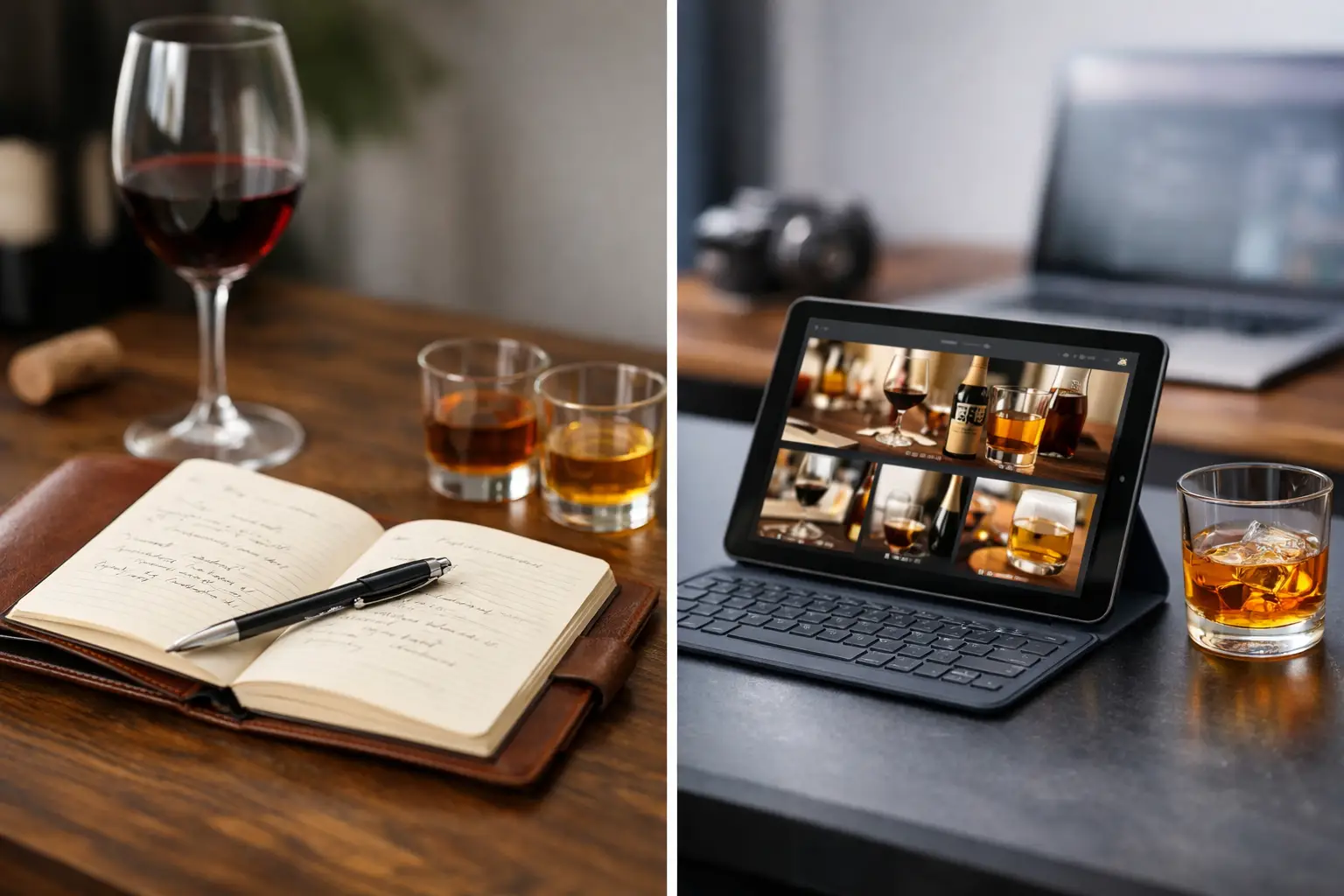
A bottle can be memorable for more than its label. Perhaps a whisky surprised you with orange peel and toasted oak, or a red wine finally made “silky tannins” make sense. Yet a few weeks later, the details have faded. A tasting journal vs digital vault comparison comes down to one useful question: how do you want to remember what you tasted well enough to choose, describe and enjoy it again?
There is no single correct answer. A paper notebook offers a quiet, hands-on ritual. A digital record offers structure, search and the ability to spot patterns across dozens of bottles. The better choice depends on how you taste, how often you return to your notes and whether your aim is simply to remember a pleasant evening or to build real tasting confidence over time.
What are you really trying to save?
A useful tasting record does more than list a bottle name and a score out of ten. It captures the moment in a way your future self can use. That might include aroma, flavour, texture, finish, food pairing, serving temperature, who you shared it with and whether you would buy it again.
For a beginner, the most valuable note may be wonderfully simple: “fresh, lemony, light and easy with grilled fish.” For a developing enthusiast, it may be the realisation that several favourite whiskies share a waxy texture, orchard-fruit character and a long, gently smoky finish. Both are valid. The point is not to sound like an expert. It is to notice your own preferences with more clarity.
Your recording method should make that process easier, not turn a relaxed glass at home into homework.
Tasting journal vs digital vault: the practical difference
A tasting journal is a physical notebook, printed tasting book or set of cards where you write by hand. A digital vault is a private, organised collection of tasting records stored on a phone, tablet or computer. Both can hold useful observations. Their differences show up in the moments before, during and after you taste.
Why a tasting journal still has a place
Writing by hand slows you down. That can be a genuine advantage when you are learning to taste. Instead of rushing to name every aroma, you may pause, take another gentle smell and find better words. The page becomes part of the ritual: pour, observe, taste, reflect, write.
Paper is also pleasingly free of distractions. There are no notifications beside the glass, no concern about battery life and no pressure to complete every field. You can sketch a label, tape in a receipt or jot down a quick thought in your own shorthand. For people who already enjoy journalling, this can make a tasting feel personal rather than technical.
A notebook works especially well if you taste occasionally, prefer a slower evening ritual or want a keepsake of particular bottles and occasions. It is uncomplicated, private and entirely yours.
The limitation is not the writing itself. It is what happens later. Finding the white wine you loved last spring can mean turning through pages. Comparing every peated whisky you have tried requires patience. If your handwriting is rushed or your notes vary from one tasting to the next, the information becomes harder to use.
Where a digital vault earns its place
A digital vault turns individual impressions into a usable tasting memory. You can save a bottle once, return to it whenever you like and search by category, style, producer, flavour cue or personal rating. That makes it far easier to answer everyday questions: What sparkling wine did we enjoy at Christmas? Which beer had that bright grapefruit note? Have I tried another rum with the same molasses richness?
Structure is the central benefit. A good digital record encourages you to notice aroma, palate, texture and finish without demanding formal knowledge. Prompts offer a starting point when “I like it” is all you can initially say. Over time, those small observations become a clearer picture of your taste.
Digital records also make comparison more natural. If you have saved several bottles, you can place them alongside one another and notice recurring themes. Perhaps you enjoy fresh acidity in white wine, creamy texture in sparkling wine or vanilla-led oak in bourbon. Those discoveries help when choosing your next bottle, planning a tasting with friends or asking for recommendations.
For this to feel trustworthy, the vault needs to be simple to use and respectful of privacy. Your tasting notes are personal preferences, not public performances. A well-designed system should help you organise them without making you feel exposed or overwhelmed.
The trade-off is that a digital vault can feel less intimate than a notebook. Some people also find that typing during a tasting interrupts the atmosphere. That is not a reason to reject it. It simply suggests choosing the right moment to record your thoughts - perhaps after the first few unhurried sips, rather than while trying to notice everything at once.
Choose based on your tasting habit
If you open a bottle once in a while and value the sensory pleasure of handwriting, a journal may be all you need. Start with the bottle name, three words about the experience and one note for next time. Consistency matters more than detail.
If you regularly explore wine, whisky, beer, spirits or liqueurs, a digital vault will usually offer more long-term value. The more bottles you save, the more helpful searching and comparison become. This is particularly true if you enjoy hosting, shopping with intention or trying to understand why one bottle appealed more than another.
A digital vault is also useful for anyone who finds tasting vocabulary intimidating. Rather than beginning with a blank page, you can work from guided sensory cues. You do not need to identify a precise fruit, spice or cask influence on your first attempt. “Ripe fruit”, “warming”, “drying” or “smooth finish” are useful observations when they are honest.
There is a middle ground, too. Keep a physical journal for special occasions and a digital vault for your ongoing collection. Write freely in the moment, then save the key details later. This approach suits people who love the ceremony of paper but do not want to lose the convenience of a searchable record.
The real value is comparison, not perfection
Many people stop taking notes because they believe their descriptions are not sophisticated enough. That misses the point. Your notes become valuable through repetition. A simple entry made twenty times can reveal more about your preferences than one elaborate page completed only once.
Try using the same short sequence each time: what do you smell, how does it feel in the mouth, what flavours stand out, how long does the finish last and would you choose it again? You will not always have an answer for every part. Leave space for uncertainty. Tasting is a skill built through attention, not a test with fixed answers.
A digital system can make this practice feel lighter. Audio-led guidance, for example, lets you keep your focus on the glass rather than searching for the right terminology. Audio Sommelier pairs guided tasting prompts with a Smart Vault, so saved bottles and personal notes can later become comparative Flights. That is useful when you want to understand the difference between two similar styles without relying on memory alone.
Make your notes useful on the next bottle
Whether you choose paper, digital or both, record the details that will guide a future decision. Note the producer and bottle, but also the context: served chilled, paired with food, shared with friends, enjoyed after dinner or tasted alongside another bottle. Context explains more than a score often can.
Avoid treating ratings as the whole story. A bottle you rate highly at a celebratory meal may not suit a quiet Tuesday evening. Instead, add one practical sentence: “Best with rich food,” “worth chilling properly,” “too sweet for me,” or “would pour for friends who prefer soft reds.” Those notes are immediately useful when you are standing in a shop or opening your cupboard at home.
It also helps to revisit a few bottles. Taste the same wine on two evenings, or compare one whisky with another from your saved collection. Your palate changes with temperature, food, mood and experience. Returning to a bottle is not repeating yourself. It is how you learn which impressions are truly part of the drink and which belonged to the moment.
The best record is the one you will actually return to. Choose the format that makes you want to pause, notice and save one honest thought. Over time, those small notes can turn an ordinary glass into a more confident, more enjoyable ritual.