14 Sep 2026
A Spirits Tasting Guide for Better First Sips
This spirits tasting guide helps you notice aroma, texture, flavour and finish, then save the details that make each bottle memorable at home for later.
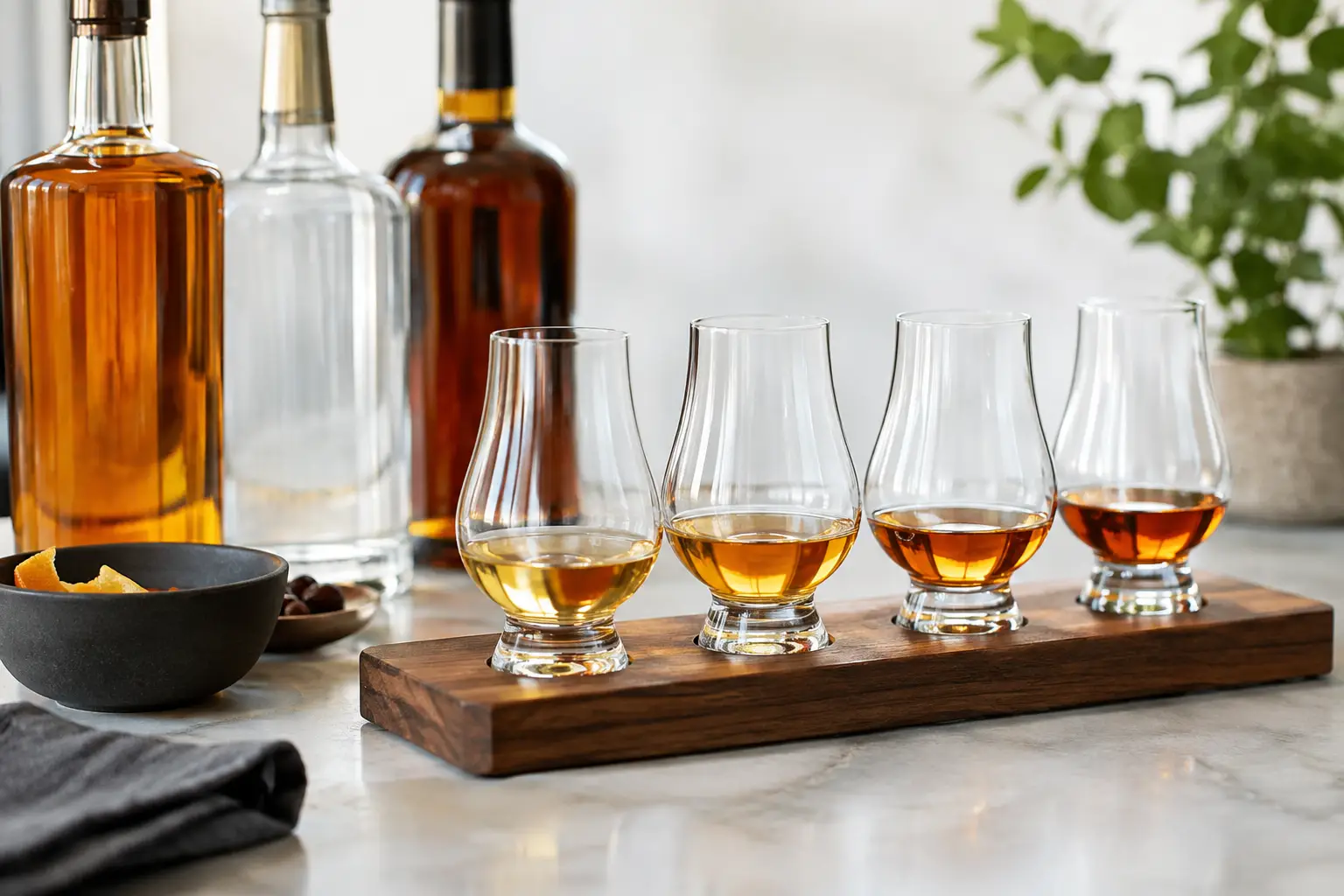
A good bottle can offer far more than a quick verdict of “nice” or “not for me”. The difference often comes down to attention, not expertise. This spirits tasting guide gives you a calm, repeatable way to notice what is already in your glass - from the first aroma to the flavour that stays after the sip.
You do not need a collection of rare bottles, a perfect palate or a shelf of specialist glassware. Start with a spirit you already own, give yourself ten unhurried minutes, and approach it with curiosity. Tasting is not a test you can fail. It is simply a way of turning a familiar drink into a clearer memory.
Set up for a clearer taste
Choose a quiet moment before a strongly flavoured meal, rather than immediately after coffee, mint, spicy food or smoking. Strong scents can blur delicate aromas, so move scented candles, cooking smells and perfume out of the immediate area if possible. Natural light is useful, but not essential.
Pour a small measure - around 15 to 25 ml is plenty for learning. A tulip-shaped glass helps concentrate aroma, particularly for whisky, rum, brandy and agave spirits, but a clean wine glass works well. For gin, vodka or white rum, a small stemmed glass is also perfectly practical. The aim is not ceremony. It is giving the liquid enough space for its character to show.
Serve most spirits at cool room temperature. A heavily chilled spirit can seem smoother because cold reduces aroma, but it can also hide detail. If you prefer it cold, begin with a small taste before adding ice, then notice what changes as it cools and dilutes. Neither approach is more correct - they answer different questions.
Keep still water nearby. A sip of water between tastes refreshes your mouth without covering the flavours you are trying to notice. Water can also be added to some higher-strength spirits, a few drops at a time, to soften the alcohol and reveal new aromas.
The spirits tasting guide: look, nose, sip, reflect
Look without over-reading the colour
Hold the glass against a pale background and observe the spirit briefly. Is it clear, golden, amber, copper or deep brown? Colour may suggest maturation in wood, added colour or a particular production style, but it does not tell you whether a spirit will taste good to you.
Swirl gently and watch how the liquid moves. Slow-moving legs on the inside of the glass may indicate texture or alcohol strength, though they are not a quality score. This is a moment to become present, not to make a judgement.
Nose in short, gentle breaths
Alcohol can overwhelm the nose, especially above 40% ABV. Keep your mouth slightly open and take short, light breaths above the rim rather than a deep inhale. If the alcohol feels sharp, hold the glass a little farther away or let it rest for a few minutes.
Start broad. Does the aroma feel fresh, rich, sweet, dry, fruity, herbal, spicy, smoky or woody? Only then look for more specific references. You might notice lemon peel, pear, vanilla, toasted almond, black pepper, damp earth, sea spray, liquorice or dried fruit.
There is no prize for finding the most elaborate descriptor. “Bright and citrus-led” is a useful note. So is “smells like the cupboard where we keep baking spices”. Personal references often create the strongest tasting memory because you already know what they mean.
Sip slowly and notice the shape
Take a small sip and let it move across your tongue before swallowing. You are not trying to identify every ingredient. Instead, ask how the spirit behaves in your mouth.
Does it feel light and clean, oily and coating, creamy, crisp, warming or drying? Does sweetness arrive first, followed by spice? Is there bitterness at the edges of the tongue? Does the flavour change after a few seconds?
Texture is one of the most useful parts of tasting language because it helps distinguish bottles that may share similar flavours. Two whiskies may both suggest vanilla and oak, for example, while one feels silky and sweet and the other dry, peppery and firm. That difference may tell you more about your preference than a long list of aroma notes.
Let the finish have its say
After swallowing, pause. The finish is what remains: its length, flavour and feeling. A short finish may fade cleanly; a long finish may continue with fruit, spice, smoke, sweetness, warmth or dryness.
Avoid treating length as an automatic sign of superiority. A brief, clean finish can be exactly right for a bright gin or a well-made vodka. What matters is balance. Ask whether the final impression feels pleasing, coherent and true to the style.
Learn the families without memorising rules
Recognising broad spirit families gives you useful starting points, but every bottle has its own voice. Whisky often brings cereal, fruit, wood, spice or smoke. Rum can range from grassy and fresh to rich with molasses, tropical fruit and caramelised notes. Brandy may show orchard fruit, grapes, nuts and warming oak.
Gin is usually led by juniper, then shaped by citrus, herbs, florals and spice. Tequila and mezcal can offer cooked agave, pepper, earth, citrus and, in some examples, smoke. Vodka tends to be subtler, where mouthfeel, grain character and a clean or creamy finish become especially important.
Liqueurs are worth tasting with the same attention. Their sweetness can make aroma easy to spot, but balance still matters. Notice whether the fruit, coffee, cream, herbs or spice feels natural and defined, or whether sugar dominates everything else.
These descriptions are invitations, not rules. A smoky whisky may be your favourite after dinner but not suit a warm afternoon. A floral gin may shine in a simple serve yet feel too perfumed when tasted neat. Context changes perception, and your notes should leave room for that.
Use water and comparison with purpose
With a full-strength spirit, add a few drops of still water after your first neat taste. Swirl, wait a moment and nose again. You may find that sharp alcohol eases and fruit, cereal, floral or nutty notes become clearer. Add too much water, however, and the spirit can become thin. Work slowly, because you cannot take water back out.
Comparative tasting is one of the fastest ways to build confidence. Taste two related bottles side by side: perhaps a bourbon and a rye, two styles of rum, or a London dry gin beside a more citrus-led example. Keep pours small and return to the first glass after tasting the second.
Rather than asking which is objectively better, ask practical questions. Which feels fuller? Which has the longer finish? Which would you choose neat, with ice, or in a mixed drink? Comparisons give your preferences useful edges.
Record what you would want to remember
A useful note does not need to resemble a professional review. Write the date, bottle, serving style and three or four observations: aroma, texture, main flavour and finish. Then add one honest line: when would you choose this again?
For example: “Tasted neat after dinner. Orange peel and vanilla on the nose. Soft, slightly oily texture, with cinnamon and roasted nuts. Long, dry finish. Best when I want something quiet rather than sweet.” That note will be more valuable later than a score without context.
Over time, patterns appear. You may realise that you consistently enjoy peppery rye, agricole rum, citrus-forward gin or brandies with a dry finish. You may also learn that a bottle you disliked neat becomes a favourite long drink. Both discoveries count.
Audio Sommelier can make this habit easier by guiding the tasting in the moment and keeping your notes in one personal tasting memory, ready for future comparisons.
Common mistakes that make spirits harder to enjoy
The most common mistake is rushing. Spirits are concentrated, and a fast sip tends to register as alcohol before anything else. Give the glass time, and give yourself permission to return after a minute or two.
Another is forcing a flavour you think you are supposed to find. If you do not smell “leather”, “sultana” or “wild herbs”, leave it. Clear, simple language builds a more reliable palate than borrowed jargon.
Finally, do not compare every spirit by the same standard. A delicate vodka should not be criticised for lacking the oak depth of an aged rum, and a punchy mezcal is not failing because it is less smooth than a mellow cognac. Taste each bottle for its own balance, character and suitability for the moment.
The next time you pour a spirit, try slowing the first sip down by thirty seconds. Notice one aroma, one texture and one flavour that stays. That small pause is enough to make the bottle feel more like yours.