13 Jun 2026
How to Improve Your Palate at Home
Learn how to improve your palate at home with simple tasting habits, better vocabulary, and practical ways to notice aroma, texture, flavour.
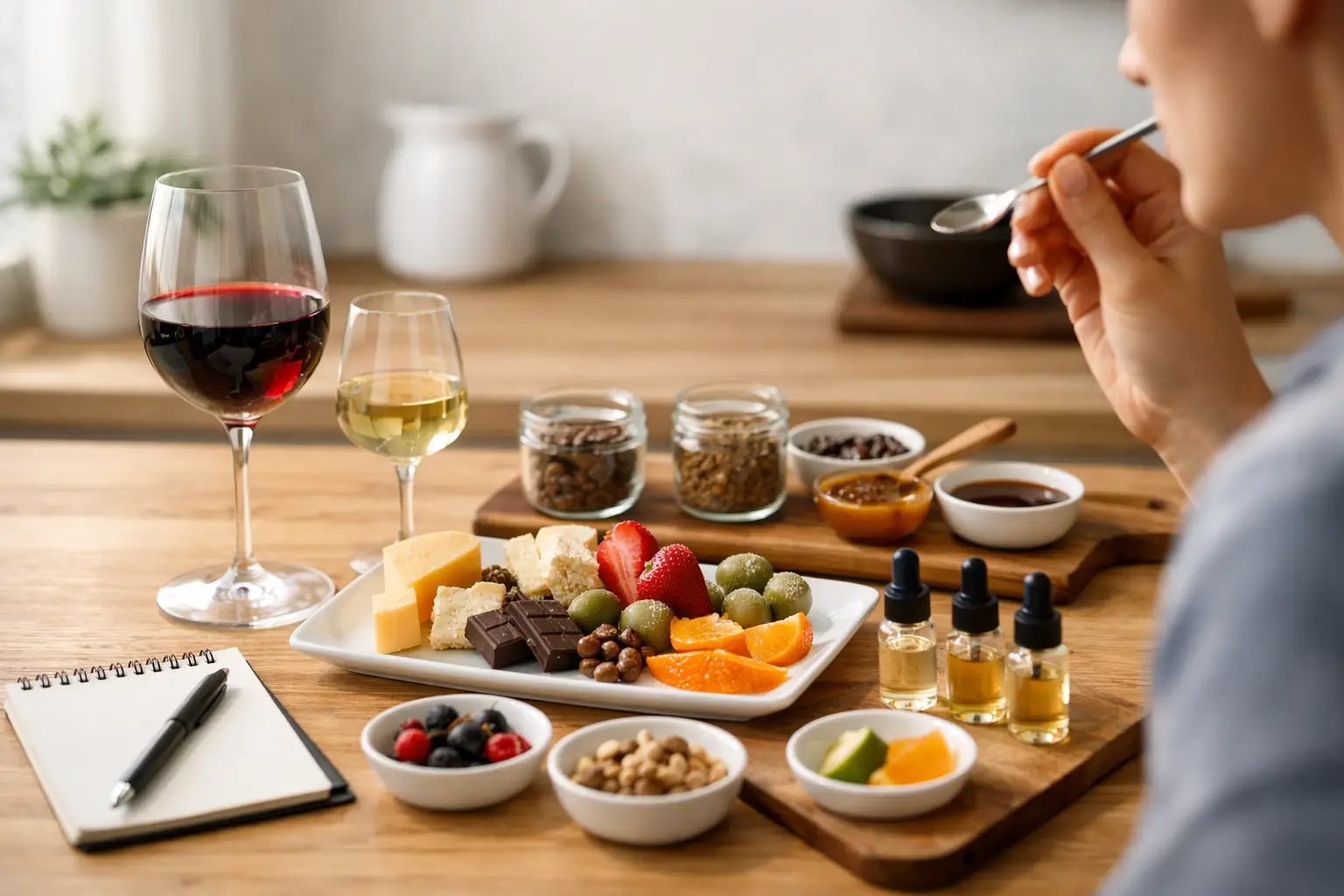
You do not need a trained nose or a cabinet full of expensive bottles to learn how to improve your palate. What you need is a little structure, a bit more attention, and a way to remember what you notice. Most people are not bad at tasting. They are simply moving too quickly to catch the detail.
That matters because the pleasure of wine, whisky, beer, sparkling wine and spirits often lives in the small differences. A whisky can feel creamy or dry. A beer can seem citrus-led at first, then finish herbal. A red wine can move from bright fruit to spice in a few seconds. If you never pause to notice those shifts, every glass stays flatter than it should.
What improving your palate really means
When people ask how to improve your palate, they often mean one of three things. They want to notice more, describe what they notice more clearly, or remember what they liked so they can choose better next time. Those goals are connected.
A better palate is not about showing off or producing poetic tasting notes. It is about building sensory confidence. The more often you taste with intention, the easier it becomes to separate sweetness from fruitiness, texture from strength, and aroma from flavour.
This is also where many beginners get discouraged. They assume experienced tasters are sensing something magical. Usually, they are just using a repeatable method. They know where to focus first, what questions to ask, and how to compare one glass with another.
Start by slowing the tasting down
The fastest way to improve is to spend longer with each sip. Not dramatically longer - just enough to give your senses time to register what is there.
Begin before you taste. Look at the liquid. Notice its depth of colour, brightness and viscosity. This will not tell you everything, but it starts the brain working. Then smell before you sip. A brief sniff often misses the detail, so return for a second and third pass. Different aromas appear at different moments.
When you taste, let the liquid move across the palate rather than swallowing instantly. Pay attention to the first impression, the middle, and the finish. Ask yourself whether the flavour stays steady or changes. That single habit can make an ordinary glass far more revealing.
Train your palate through comparison
One drink in isolation can be difficult to judge. Two drinks side by side teach much more. Comparison creates contrast, and contrast makes flavour easier to recognise.
Try tasting two similar styles together. Compare two Sauvignon Blancs from different regions, or two whiskies with different cask influence, or two lagers from different producers. You are not looking for a winner at first. You are trying to notice difference. Which one feels lighter? Which one smells fresher? Which finish lasts longer?
This is one of the most practical answers to how to improve your palate, because your senses learn by reference. Once you recognise that one beer is more bitter than another, or one sparkling wine feels softer in the mousse, your vocabulary starts to become more precise.
There is a trade-off here. If you compare bottles that are too different too early, the exercise can become vague. A heavily peated whisky and a delicate Lowland style will obviously differ, but you may not learn much beyond that. Closer comparisons usually sharpen the palate faster.
Build a small, usable flavour vocabulary
Many people can taste more than they think, but they struggle to name it. That gap creates uncertainty. The answer is not to memorise long aroma wheels or force obscure references. It is better to develop a smaller vocabulary you can actually use.
Start with broad categories: fruit, floral, spice, herbal, nutty, smoky, creamy, earthy. Then narrow down only when it feels natural. Citrus is useful. Whether it is lemon, grapefruit or lime can come later. Red fruit is useful. Whether it is raspberry or cherry does not need to be perfect every time.
Texture words matter just as much. Is it crisp, silky, round, sharp, oily, light, drying, prickly or smooth? People often focus only on flavour, but texture is where confidence grows quickly. You may not be sure whether a note is apricot or peach, but you can often tell whether the mouthfeel is lean or generous.
How to improve your palate with everyday practice
You can train your palate outside the glass. In fact, you should. Sensory memory improves when you pay more attention to smells and tastes in daily life.
When you cut a lemon, smell the peel and the juice separately. When you make coffee, notice the difference between aroma and bitterness. Taste dark chocolate, fresh herbs, jam, tonic water, green apple, black pepper, vanilla yoghurt. These references give you anchors. Later, when something similar appears in a wine or spirit, the recognition comes faster.
This does not need to become a homework routine. The goal is simply to be more observant. The more sensory references you collect, the less abstract tasting becomes.
Remove the pressure to be right
One reason people stop improving is that they worry about getting the tasting note wrong. That pressure slows learning. Tasting is partly subjective, especially at home, where glassware, temperature, food and mood can all affect perception.
If you smell pear and someone else says apple, that does not mean you have failed. The more useful question is whether you are both pointing towards the same style of freshness and fruit profile. Precision improves with time, but confidence comes from describing what you genuinely notice.
There are limits, of course. Technique matters. If a white wine is too cold, aroma will seem muted. If a whisky is served in a glass that throws alcohol too aggressively, delicate notes may be hidden. Improving your palate is not only about your senses. It is also about giving those senses a fair chance.
Take notes while the memory is fresh
A stronger palate is also a stronger memory. If you cannot remember what you liked last month, progress feels slower than it is.
Keep notes immediately after tasting, even if they are brief. Record the style, what stood out in aroma, how it felt on the palate, and whether you would choose it again. You do not need a paragraph. A few clear lines are enough if they capture the experience honestly.
This habit becomes especially useful over time. Patterns start to emerge. You might realise you prefer higher-acid whites, softer tannins in red wine, or whiskies with more orchard fruit than smoke. That kind of clarity saves money, improves buying decisions and makes entertaining easier because you know your own taste with more certainty.
A structured digital system can help here. Audio Sommelier, for example, is designed to turn casual drinking into a guided tasting ritual, with notes and saved bottles that make future comparison much easier. For people who want more confidence without the theatre often attached to tasting culture, that kind of support can be genuinely useful.
Focus on consistency, not intensity
You do not need to taste every day to improve. You do need some regularity. One thoughtful tasting each week will teach you more than three rushed glasses on a Friday night.
Consistency helps because sensory learning is cumulative. Each time you smell, taste, compare and note, you reinforce a pattern. Over a few months, what once felt hard starts to feel automatic. You stop searching for the right answer and start recognising familiar signals.
It also helps to keep conditions reasonably steady. Use similar glassware when possible. Avoid strong cooking smells nearby. Taste before a heavy meal rather than after. None of this needs to be obsessive, but a little control reduces noise and lets the palate focus.
Know what not to chase
A more developed palate does not always mean preferring the most complex or expensive bottle. Sometimes a straightforward lager is exactly what suits the moment. Sometimes a simple, bright white wine is more satisfying than a layered one that asks for concentration.
That is worth saying because palate improvement can drift into performance if you are not careful. The point is not to train yourself out of pleasure. The point is to notice pleasure more clearly, and to understand why one bottle suits you better than another.
If you keep that in view, progress feels enjoyable rather than dutiful. You become more observant, more articulate and more at ease with your own preferences.
The next time you pour a glass, give it five extra minutes and a little more attention than usual. That is often where better tasting begins.