16 Sep 2026
How to Identify Wine Aromas with Confidence
Learn how to identify wine aromas with a calm, practical method: prepare your glass, smell with purpose, name familiar notes and build confidence at home.
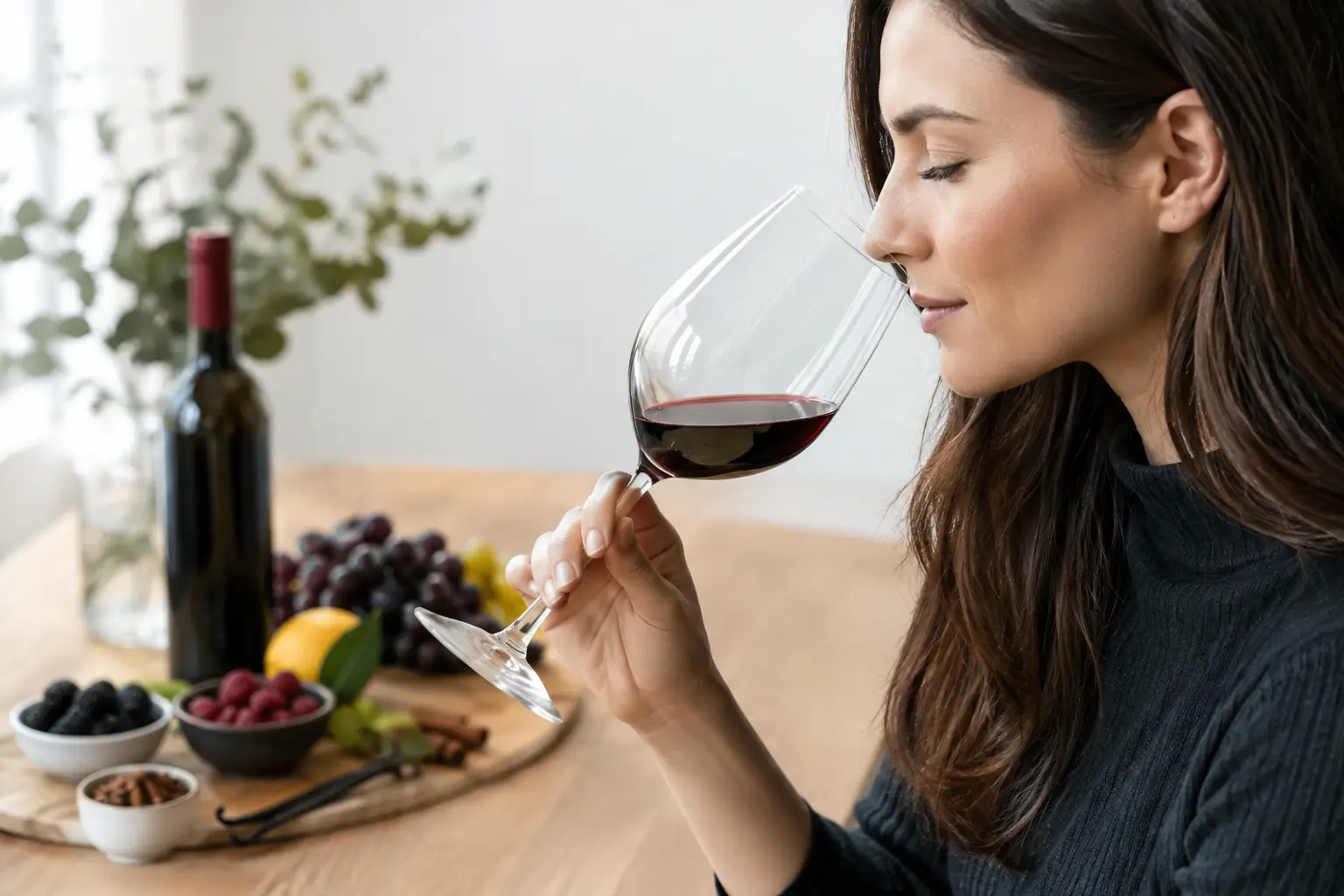
A wine can smell like lemon peel, blackcurrant leaf, toast or wet stone, yet the first honest answer is often simply: “wine”. That is a perfectly good starting point. Learning how to identify wine aromas is not about having an unusually sensitive nose or memorising a long list of tasting terms. It is about slowing down, using a simple method and trusting familiar references from daily life.
Start by giving the wine a fair chance
Aroma is easily affected by the setting. Strong cooking smells, scented candles, perfume and even a freshly brewed coffee can crowd out the details in your glass. If possible, taste in a neutral-smelling room and use a clean glass that has been rinsed without heavily fragranced washing-up liquid.
Temperature matters, too. A very cold white wine may seem quiet and one-dimensional because cold suppresses aroma. A warm red can feel dominated by alcohol before its fruit and savoury notes have a chance to appear. You do not need a thermometer to make progress. If the wine smells muted, let it rest for a few minutes. If it smells hot or overly alcoholic, chill it briefly.
Pour a modest measure, ideally into a wine glass with a bowl that narrows at the top. This shape helps gather aromas rather than letting them disappear into the room. There is no need for theatrical swirling. A small, controlled circle is enough.
How to identify wine aromas in three passes
The most useful approach is to smell the wine more than once. Each pass answers a different question, which keeps the experience clear rather than overwhelming.
First pass: notice the broad impression
Before swirling, take one short sniff. Ask yourself whether the wine feels mainly fruity, floral, herbal, spicy, earthy, savoury or sweetly scented. Do not force a precise answer yet.
You might notice that a Sauvignon Blanc seems fresh and green, while a Syrah feels dark, peppery and warm. These broad impressions are valuable. They give you a direction before you begin looking for individual notes.
At this stage, avoid trying to identify ten things at once. One clear observation such as “ripe stone fruit” or “dried herbs” is more useful than a busy collection of guesses.
Second pass: swirl gently and look for specifics
Give the glass a gentle swirl, then smell again. Now you can move from category to reference. If you noticed fruit, what sort of fruit is it? Citrus can become lemon, lime, grapefruit or orange zest. Red fruit can become strawberry, raspberry, cranberry or cherry. Dark fruit may suggest blackberry, plum, blackcurrant or blueberry.
The aim is not to find the official answer. Wines rarely smell exactly like a freshly cut peach or a jar of blackberry jam. Instead, look for the closest memory. Perhaps the wine reminds you of the skin of a pear, rather than pear juice, or a handful of crushed raspberries, rather than a raspberry sweet.
Specificity improves with practice, but it should remain honest. “Something like lemon peel” is a strong tasting note. It tells you what you experienced without pretending certainty.
Third pass: look beneath the fruit
Many people stop at fruit, which is understandable because it is often the clearest part of a wine’s aroma. But the most memorable wines usually offer another layer. After you have named the fruit, ask what else sits around it.
A white wine may combine apple or peach with blossom, almond, beeswax, ginger or a flinty, rain-on-stone character. A red may show cherry and plum alongside violet, dried leaves, black pepper, tobacco, cedar or cocoa. In sparkling wine, citrus and orchard fruit can be joined by brioche, biscuit or roasted nuts.
These are not decorations added by a tasting professional. They are useful signposts that help you remember the wine later. If “cherry, dried herbs and a faint smoky note” brings a bottle back to mind, the description has done its job.
Use a simple aroma map
When you are unsure what you are smelling, an aroma map keeps your thoughts organised. Begin with fruit, then move to flowers and herbs, spice, earth and savoury notes, and finally oak or ageing characters. You are not required to find something in every group.
Fresh fruit aromas often point towards the grape variety and the climate where it was grown. Cooler conditions may bring tart citrus, green apple, cranberry or redcurrant. Warmer conditions can suggest peach, mango, ripe plum, blackberry or dried fruit. This is a helpful pattern, not a rule. Winemaking choices and bottle age can change the picture considerably.
Floral and herbal aromas can be subtle but distinctive. Think of rose, violet, orange blossom, chamomile, mint, fennel, bay leaf, freshly cut grass or blackcurrant leaf. Earthy and savoury notes may recall mushrooms, woodland floor, olive, leather or sun-warmed dust. These comparisons can sound unusual until you realise that smell is built on association. Your own references are allowed to be personal.
Oak-aged wines may show vanilla, clove, toast, coffee, coconut, smoke or cedar. Those notes do not automatically mean a wine is better. Some drinkers enjoy a clear oak influence; others prefer fruit and freshness to lead. Identifying aroma is observation, not a scorecard.
Separate grape, winemaking and bottle age
A useful next step is to consider where an aroma may come from. This helps you make sense of a wine without needing technical knowledge.
Primary aromas come mainly from the grape and include fruit, floral and herbal notes. Secondary aromas develop during fermentation and winemaking. Bread dough, yoghurt-like creaminess, butter and biscuit can appear here, especially in some white and sparkling wines. Tertiary aromas develop as wine ages, either in barrel or bottle. Dried fruit, nuts, tobacco, leather, honey and forest floor can become more noticeable over time.
The boundaries are not always neat. A wine can smell of vanilla because it has spent time in oak, while its ripe blackberry character may come from the grape grown in a warm place. You do not need to diagnose every note. Simply noticing that the wine has fresh fruit alongside toast and spice is already a more complete observation.
Give yourself better prompts
The question “What does it smell of?” can feel too wide. More focused prompts make aroma recognition easier. Ask whether the fruit feels fresh, ripe, dried or cooked. Consider whether the scent is light and lifted or deep and concentrated. Notice whether it seems cool and green, warm and sun-ripened, sweet, savoury or spicy.
It also helps to smell away from the glass for a moment, then return. Your nose adapts quickly, especially to strong aromas. A short reset can reveal a note you missed on the first attempt.
If you are tasting with someone else, compare impressions without trying to agree. One person may say peach while another says apricot. Both may be responding to the same family of aromas. The useful part is the shared direction, not winning the most precise descriptor.
Build a tasting memory, one bottle at a time
The fastest way to improve is to make a brief record while the wine is in front of you. Write down two or three aromas, how certain you felt and whether you enjoyed them. Avoid copying the back label before you have made your own observations. Producer notes can be helpful afterwards, but they should not replace your senses.
Over time, patterns become easier to recognise. You may notice that your favourite whites often have citrus, herbs and mineral notes, or that you respond strongly to reds with violet, pepper and dark berries. Your preferences matter as much as your vocabulary.
A guided audio tasting can be especially useful here because it gives you pauses to smell, reflect and name what is present rather than rushing towards an answer. Audio Sommelier is designed around that calm rhythm: add a bottle, save your impressions and return to them when you want to compare wines later.
When an aroma seems wrong
Not every unexpected smell is a fault. Earth, mushroom, leather and dried leaves can be appealing signs of maturity in the right wine. However, a strong smell of damp cardboard, mouldy cellar, nail varnish remover or cooked cabbage may indicate that something is not quite right.
Context matters. A faint struck-match note can be intentional and fade with air, while an overpowering burnt-rubber smell is less likely to be welcome. If in doubt, give the wine a few minutes in the glass and smell again. If the note remains distracting and overwhelms everything else, trust your reaction.
The goal is not to turn every glass into an exam. Pause, swirl, take a careful breath and choose the closest familiar memory. With each bottle, your nose gains another reference point, and the next aroma becomes easier to recognise.