9 Jun 2026
Best Way to Taste Spirits at Home
Find the best way to taste spirits at home with simple steps for aroma, texture, flavour and finish - no expertise needed, just clearer sips.
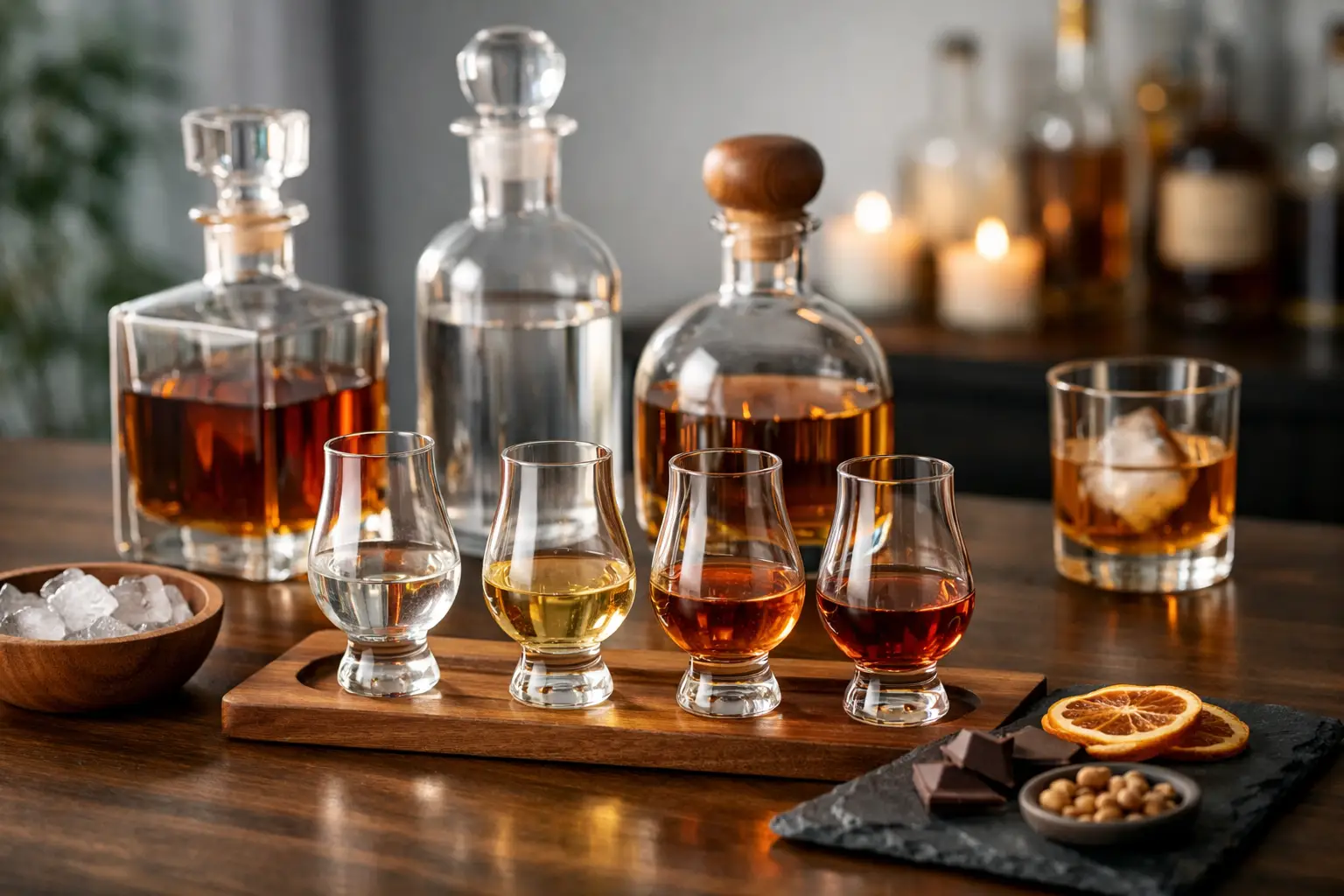
A generous pour, a quick swirl, a sip while half-distracted - that is how many bottles get consumed at home. If you are wondering about the best way to taste spirits, the answer is usually not buying rarer bottles or memorising specialist jargon. It is slowing the moment down just enough to notice what is already in your glass.
That matters because spirits can feel oddly intimidating. One person says they get orange peel, cedar and toasted hazelnut. Someone else thinks, I taste alcohol. Both reactions are normal. Good tasting is not about performing expertise. It is about using a clear method so your palate has something steady to follow.
The best way to taste spirits starts before the first sip
Most tasting problems begin before the spirit reaches your mouth. If the glass is too full, the room is full of cooking smells, or the liquid is ice cold, you make the job harder than it needs to be.
Start with a small pour rather than a large one. Around 15 to 25ml is enough for proper attention without overwhelming the nose. Choose a clean glass with a shape that gathers aromas slightly at the top. It does not need to be precious or expensive. What matters is that it is free from detergent smell and broad enough to let the spirit open a little.
Temperature makes a bigger difference than many people expect. Most spirits show more detail at cool room temperature than they do straight from a cold cupboard or over a pile of ice. Chill can mute aroma and flatten texture. Ice has its place, particularly when you are drinking for refreshment, but if the goal is tasting, begin neat.
The setting matters too. Strong candles, hand cream, coffee brewing nearby, or a heavily seasoned supper can all interfere. A quiet, neutral moment helps. This is one reason guided tasting works so well at home - not because it makes the occasion formal, but because it gives your attention somewhere useful to go.
How to taste spirits without overcomplicating it
A reliable tasting method is simple: look, nose, sip, notice the finish, then return for a second sip. The second sip is often the one that tells the truth.
Look for clues, not answers
Colour can tell you something, but not everything. A deep amber whisky may suggest cask influence or age, while a clear vodka or white rum offers fewer visual cues. Still, appearance helps set expectations. Notice the shade, brightness and thickness in the glass. Does it look light and crisp, or rich and oily? You are not trying to solve the spirit from sight alone. You are gathering context.
Nose gently and in stages
This is where many people go wrong. A hard, deep sniff can flood the senses with alcohol. Instead, bring the glass up gradually and take short, light sniffs with your mouth slightly open. That softens the effect of the alcohol and makes individual aromas easier to separate.
Try to notice broad families first. Is it fruity, spicy, floral, herbal, smoky, creamy, woody or sweet? Once you have the family, finer details are easier. Apple, pear and citrus might sit under fruit. Vanilla, clove and pepper might sit under spice. If all you can say at first is fresh, warm, sharp or sweet, that is still useful. Clear language beats forced specificity.
Take a small sip and let it move
The first sip should be modest. Let it coat the tongue before swallowing. Notice where the spirit lands. Does it feel silky, lean, oily, prickly, creamy or drying? Texture is one of the quickest routes to confidence because you do not need a perfect flavour reference to describe it.
Then pay attention to flavour development. Some spirits arrive sweet and finish dry. Others open quietly and then grow in spice or heat. A good tasting note follows the sequence rather than trying to cram every impression into a single sentence.
Stay with the finish
Finish is simply what remains after swallowing. Does the flavour disappear quickly or linger? Does it become softer, smokier, more bitter or more rounded? Beginners often rush past this part, yet it is where character often becomes clearest.
A short finish is not automatically bad, and a long finish is not automatically superior. It depends on the style. The point is to notice whether the ending feels balanced and pleasant for you.
The best way to taste spirits is to compare, not just evaluate
Tasting one spirit in isolation can be enjoyable, but comparison teaches faster. Our senses are relative. You understand sweetness more clearly when one pour is drier than the other. You notice texture better when one spirit feels lean and another feels velvety.
This does not mean you need a formal line-up of expensive bottles. Even comparing two styles you already own can sharpen your palate. A London dry gin next to a more citrus-led gin, or a bourbon beside a Speyside whisky, can reveal more in twenty minutes than several casual glasses spread across a month.
Keep the comparison fair. Use similar pours, similar glasses and the same tasting order each time. Usually it is sensible to move from lighter and fresher styles towards richer, oakier or higher-strength ones. If a very peated whisky comes first, for example, it may dominate everything that follows.
When people say they want better tasting language, this is often the missing piece. Description becomes easier when you can say, this one is drier than that one, or this has more vanilla but less fruit. Relative noticing is more natural than trying to produce a perfect standalone verdict.
Add water carefully, and only after tasting neat
Water changes spirits. Sometimes it opens aroma and softens alcohol. Sometimes it dulls structure and leaves the palate feeling flatter. That is why there is no single rule beyond this one: taste neat first, then experiment.
Add only a few drops at a time, especially with cask strength or higher-proof styles. Pause after each addition. The goal is not to dilute the spirit into submission but to see whether new aromas appear or the texture becomes more expressive.
With lower-strength spirits, extra water may do very little or even strip away detail. With stronger whiskies, rum or some brandies, it can be transformative. It depends on the bottling and on your own preference. Tasting well means giving yourself permission to notice both possibilities.
Common mistakes that make spirits harder to understand
One of the most common mistakes is rushing. Spirits reward patience more than volume. Another is treating tasting notes as a test. If you cannot detect fig leaf, cigar box or candied violet, that does not mean you are bad at tasting. It usually means the reference is not meaningful to you.
There is also a tendency to chase flavour while ignoring structure. Yet alcohol warmth, weight, sweetness, dryness and finish often tell you more, more quickly, than hunting for obscure aroma notes. If your tasting feels muddled, return to the basics: what does it smell like, how does it feel, what changes from start to finish?
Finally, do not underestimate memory. A good spirit tasted once may be enjoyable, but hard to recall accurately a week later. Saving notes, even brief ones, builds pattern recognition over time. You start to remember not only what you liked, but why.
A simple way to build confidence over time
If you want the best way to taste spirits to become second nature, make the process repeatable. Use the same four prompts each time: aroma, texture, flavour, finish. Keep your notes short. One or two lines are enough if they are honest and specific.
For example, instead of writing smooth and nice, you might write bright citrus on the nose, slightly oily texture, vanilla and pepper through the middle, dry finish. That is already far more helpful the next time you choose a bottle. It creates a memory you can trust.
This is where gentle structure makes home tasting feel less intimidating. A guided format, including audio-led prompts such as those used by Audio Sommelier, can help you stay present with the glass instead of second-guessing yourself. The benefit is not just better notes. It is first sip confidence - the feeling that you know what to look for and how to describe it in your own words.
Spirits tasting does not need to become a ceremony. It only needs a little intention. Pour less, notice more, compare when you can, and let your palate learn by repetition rather than pressure. The more calmly you taste, the more clearly a spirit tends to speak.