4 Jun 2026
How to Do a Guided Whisky Tasting at Home
Learn how to enjoy a guided whisky tasting at home with simple steps, better tasting language, and more confidence in every glass.
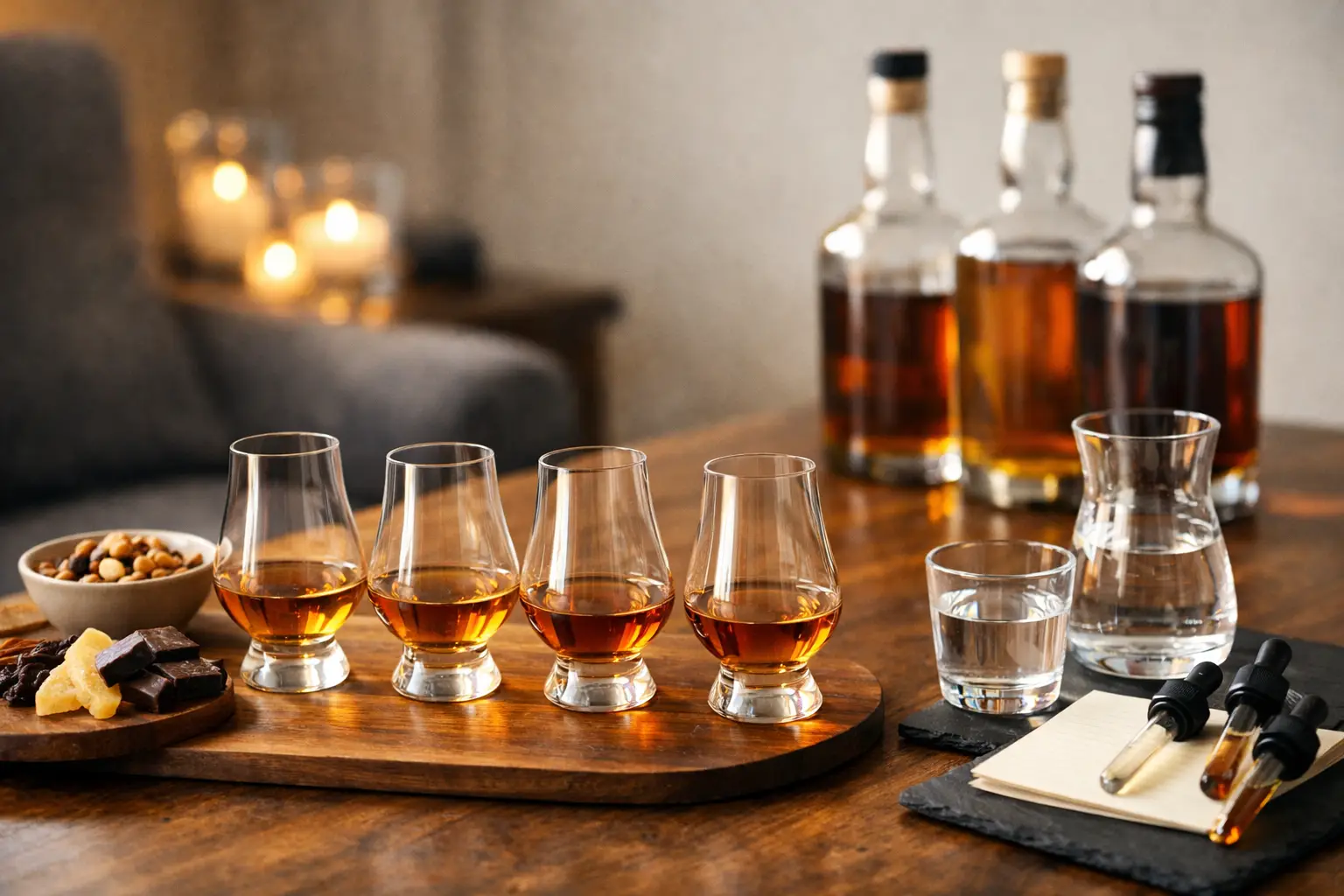
A good bottle can feel slightly wasted when all you can say is, “That’s nice.” If that sounds familiar, a guided whisky tasting at home changes the experience quickly. You do not need specialist glassware, a perfect palate, or a shelf full of rare drams. You need a little structure, a calm setting, and prompts that help you notice what is already in the glass.
For most people, whisky is not difficult because the flavours are impossible to detect. It is difficult because nobody has shown them what to pay attention to, in what order, and with which words. That is where guidance matters. It turns guessing into observation and makes the whole experience more relaxed, not more formal.
Why guided whisky tasting at home works
At home, you remove much of the pressure that can make tasting feel performative. There is no crowded bar, no hurry to order, and no sense that you should already know the difference between orchard fruit, dried spice, smoke or oak. You can take your time with the nose, revisit a sip, add a few drops of water, and decide what you actually think.
That slower pace matters because whisky unfolds in stages. The aroma may suggest one thing, the texture another, and the finish something else again. Without guidance, many people jump straight to whether they like it. That answer matters, of course, but it is only the end point. The useful part is understanding why you like it, or why you do not.
A guided format also gives you repeatability. If you taste in a consistent sequence each time, your comparisons improve. A bottle that once seemed “smooth” starts to reveal vanilla, pepper, toasted cereal, orange peel or a dry, warming finish. Your confidence grows because your impressions become more specific.
What you need before you start
The appeal of a guided whisky tasting at home is that it works with bottles you already own. Start with one whisky if you are new to tasting. Two or three can be excellent for comparison, but only if the line-up is manageable. Too many drams blur together, especially early on.
Choose a quiet room with minimal cooking smells, scented candles or strong aftershave nearby. Pour small measures. You are tasting, not filling a tumbler for the evening. A tulip-shaped glass can help concentrate aromas, but if you do not have one, use the cleanest glass you own that narrows slightly at the top.
Keep a little still water nearby, both for drinking and for adding a few drops to the whisky if needed. Water can soften alcohol on the nose and reveal subtler aromas, though this depends on the whisky. Some become more expressive. Others flatten. That is part of the learning.
A notebook or digital notes tool is worth having from the start. Memory is less reliable than it feels in the moment. If you save what you tasted, you begin to build a personal reference point rather than starting from zero each time.
A simple tasting sequence that builds confidence
The most useful guidance is not flashy. It is clear and repeatable. Start by looking at the whisky. Notice the colour, but treat it as context, not proof of quality. A deeper amber can suggest cask influence, yet colour alone does not tell the full story.
Next, nose the whisky gently. Do not bury your nose deep in the glass and inhale sharply. Alcohol can overwhelm everything else. Keep the glass slightly below your nose, take short gentle sniffs, and give yourself time. Ask simple questions. Is it fresh or rich? Fruity or spicy? Sweet, smoky, nutty, malty, coastal, herbal?
Then take a small sip and let it move across the palate. Notice the texture first. Is it light, oily, creamy, drying, silky? Texture often gives people useful traction because it feels more immediate than flavour. After that, pay attention to what you taste. You do not need a perfect answer. You are looking for direction.
Finally, notice the finish. Does the flavour disappear quickly or linger? Does it fade into sweetness, spice, oak, warmth, smoke or bitterness? The finish is often where a whisky becomes memorable.
How to talk about what you taste without sounding forced
One of the biggest barriers to whisky is vocabulary. People assume tasting language must be dramatic or highly technical. It does not. Better tasting language is usually simpler and more honest.
Start broad, then narrow. “Fruit” is useful before “baked apple”. “Spice” is useful before “clove” or “black pepper”. If all you know is that something feels dry and warming with a little sweetness at the front, that is already a meaningful note.
It also helps to separate flavour from judgement. “I taste toasted vanilla and a dry oak finish” is different from “This is good.” Both can be true, but only the first helps you learn your own preferences. Over time, those notes reveal patterns. You may discover that you consistently enjoy whiskies with orchard fruit and honey, or that heavy smoke is better for occasional sipping than regular pouring.
There is room for subjectivity here. Two people can taste the same whisky and notice different details. That does not mean one of them is wrong. It usually means attention is being drawn to different aspects of the same dram.
Should you compare whiskies side by side?
Yes, but only when the comparison has a purpose. Side-by-side tasting is one of the fastest ways to improve because contrast makes flavour easier to notice. A bourbon cask matured whisky beside a sherried one will teach you more in twenty minutes than isolated sipping over several weeks.
The trade-off is palate fatigue. If you compare too many, your senses dull and your notes become vague. For most home tastings, two or three pours is enough. Try comparing one lighter style with one richer style, or two whiskies from the same region with different cask influence. Keep the frame clear so your attention has something to hold on to.
This is where a structured digital tasting experience can be especially useful. Audio-led guidance keeps the pace steady and helps you focus on aroma, texture, flavour and finish in an order that makes sense. For beginners and developing enthusiasts alike, that kind of calm prompting often removes the awkwardness that causes people to give up too early.
Common mistakes in a guided whisky tasting at home
Most problems are easy to fix. People pour too much, taste too quickly, or expect immediate certainty. Whisky rarely rewards rushing. The first nose can be tight. The second sip may show more than the first. A few drops of water can shift the profile noticeably.
Temperature matters too. If the room is very cold, aromas can seem muted. If your glass has been warming in your hand for too long, alcohol can become more assertive. Neither ruins the tasting, but both change what you notice.
Another common mistake is chasing someone else’s tasting note too literally. If a guide mentions pear, do not force yourself to find pear. Use the prompt as a direction, not a test. Perhaps what you notice is green apple, cereal, or just a fresh fruit note. The goal is not to pass. The goal is to pay attention with more clarity.
Turning one tasting into long-term progress
A single guided session can improve your next glass. Repeated sessions build real tasting memory. That is where the experience becomes especially rewarding. Once you can save bottles, record notes, and revisit them later, you stop relying on vague impressions.
Patterns begin to emerge. You remember which whisky felt creamy rather than sharp, which bottle opened up with water, and which finish stayed with you longest. That memory system matters more than many people realise. It transforms tasting from a one-off activity into a personal reference library.
For a platform like Audio Sommelier, that practical value is the point. The guidance is there to make tasting feel approachable, but the real benefit comes from being able to return to your own notes, compare saved bottles, and build confidence over time using what you already drink at home.
Hosting others without making it formal
A home tasting can also work beautifully with friends, provided the tone stays relaxed. Keep the group small, pour modestly, and guide the conversation with straightforward prompts. Ask what each person notices on the nose, how the whisky feels on the palate, and whether the finish is short, warming, spicy or sweet.
The best part is that nobody needs to perform expertise. A guided approach gives everyone the same starting point. Beginners feel included, and more experienced drinkers often enjoy slowing down enough to articulate what they usually sense instinctively.
Whisky becomes more enjoyable when you stop treating tasting as a test and start treating it as attention. A little structure, a quiet room, and the right prompts can turn an ordinary pour into something far more memorable. If you already have a bottle you enjoy, you are closer than you think to your first truly guided tasting.