26 Jul 2026
The Best Drinks for Palate Training at Home
Find the best drinks for palate training, from tea and sparkling water to wine and whisky, with a calm method for noticing aroma, texture and finish.
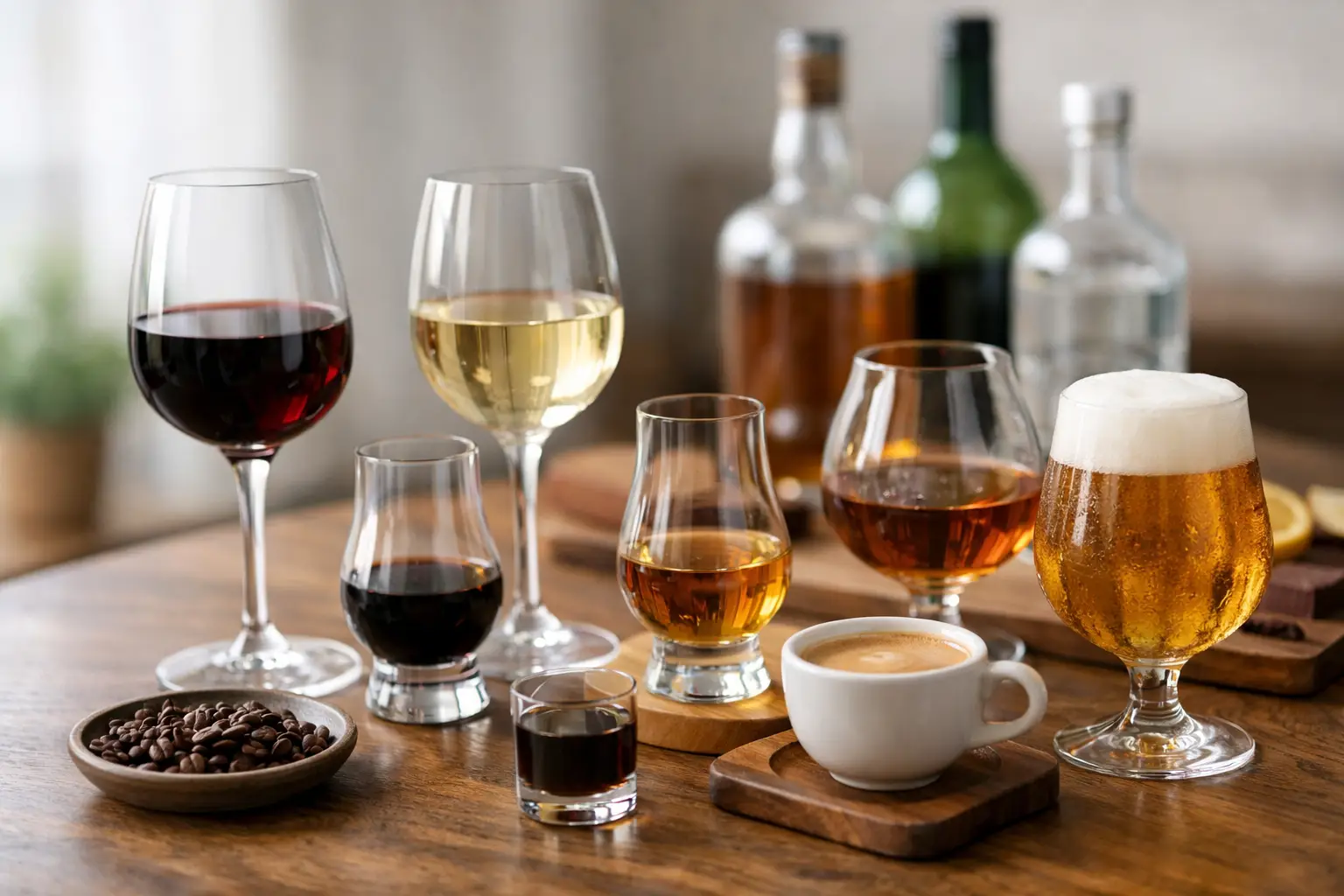
A good palate is not built by buying rarer bottles or memorising a long list of flavour terms. It is built by paying closer attention to what is already in your glass. The best drinks for palate training are the ones that make one sensory idea clear at a time: acidity, bitterness, sweetness, texture, aroma or length of finish.
For most people, the simplest place to begin is at home with familiar drinks. You do not need prior wine knowledge, specialist equipment or a perfect vocabulary. You need a quiet few minutes, a clean glass and the willingness to compare one sip with the next.
What palate training actually develops
Palate training is often described as learning to taste flavours, but that only tells part of the story. Your palate also learns to recognise structure: the mouth-watering pull of acidity, the drying grip of tannin, the weight of a drink across the tongue and the way a flavour lingers after swallowing.
Aroma matters just as much. Much of what we call taste happens through smell, especially after you sip and breathe out gently through your nose. With practice, broad impressions such as fresh, warming, creamy or bitter begin to separate into clearer observations: lemon peel rather than simply citrus, toasted nuts rather than simply oak, or black tea-like dryness rather than bitterness.
The aim is not to identify every note correctly. It is to notice more, describe it honestly and remember what you enjoyed. That is how first-sip confidence becomes a useful personal tasting memory.
Best drinks for palate training, by sensory skill
Still water and sparkling water for texture
Water may seem an unlikely training drink, yet it gives you a clean baseline. Taste still water at room temperature, then compare it with chilled still water. Cold mutes aroma and can make texture harder to notice, while room temperature often feels rounder or softer.
Then compare still and sparkling water. Focus on the physical sensation rather than flavour. Are the bubbles sharp and lively, fine and creamy, or quickly fading? Does carbonation make your mouth water? Sparkling water is particularly helpful for understanding why a sparkling wine can feel refreshing even when it has a little sweetness.
Use plain water to reset your palate between samples as well. Avoid strongly flavoured fizzy drinks during a tasting session, as their sweetness and acidity can make subtle drinks seem flatter than they are.
Tea for tannin, bitterness and finish
Tea is one of the most useful everyday tools for learning structure. Brew a light black tea and notice the drying sensation on your gums and cheeks. This is a practical introduction to tannin, the same mouth-drying quality you may find in red wine, especially wines made with thick-skinned grapes.
Now brew a second cup for longer. The flavour will become more intense, but separate the sensations: is it bitter on the back of the tongue, drying across the mouth, or both? Bitterness and tannin are often confused, even though they behave differently. Bitterness is a flavour perception. Tannin is more about texture.
Green tea offers another useful comparison. It can show vegetal, floral or grassy aromas alongside bitterness and a lighter kind of astringency. Taste without rushing, then wait ten seconds after swallowing. The remaining impression is the finish. Is it clean, drying, sweet-edged or short?
Coffee for roast and aromatic detail
Coffee can teach you how preparation changes a familiar drink. Smell freshly ground coffee, then smell the brewed cup before tasting. You may notice roast, cocoa, nuts, caramel, dried fruit or a slightly smoky edge. None of those observations needs to be exact to be useful.
Try the same coffee at two temperatures. When hot, texture and roast may stand out most. As it cools, acidity and fruit-like notes often become easier to detect. This is a valuable lesson for wine and whisky too: temperature changes what you can smell and taste.
Keep coffee sessions separate from delicate wine tasting where possible. Its persistent aroma can dominate your palate. Think of it as a focused training exercise rather than a reset drink.
Apple juice and lemonade for sweetness and acidity
Sweetness is easy to recognise when it is obvious, but harder to judge when it sits alongside acidity. Compare a small sip of cloudy apple juice with a sip of still lemonade or freshly squeezed lemon diluted with water. The apple juice may feel round, ripe and full. The lemon drink should make your mouth water more quickly.
That mouth-watering response is one of the clearest signs of acidity. In wine, acidity can suggest lemon, green apple, cranberry or even yoghurt-like tang, but it is the physical lift that matters most. A drink may smell fruity without being sweet, and it may taste rich while still being bright with acidity.
This comparison also shows why balance matters. A sweet drink without enough freshness can feel heavy. A highly acidic drink without fruit or sweetness may feel severe. Neither is automatically good or bad. Your preference is part of the tasting result.
Dry wine for balance and structure
Wine brings several sensory elements together, which makes it ideal once you have practised them separately. Begin with a dry white wine, such as a crisp Sauvignon Blanc, Pinot Grigio or unoaked Chardonnay. First, smell without searching for a named fruit. Ask whether the aroma feels fresh, ripe, floral, herbal, stony or creamy.
On the palate, notice weight. Does it feel light like water, medium like milk, or more coating? Then notice acidity. Does it gently freshen the mouth or make it water noticeably? Finally, pause for the finish. A longer finish does not always mean you will prefer the wine, but it often gives you more to reflect on.
For red wine, choose a lighter, approachable style before moving to powerful examples. Pinot Noir, Beaujolais or a lighter-bodied red can make tannin easier to isolate without overwhelming alcohol or oak. Compare its dryness with the black tea exercise. If your cheeks and gums feel gently gripped after the sip, you are noticing tannin at work.
Taste responsibly and keep pours small. Palate training is more effective when attention stays sharp.
Whisky and aged spirits for flavour development
Whisky is excellent for learning how aroma develops over time, though its higher alcohol level calls for a slower approach. Start by smelling from a short distance rather than placing your nose deep in the glass. Look for broad families first: cereal, fruit, vanilla, spice, nuts, smoke or dried fruit.
Take a very small sip, let it rest briefly, then swallow. Notice where warmth appears and how the texture changes. Add a few drops of water only after you have tasted it neat. Water can soften the alcohol prickle and reveal new aromas, but it also changes the original balance. There is no single correct dilution.
A comparison between an unpeated and peated whisky can be particularly instructive. One may lean towards orchard fruit, honey and biscuit; the other may bring smoke, earth, sea spray or medicinal notes. The point is not to force the expected descriptors. Ask which aromas feel most prominent to you, and whether they stay through the finish.
A simple way to practise without overthinking
Choose two drinks that contrast in one clear way, rather than opening several unrelated bottles. For example, compare still water with sparkling water, a dry white wine with a lightly sweet one, or black tea with a light red wine. Pour modest amounts and use similar glasses where practical.
Give each drink the same sequence of attention. Look at its colour and clarity. Smell it twice, first for the overall impression and then for detail. Take a small sip and identify sweetness, acidity, bitterness, tannin or body where relevant. Wait before deciding what remains.
Write only three notes: what you smelled, what the drink felt like and what stayed after the sip. Short notes are more useful than a performance of tasting vocabulary. Over time, your saved comparisons will show patterns: perhaps you consistently enjoy bright acidity, soft textures, savoury finishes or gentle smoke.
Audio Sommelier can make this process feel less solitary, guiding attention through aroma, texture, flavour and finish while helping you retain the bottles and observations that matter to you.
Common mistakes that make tasting harder
The biggest mistake is tasting when your senses are already crowded. Strong perfume, scented candles, spicy food, chewing gum and smoking can all obscure aroma. A neutral setting is not about ceremony. It simply lets the drink speak more clearly.
Another is trying to taste every possible flavour at once. If all you can say is that a wine feels fresh and tastes of red fruit, that is a strong start. Precision comes from repeated comparisons, not pressure.
Finally, do not assume expensive drinks are better training tools. A familiar cup of tea can teach tannin more clearly than a complex bottle of red wine. A simple sparkling water comparison can teach texture more directly than a celebratory sparkling wine. Begin where the lesson is easiest to feel.
Your palate does not need to become someone else's. With a little structure, it becomes a clearer record of your own preferences - one attentive sip at a time.