6 Jul 2026
Is a Subscription for Wine Education Worth It?
Is a subscription for wine education worth it? Learn how guided tasting, memory tools, and audio support can build confidence at home.
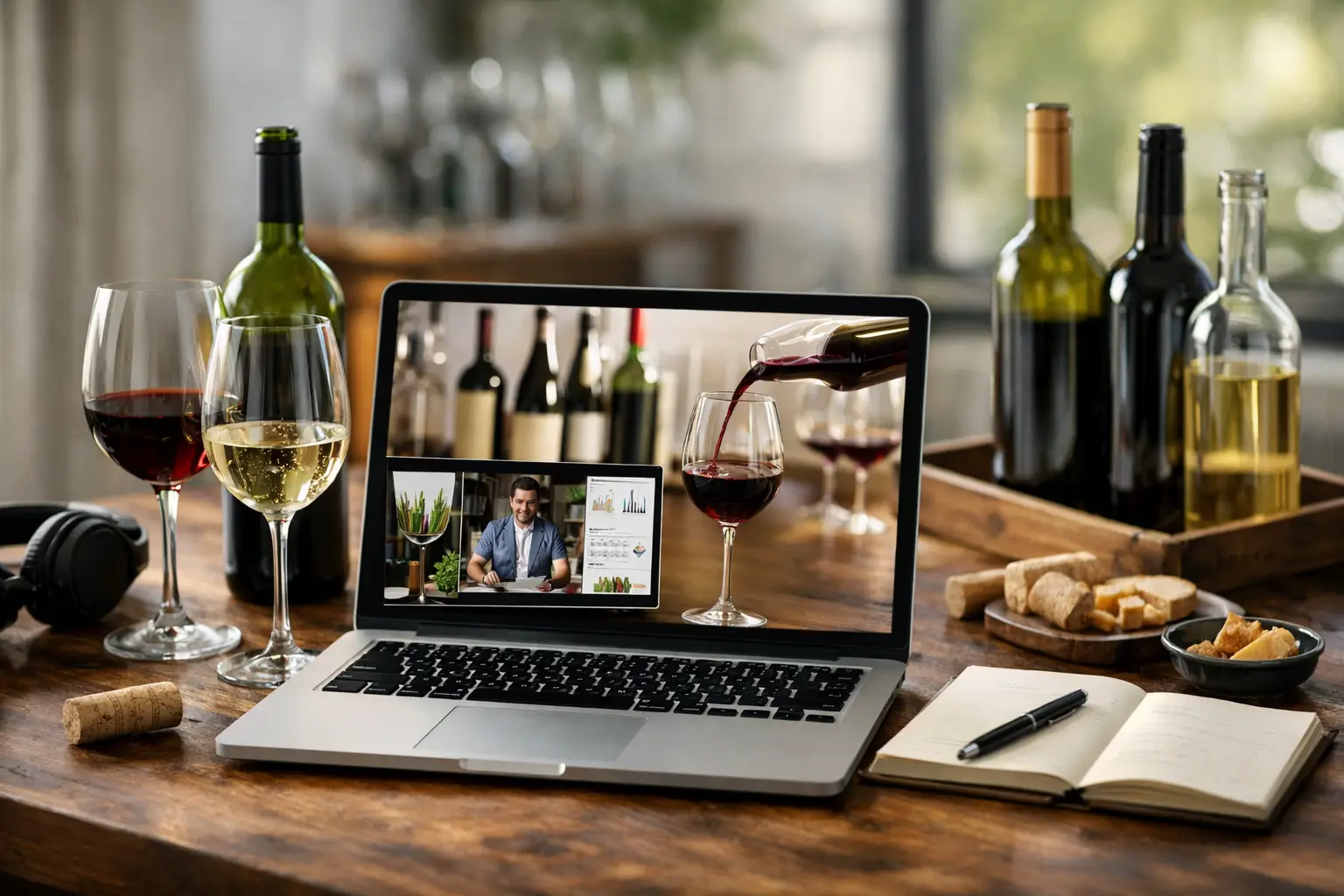
Most people do not need more wine. They need a better way to understand the bottles they are already buying.
That is where a subscription for wine education can make real sense. Not as another layer of wine jargon, and not as a club that sends more bottles to your door, but as a calm, practical way to taste with more confidence at home. If you have ever poured a glass, known you liked it, and then struggled to explain why, this kind of subscription starts to feel less like a luxury and more like useful guidance.
What a subscription for wine education should actually do
The phrase can mean a few different things, and that is where some confusion starts. Some services focus on theory, with lessons on grapes, regions, and production methods. Others bundle education with wine deliveries. A smaller group focuses on guided tasting itself, helping you understand what is in your glass step by step.
For most home drinkers, the third option is often the most useful. It meets you at the point where uncertainty usually begins - the moment the wine is poured. You are not trying to pass an exam. You are trying to notice aroma, texture, flavour, and finish in a way that feels clear rather than intimidating.
A strong educational subscription should help you do three things well. It should tell you what to pay attention to, give you language that feels natural, and help you remember what you experienced later. Without that last part, even a good tasting session can fade quickly.
Why traditional wine learning often loses beginners
Many people are curious about wine but put off by the way it is sometimes taught. The subject can feel crowded with rules, fixed opinions, and tasting notes that read more like a puzzle than a pleasure. When every sip seems to demand the right answer, confidence drops fast.
The issue is not that wine education is too detailed. Detail can be fascinating. The issue is timing. If someone is still learning to identify acidity or tannin, they do not need a long detour into classification systems before they can enjoy a Tuesday evening glass with more awareness.
That is why guided learning tends to work better for beginners and casual enthusiasts. It introduces structure without creating pressure. You are shown what to notice in the order it appears, rather than being handed a dense set of facts and left to work out what matters in practice.
The best format is the one you will actually use
A subscription only has value if it fits your real life. That sounds obvious, but it matters more in wine education than people expect.
Some people enjoy reading lesson modules. Others prefer video. Many find audio guidance easier because it leaves their hands free and keeps attention on the glass rather than the screen. If your goal is to taste more intentionally at home, an audio-led format can feel especially natural. You can listen as you swirl, smell, sip, and pause, which makes the learning process less abstract.
That ease of use matters. If education feels like homework, most people will not return to it consistently. If it feels like a well-guided ritual, they often do.
What you gain from guided tasting over time
The first benefit is confidence. Not expert-level certainty, but enough clarity to stop second-guessing yourself. You begin to notice recurring patterns in the wines you enjoy. You become quicker at spotting whether a wine feels fresh, rounded, light, textured, sharp, or savoury.
The second benefit is better language. This does not mean memorising theatrical descriptors. It means being able to say, in your own words, what you are experiencing. That might be ripe stone fruit, blackcurrant, citrus peel, soft spice, chalky texture, or a short finish. Once that vocabulary starts to build, choosing bottles becomes easier too.
The third benefit is memory. This is often the missing piece. People may have several useful tasting experiences, but if they are not saved in a structured way, the learning never compounds. You remember that one white was excellent with fish, or that one red felt too heavy, but not enough to build a clear personal reference point.
That is where digital tools can make a subscription genuinely educational rather than merely entertaining. Saving bottles, notes, and comparisons over time helps turn scattered impressions into something more dependable.
What to look for in a wine education subscription
A good service should reduce friction, not add to it. If you need specialist equipment, lengthy preparation, or a large amount of prior knowledge, it may not suit the audience that most needs support.
Look for guidance that starts with the bottle you already have. That approach keeps the experience grounded and practical. It also makes the subscription easier to justify because it adds value to purchases you were already making.
It also helps if the service supports comparison. Wine understanding improves faster when you can place one bottle next to another in your memory. Perhaps one Sauvignon Blanc feels greener and sharper, while another is softer and more tropical. Perhaps two Pinot Noirs share brightness, but one is more earthy and the other more fruit-led. Comparison creates context, and context makes learning stick.
A strong memory system matters too. Notes are useful, but notes alone can become cluttered. The better option is a structured tasting record you can revisit, build on, and compare over time. That makes your own preferences easier to recognise and trust.
Is a subscription for wine education better than buying a course?
It depends on how you learn and what you want from the experience.
A one-off course can be excellent if you want a fixed body of knowledge and enjoy formal study. It may suit someone preparing for hospitality work, professional exams, or a more academic understanding of wine. The trade-off is that many courses are front-loaded. You receive a lot of information at once, then have to work hard to apply it consistently in daily life.
A subscription model is often better for habit-building. It gives you regular access to guided support, which means learning can happen alongside normal drinking occasions rather than apart from them. Instead of setting aside time to study wine, you learn while opening the bottle you were going to enjoy anyway.
That makes the progress feel more practical. It also tends to be less intimidating for people who want useful results without committing to a formal wine identity.
Where digital guidance works especially well
Home tasting is where most people need help most. In a restaurant, there may be a sommelier or a confident friend at the table. At home, you are usually on your own with the bottle and your assumptions.
Digital tasting guidance fills that gap neatly when it is done well. A platform such as Audio Sommelier, for example, is designed around AI-guided, audio-led tasting support, which means the educational experience happens while you taste rather than before or after. That changes the feel of wine learning completely. It becomes less about performing knowledge and more about building it calmly, sip by sip.
This approach also respects privacy and pace. You can taste in your own space, ask questions without embarrassment, and return to saved bottles and notes when you want to compare them later. For many adults, especially those balancing work, family, and social life, that flexibility is far more realistic than attending classes.
Who gets the most value from it
A subscription for wine education tends to suit three kinds of people especially well. The first is the beginner who wants first sip confidence without being talked down to. The second is the casual enthusiast who already buys decent bottles but feels their tasting vocabulary has stalled. The third is the host who wants to serve wine more thoughtfully and talk about it with ease when friends are over.
It may be less useful for someone who already has advanced formal training and is mainly looking for highly technical material. But for most everyday wine drinkers, practical guidance beats complexity for its own sake.
The real value is not just learning what wine experts know. It is learning what you like, why you like it, and how to recognise it again.
The question is not whether wine education matters
It does. The better question is whether the format helps you use it consistently.
If a subscription gives you clear tasting guidance, approachable language, and a reliable way to store your wine memories, it can be a very sensible investment. Not because it makes wine more serious, but because it makes enjoyment more informed and repeatable.
A good bottle can disappear in an evening. The skill of understanding it can stay with you much longer.