10 Jul 2026
How to Taste Wine Confidently at Home
Learn how to taste wine confidently at home with simple steps to notice aroma, texture, flavour and finish, with no wine knowledge needed.
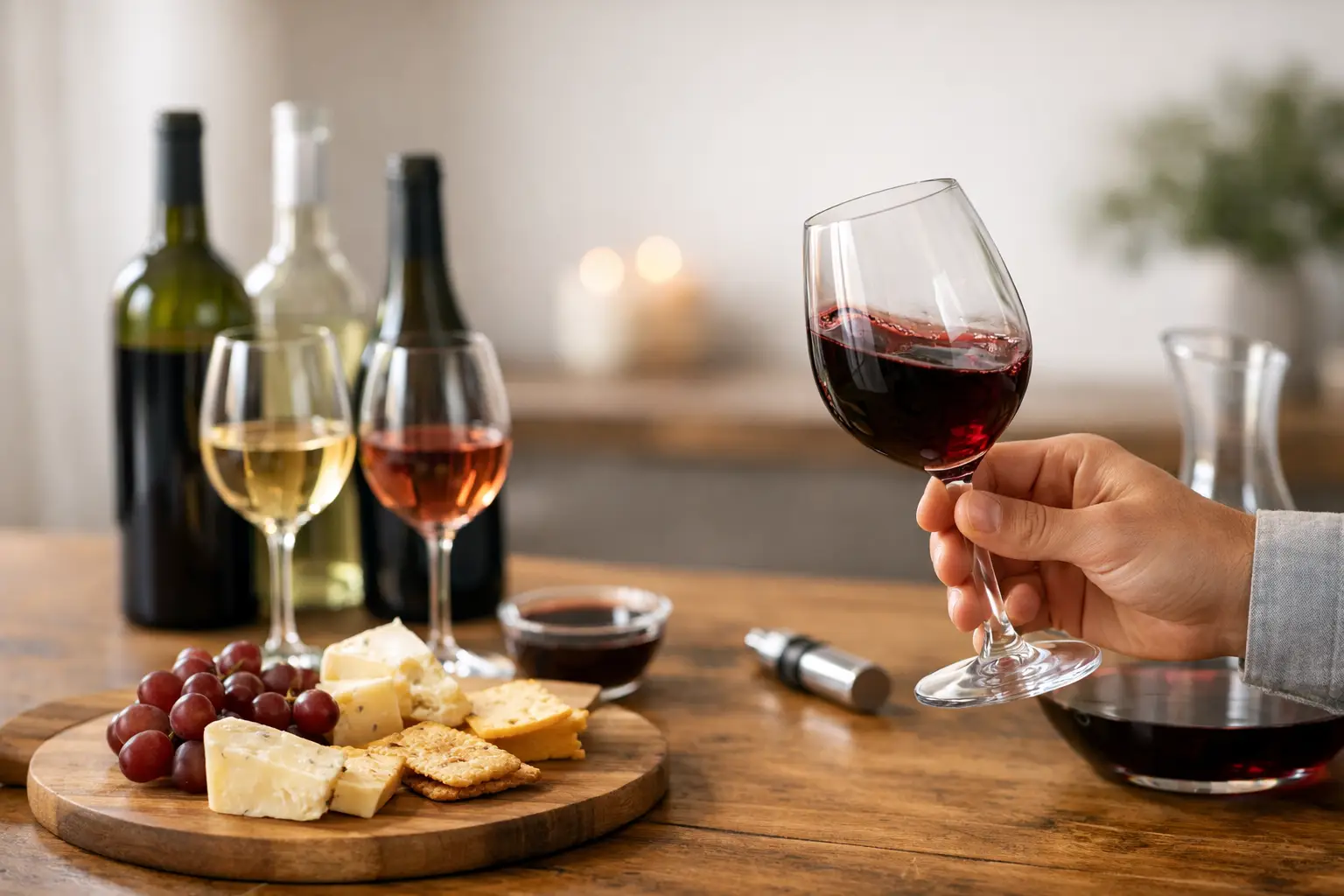
You do not need a trained palate, a perfect wine glass, or a memorised list of grape varieties to learn how to taste wine confidently. What you need is a simple way to notice what is already in the glass. Most people feel unsure not because wine is complicated, but because nobody has shown them what to pay attention to first.
That is good news, because confidence in tasting is not about sounding clever. It is about having a calm, repeatable method. Once you know how to look, smell, sip and describe what you notice, wine starts to feel less like a test and more like a skill you can build.
How to taste wine confidently without overthinking it
The fastest way to feel more assured is to stop trying to identify everything at once. You are not expected to detect twelve aromas, name the soil type, and guess the vintage from one sip. A better approach is to move through the wine in a steady order: appearance, aroma, palate and finish.
That structure matters because it gives your attention somewhere to go. Instead of asking, "Do I know enough?" you ask, "What do I notice now?" That small shift changes the whole experience.
Start by looking at the wine. Hold the glass against a light background and notice the colour and depth. Is it pale lemon, deep ruby, or somewhere in between? You are not hunting for hidden meaning here. You are simply training yourself to observe before you judge.
Then smell the wine before swirling, and again after swirling gently. The first smell often gives lighter, fresher notes. The second can show more fruit, spice, floral character or oak. If all you can say is "fresh", "ripe", "soft" or "earthy", that is already useful. Clear, honest words are far better than borrowed jargon.
When you sip, let the wine move across your mouth for a moment before swallowing. Notice whether it feels light or full, crisp or smooth, lean or rich. Then ask yourself what flavours stay behind and how long they last. This is where many people realise they know more than they thought.
Start with what is easy to notice
Beginners often assume the right answer is the most specific one. In practice, broader descriptions are often more reliable. You may not know whether a white wine smells exactly like quince, but you can probably tell whether it smells more like citrus, orchard fruit or stone fruit. You may not identify cedar in a red, but you can tell whether it feels fresh and juicy or darker and more savoury.
This matters because confidence grows from accuracy, not performance. If you say a wine has bright acidity, gentle tannins and a dry finish, you are describing the experience well. You do not need to decorate that with technical language unless it genuinely helps.
A useful rule is to begin with contrasts. Is the aroma fresh or ripe? Is the body light or full? Is the finish short or lingering? Is the texture smooth or firm? Contrast makes tasting easier because the brain handles difference more readily than endless possibility.
The four things worth noticing in every glass
If you only remember four categories, make them aroma, sweetness, acidity and texture. These give you enough structure to describe most wines clearly.
Aroma
Aroma is often where uncertainty begins, because smell feels personal. In reality, that is not a problem. Wine references come from memory, and memory varies from person to person. One person says blackcurrant, another says dark berries. Both may be right enough to be useful.
Try to notice families of aroma rather than forcing one exact answer. Citrus, red fruit, black fruit, floral notes, herbs, spice, oak, earth and savoury notes are practical starting points. If the wine reminds you of lemon peel, cherries, dried rose, vanilla or wet stone, note it. If not, stay broad.
Sweetness
Many people confuse fruitiness with sweetness. A wine can smell like ripe peaches or jammy berries and still be dry. When tasting, ask whether there is actual residual sugar on the palate, or simply ripe fruit character. This distinction becomes easier with practice, and once it clicks, your tasting notes become far more precise.
Acidity
Acidity is the brightness that makes your mouth water. It is one of the easiest sensations to recognise once you know what to look for. High acidity feels lively and refreshing. Lower acidity feels softer and rounder. Neither is inherently better. It depends on the style of wine and what you enjoy.
Texture
Texture is where confidence often takes root, because it is physical rather than abstract. Notice weight, grip and shape. Does the wine feel silky, chalky, creamy, lean or dense? Red wines may have tannins that feel drying on the gums. White wines may feel crisp, waxy or rounded. Sparkling wines may feel delicate or forceful depending on the mousse.
Why wine can taste different from one day to the next
One reason people doubt themselves is that the same bottle can seem different at different times. That does not always mean you are imagining it. Temperature, glassware, food, mood and even how long the bottle has been open can change what stands out.
A white served too cold may hide aroma and texture. A red served too warm may feel blurred and overly alcoholic. A wine tasted after spicy food may seem flatter or hotter than it would on its own. Your confidence improves when you understand these variables rather than treating every change as a mistake.
This is also why comparison is so helpful. Tasting one wine alone can feel vague. Tasting two side by side teaches you faster. One may seem brighter, the other softer. One may finish cleanly, the other linger with spice. Contrast builds vocabulary naturally.
How to taste wine confidently when you are with other people
Social settings can make tasting feel performative, especially if someone at the table speaks very confidently. The best response is not to compete. It is to stay grounded in your own sensory experience.
You can say, "I am getting red fruit and something slightly peppery," or "This feels quite smooth with a dry finish." Those are strong tasting comments because they are specific enough to be meaningful and modest enough to be honest.
It also helps to remember that disagreement is normal. Wine is not a maths problem with one correct result. If someone smells violets and you smell cherries, both impressions may be valid. Shared tasting is most useful when it expands your noticing, not when it pressures you to perform.
Build a simple tasting habit
If you want first sip confidence, repetition matters more than intensity. You do not need to stage formal tastings every week. You only need a short ritual that helps you pay attention.
Pour a small glass. Pause before drinking. Look, smell, sip, and say three things you notice. That is enough. If you want to go further, save a few words about the wine so you can return to them later. Over time, patterns become clearer. You begin to remember which styles you enjoy, which textures suit your palate, and which bottles are worth buying again.
This is where structured guidance can be particularly helpful. A calm prompt at the right moment can stop the mind going blank and make tasting feel far more intuitive. Audio Sommelier is built around exactly that idea - practical, guided tasting at home using the bottles you already have, with a way to save what you noticed so your palate has a memory as well as a moment.
A better goal than sounding like an expert
There is a quiet difference between expertise and confidence. Expertise takes time. Confidence comes earlier, and it comes from knowing how to proceed even when you do not have all the answers.
If you can notice colour, describe aroma in broad families, comment on acidity and texture, and say something honest about the finish, you already know how to taste wine confidently. From there, everything else is refinement.
The most useful tasters are rarely the most theatrical. They are the ones who pay attention, trust their senses, and keep a record of what they enjoy. Start there, and each bottle becomes less of a mystery and more of a conversation you know how to have.
Next time you pour a glass, give yourself an extra minute before the first proper sip. That minute is often where confidence begins.