18 Jul 2026
How to Taste Sparkling Wine With Confidence
Learn how to taste sparkling wine with calm, practical steps for noticing bubbles, aroma, flavour, texture and finish in every glass at home with ease.
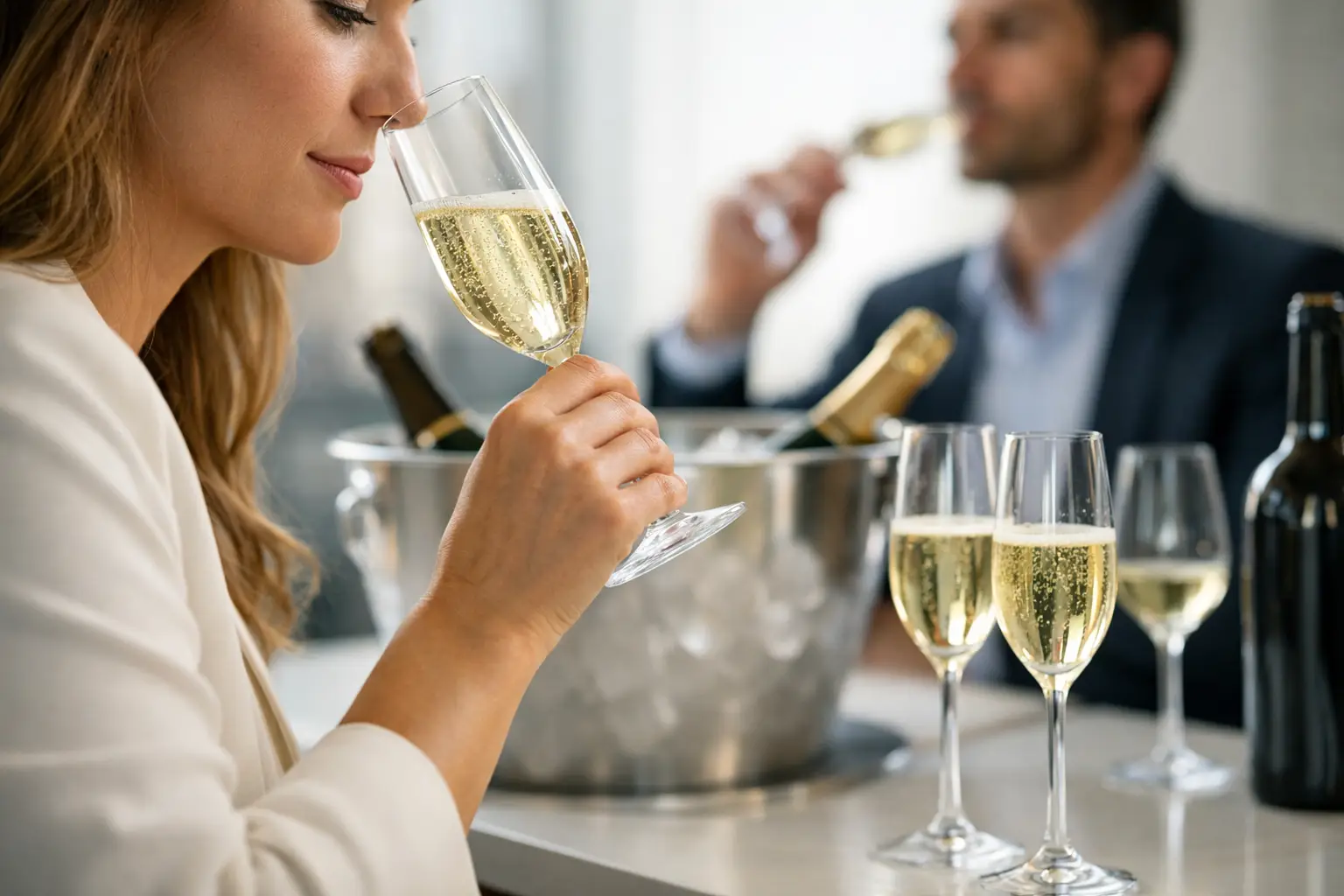
That first rush of bubbles can make sparkling wine seem harder to describe than it is. Yet learning how to taste sparkling wine is less about finding the ‘right’ answer and more about slowing down long enough to notice what is already in the glass. No wine knowledge needed - just a clean glass, a bottle you enjoy and a few unhurried minutes.
Sparkling wine gives you plenty of sensory clues: the look and behaviour of its bubbles, bright aromas, the shape of its acidity and the way the mousse feels across your palate. A simple structure helps turn those clues into words you can remember and use next time.
Set up the glass before you pour
Start with temperature. Most sparkling wines show well when properly chilled, usually around 6-10°C. If the bottle is too cold, its aromas and flavours can seem muted. Too warm, and the bubbles may feel coarse while the alcohol becomes more noticeable. If it has just come from a very cold fridge, give your poured glass five minutes before judging it.
A tulip-shaped glass is particularly useful for tasting because its rounded bowl gives aromas space to gather, while its narrower rim keeps them focused. A flute is perfectly fine for celebration and preserves the visual lift of the bubbles, but it can make aroma harder to assess. If all you have is a regular white wine glass, use that. Cleanliness matters more than specialised glassware: detergent residue and grease can flatten a wine’s bead surprisingly quickly.
Open the bottle carefully. Keep a thumb over the cork, loosen the wire cage, then turn the bottle rather than the cork until it releases with a gentle sigh. A dramatic pop is not a sign of quality. It often means some pressure, and potentially some wine, has been lost before the tasting begins.
Pour only a small amount at first, around a third of the glass. This leaves room to observe the bubbles and to swirl gently without spilling.
How to taste sparkling wine, one sense at a time
A professional-style tasting need not feel formal. Move through appearance, nose, palate and finish in that order. Each stage gives context to the next, and none of them requires a perfect vocabulary.
Look at colour, clarity and bubbles
Hold the glass against a pale background in good natural light if possible. Is the wine water-white, pale lemon, golden, coppery or rose-pink? Colour can hint at age and style, although it is never proof on its own. A youthful Prosecco may be very pale; an older traditional-method sparkling wine may have a deeper gold tone.
Then watch the bubbles. Are they fine and steady, rising in a delicate stream, or larger and more energetic? You may hear people describe a wine’s ‘mousse’. This means the overall texture and behaviour of the bubbles, both in the glass and on the palate. Fine bubbles can feel creamy or soft; broader bubbles may feel lively, assertive or refreshing. Neither is automatically better. The character should suit the style and your preference.
Do not spend too long trying to judge quality by bubble size alone. Glass cleanliness, temperature and how recently the bottle was opened all affect what you see. Treat this stage as observation, not a test.
Smell before you swirl
Take one short, gentle sniff first. Sparkling wine can release aromas quickly, and an enthusiastic swirl may disperse some of its gas. Notice your immediate impression: fresh citrus, green apple, pear, white flowers, red berries or something more savoury?
Next, give the glass a small swirl and smell again. Try to separate what you notice into simple groups. Fruit might suggest lemon, grapefruit, peach, apple, quince, strawberry or raspberry. Floral notes may recall elderflower, blossom or rose. Some wines show bakery notes such as bread dough, brioche, toast or biscuit. Others bring almond, honey, cream, hazelnut or a stony, chalky character.
You do not need to identify every aroma precisely. ‘Fresh apple and lemon, with a little baked pastry’ is far more useful than forcing a long list of uncertain comparisons. If a smell reminds you of a real memory, trust that connection and write it down in your own words.
Take two purposeful sips
For the first sip, focus on texture. Let the wine move across your tongue before swallowing. How do the bubbles feel? They might be crisp, prickly, creamy, frothy, delicate or persistent. Notice whether the wine feels light and direct, rounded and smooth, or fuller and more vinous, almost like a still white wine with bubbles.
On the second sip, focus on balance. Sparkling wine is shaped by the relationship between acidity, fruit, sweetness and alcohol. Acidity creates the mouth-watering, refreshing sensation often associated with lemon or green apple. It should make you want another sip, not leave the wine painfully sharp.
Sweetness is more subtle than many people expect. A wine labelled Brut is generally dry, but it may still taste fruity or softly rounded. Extra Dry is actually a little sweeter than Brut, despite the name. Demi-Sec is sweeter again and can be excellent with desserts, spicy dishes or salty snacks. If you are unsure, ask yourself a simpler question: does the finish feel bone-dry, gently fruity, or clearly sweet?
Fruit flavours often become clearer on the palate than on the nose. You may taste citrus, apple, pear, peach, pineapple, cherry or berry fruit. Traditional-method wines can also develop notes of toast, pastry cream, nuts and spice. A tank-method wine such as Prosecco often leans towards fresh fruit and flowers. These are useful tendencies, not rules. Let the bottle in front of you have the final word.
Pause for the finish
After swallowing, wait a few seconds. What remains? This is the finish, and it tells you whether the wine’s flavours disappear quickly, stay clean and bright, or develop into something more complex.
A short finish is not necessarily disappointing, especially in a light, easy-drinking bottle. But a longer finish can be satisfying because it gives you more time to notice changing flavours: perhaps lemon becomes almond, apple becomes brioche, or red berries turn savoury and dry. Consider whether the ending feels balanced, bitter, creamy, saline, warm or refreshing.
Use language that sounds like you
Tasting notes are not an exam paper. You are building a useful memory of what you enjoyed, what you would buy again and what you might pair differently. Begin with a few clear observations rather than reaching for technical language.
A note might read: ‘Pale gold, fine bubbles, lemon peel and green apple. Dry, bright and lightly creamy, with a biscuit finish.’ Or: ‘Soft pink colour, strawberry and rose aromas, gentle sweetness, lively bubbles and a clean finish.’ Both tell a future you something meaningful.
If you are tasting with friends, compare impressions before looking at a producer’s description. One person may find pear where another notices apple, and both may be responding to the same family of aromas. The goal is not agreement. It is paying attention.
Taste alongside food, but taste the wine alone first
Sparkling wine is versatile at the table because its acidity and bubbles refresh the palate. Salty foods, fried dishes, seafood, creamy cheeses and many lighter meals can all work well. A dry, high-acid style can cut through rich food, while a sweeter style may soften chilli heat or complement fruit-based desserts.
Still, take your first few sips before eating. Food changes perception quickly. Salt can make a wine seem fruitier, sweetness can make a dry wine appear sharper, and spicy dishes can intensify alcohol and bubbles. There is no wrong pairing if you enjoy it, but tasting the wine on its own gives you a clearer baseline.
Make each bottle a useful comparison
The fastest way to develop confidence is to compare two sparkling wines on purpose. Try a fresh Prosecco beside a traditional-method English sparkling wine, Champagne or Cava. Notice which feels fruitier, which has more toast or biscuit character, and which has a creamier mousse. You do not need to buy expensive bottles for this exercise. Difference is more helpful than prestige.
Save a brief note after each tasting: the bottle, the occasion, three sensory details and whether you would choose it again. Over time, patterns become visible. You may find that you consistently prefer bone-dry wines with citrus and chalky freshness, or that richer, brioche-led styles suit your favourite meals. Audio Sommelier can help you turn those moments into guided tastings and a personal record, using the bottles already in your home.
The next time you pour a glass, give yourself permission to notice just one new thing: the texture of the mousse, the fruit after the first sip, or the flavour that stays after the bubbles fade. That small pause is where confidence begins.