8 Jul 2026
How to Host a Tasting Flight at Home
Learn how to host a tasting flight at home with simple pairings, smart pour sizes, pacing tips, and easy guidance for confident tasting.
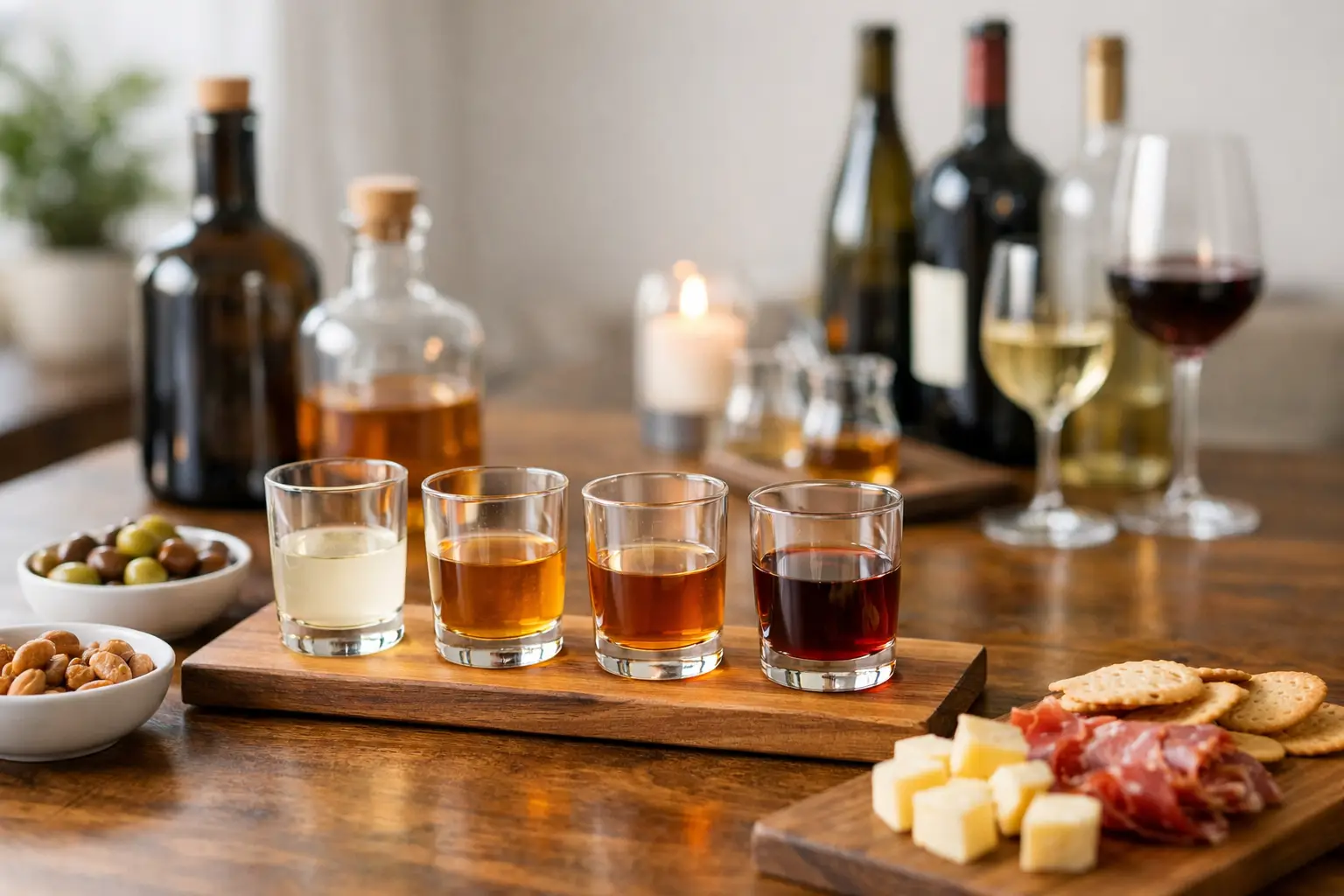
A good tasting flight does not begin with expensive bottles. It begins with a clear reason for putting those glasses on the table in the first place. If you are wondering how to host a tasting flight that feels thoughtful rather than fussy, the aim is simple - help people notice differences, talk about them with confidence, and enjoy the process without feeling tested.
That matters because a flight is not just a way to serve drinks. It is a way to compare. Side-by-side tasting sharpens your attention far more quickly than opening one bottle, finishing it, and trying to remember what it was like next week. Done well, a flight gives guests a sense of discovery and gives you a structure that makes hosting feel easier, not harder.
Start with a clear theme
The most successful flights are narrow enough to make comparison easy. That is the first decision to make before you think about glassware, food or serving order. A loose theme like red wine can become muddled quickly. A tighter theme such as three Sauvignon Blancs from different regions, or three whiskies finished in different casks, gives people something specific to look for.
You do not need rare bottles to make this work. In fact, familiar styles often produce better conversations because guests are comparing things they might actually buy again. Beer works especially well for this. You could pour a pale ale, an IPA and a session IPA from different breweries, or compare three stouts with different roast levels. With sparkling wine, even two or three examples with different sweetness levels can teach a lot in one sitting.
If you are hosting mixed-experience guests, keep the theme intuitive. Grape variety, region, cask finish, sweetness, age or production style are all useful anchors. The narrower the brief, the more relaxed the tasting tends to feel, because people know what they are paying attention to.
How to host a tasting flight without overcomplicating it
Most home hosts make one of two mistakes. They either pour too many samples and tire everyone out, or they over-explain and make the evening feel like homework. The sweet spot is usually three to five pours. That is enough to spot patterns, but not so much that palates become confused.
Keep sample sizes modest. Around 50ml works for wine and sparkling wine, while 15 to 25ml is more sensible for spirits and liqueurs. Beer depends on strength and format, but a small tasting pour is plenty. Guests do not need full serves to have a meaningful experience.
Glassware helps, but perfection is not required. Matching glasses are useful because they reduce distractions, yet the real priority is cleanliness and enough space to swirl and smell. If you only have a mix of glasses, use the most similar ones available and focus on consistency.
Temperature is another detail that changes everything. Whites served too cold can seem muted. Reds served too warm can feel heavy. Spirits can lose definition if they are overly chilled. You are not aiming for laboratory conditions, just sensible serving temperatures that let aroma and texture show properly.
Build the order with care
Serving order shapes the whole tasting. The general rule is to move from lighter and more delicate to richer and more intense. That means lower tannin before higher tannin in wine, gentler peat before heavily smoky whisky, and lower bitterness before aggressive bitterness in beer.
Sweetness and alcohol also matter. Dry styles usually come before sweeter ones. Lower alcohol often sits better at the start than the end, unless the tasting theme itself suggests another order. There are exceptions. If you are comparing the same style from youngest to oldest, or unoaked to oaked, that progression may make more sense. The key is to build a sequence that helps contrast, not confusion.
Before guests arrive, taste through the flight yourself if possible. A quick pre-check can reveal that bottle number three overwhelms bottle number two, or that one sample should be moved earlier to make the comparison cleaner. Hosting becomes much calmer when you have already tested the flow.
Set the table for attention, not ceremony
A tasting flight feels more comfortable when the setup is simple and intentional. Each guest needs water, a neutral palate cleanser such as plain crackers or bread, and enough room to keep glasses in front of them. Labels can stay visible if the mood is casual, but blind tasting can be fun if your group enjoys guessing without pressure.
Good lighting helps more than people realise. Guests notice colour and clarity more easily, and the whole table feels more focused. Strong food smells, scented candles and heavy room fragrance are less helpful. Aroma is central to tasting, so a neutral environment gives every bottle a fair chance.
You do not need printed scorecards unless your guests want them. A few simple prompts are usually enough. What do you notice on the nose? How does the texture feel? Does the finish stay light, savoury, sweet, warming, dry? Questions like these encourage observation without suggesting there is a right answer.
Guide the tasting in a calm, useful way
If you want to know how to host a tasting flight confidently, think of yourself less as a lecturer and more as a guide. Your job is not to perform expertise. Your job is to create enough structure that everyone can notice more than they usually would.
Start with a minute of quiet observation. Encourage guests to look, smell, then sip. Let them return to the glass more than once. People often feel rushed into declaring what they think they taste, when in reality the second nose or second sip is where confidence begins.
Keep your language accessible. Instead of asking for textbook descriptors, ask what the drink reminds them of. Fresh apple, toast, black tea, orange peel, vanilla, herbs, roasted coffee, wet stone - all of these are valid if they reflect the glass in front of them. Tasting language improves through practice, not perfection.
This is where guided support can make a real difference. Platforms such as Audio Sommelier are designed for exactly this kind of at-home comparison, helping people move through aroma, palate, texture and finish with calm prompts and no wine knowledge needed. For hosts who want structure without sounding scripted, that sort of support can remove a lot of pressure.
Expect preferences to change as comparisons build
One of the pleasures of a flight is that favourites often shift. The bottle that seems quiet at first may become the most elegant once guests compare it with louder styles. A richer sample may impress on first sip but feel less balanced over time. That is normal, and it is worth making space for it.
Invite guests to revisit their first pour after tasting the last one. Comparison is where memory becomes sharper. People start to notice acidity, softness, spice, bitterness or length in a much more concrete way when they can move back and forth between glasses.
This is also why food should be handled carefully. If the evening is built around tasting, keep snacks neutral during the flight and save stronger pairings for afterwards. Cheese, charcuterie or dessert can be lovely, but they will shift perception. Sometimes that is the point. Sometimes it gets in the way.
Keep the mood welcoming for beginners
A good host lowers the stakes. Not everyone wants to announce detailed tasting notes in front of a group, especially if they are new to wine, whisky or beer. Give people permission to be simple and honest. Saying this one feels sharper, smoother, sweeter or more floral is already useful.
It also helps to avoid turning the evening into a quiz. Facts about region, production or ageing are interesting when they explain what is in the glass. They are less helpful when they sound like a test of knowledge. If your guests leave with better tasting language and a clearer sense of what they enjoy, the flight has done its job.
That applies to you as well. You do not need to know everything to host well. A thoughtful theme, sensible pacing and a few clear prompts are usually enough to make people feel looked after.
What makes guests remember the evening
People remember tasting flights when the experience feels coherent. They can see why these particular drinks were chosen, they have time to compare them properly, and they leave with one or two new observations they can use again later. That might be realising they prefer higher acidity in white wine, discovering that oak changes texture more than aroma for them, or learning that peat is more nuanced than simply smoky.
That is the real value of hosting a flight at home. It turns drinking into noticing. It gives shape to preference. And it makes future bottle choices feel less random, because guests are no longer relying on vague memory or label design alone.
The next time you open a few bottles for friends, make them part of a conversation rather than a line-up. People do not need grandeur to taste well. They need a little structure, a little curiosity, and enough calm around the table to trust what they are sensing.