2 Oct 2026
12 Best Whisky Aromas to Recognise First
Learn the best whisky aromas to recognise, from vanilla and orchard fruit to peat smoke, with a calm method for nosing each dram with confidence at home.
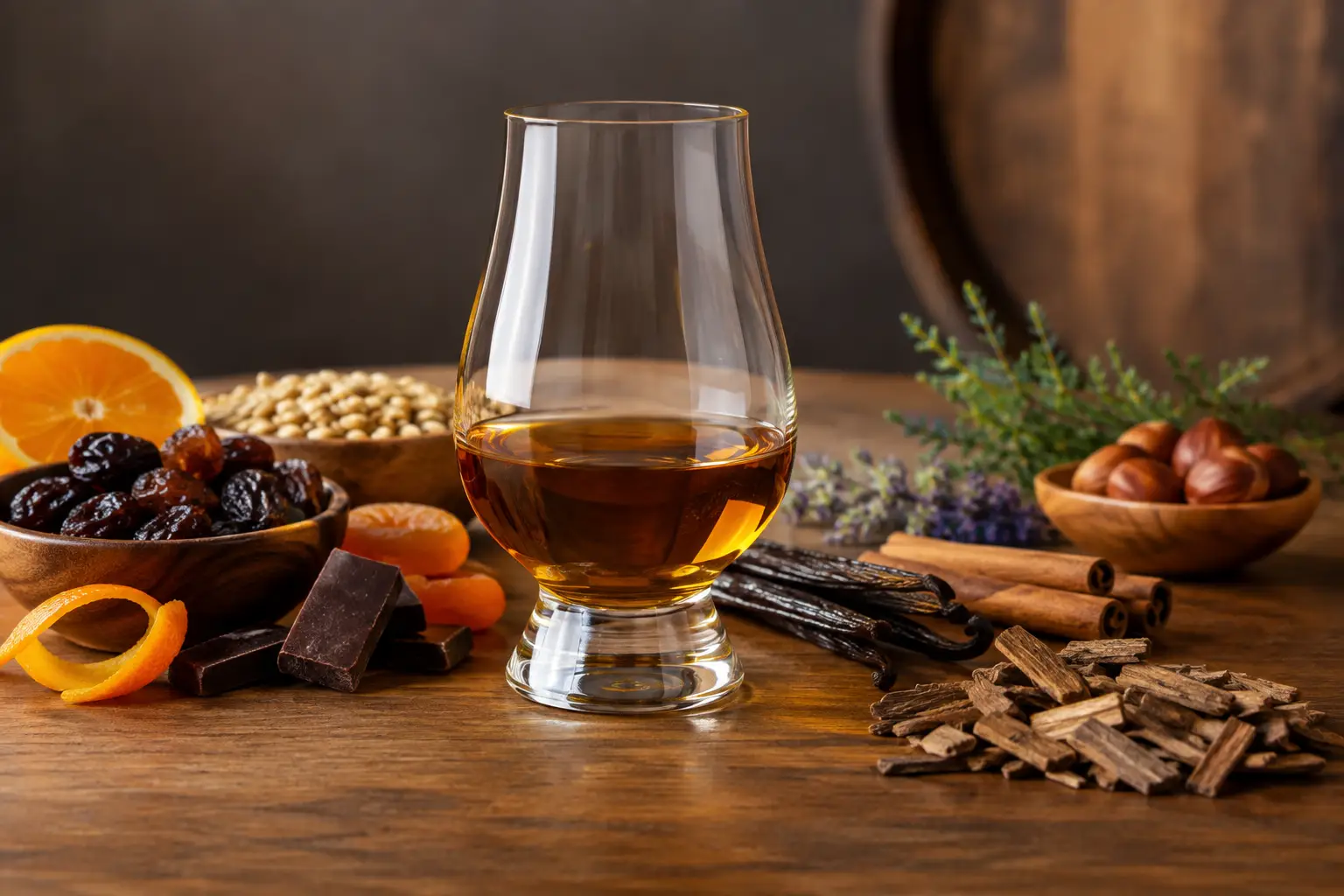
A whisky can smell of an old library, a seaside bonfire, a fruit bowl or fresh pastry - sometimes all before the first sip. Learning the best whisky aromas to recognise gives you a practical starting point: not a test to pass, but a way to notice why one dram feels familiar, warming or completely unlike the last.
You do not need an exceptional nose or a shelf of rare bottles. You only need a clean glass, a little patience and language that connects what you smell to everyday memories. Start with broad aroma families, then become more specific as your confidence grows.
How to nose whisky without overwhelming your senses
Pour a modest measure and give it a minute or two in the glass. Alcohol rises quickly, particularly in cask-strength whisky, so pushing your nose straight into the rim can make every aroma seem sharp and indistinct.
Hold the glass just below your nose and take two or three short, gentle sniffs with your mouth slightly open. Then move the glass a little further away and return. This small change in distance often reveals a different layer: the first impression may be bright fruit, while a second sniff brings vanilla, cereal or smoke.
Try not to search for a precise answer immediately. Ask yourself whether the aroma is fresh or rich, sweet or dry, fruity or savoury. Those simple contrasts narrow the field naturally. A few drops of still water can also soften the alcohol and open a fuller-strength whisky, but add it gradually. Some lighter expressions lose definition if diluted too far.
The best whisky aromas to recognise first
1. Vanilla
Vanilla is one of the most useful reference points in whisky. It often comes from maturation in oak, especially American oak that previously held bourbon. Look for vanilla pod, vanilla fudge, ice cream or custard rather than perfume-like vanilla essence.
Vanilla commonly sits alongside sweetness, but it does not mean the whisky has added sugar. It is an oak-derived impression, and it can range from delicate and creamy to deep and toasted.
2. Toffee, caramel and butterscotch
These aromas suggest warmed sugar, buttery sweets, treacle pudding or caramel sauce. They are often linked to oak maturation and can become more pronounced in whiskies aged in active barrels or finished in sweet-wine casks.
It helps to separate them from vanilla. Vanilla is usually lighter and more aromatic; toffee and caramel feel darker, richer and more cooked. You may find both in the same glass.
3. Apple and pear
Fresh orchard fruit is a classic whisky family, particularly in many lighter Scotch styles and Irish whiskies. Think green apple, pear drop, apple skin, poached pear or apple crumble. The detail matters because fresh fruit and cooked fruit create very different impressions.
If a whisky seems clean, lifted and gently sweet, apple or pear is often a good place to begin. These aromas can be subtle, so revisit the glass after it has rested rather than assuming they are absent.
4. Citrus peel
Lemon, orange, grapefruit and tangerine can bring brightness to a dram. In whisky, citrus often presents as peel rather than juice: lemon zest, orange oil, marmalade or candied citrus. A dry citrus note can make a rich whisky feel more balanced, while orange marmalade may accompany sherry-cask richness.
Avoid forcing a distinction between every fruit at first. “Bright orange peel” is more useful and honest than debating whether it is precisely satsuma or mandarin.
5. Dried fruit
Raisins, dates, figs, prunes and sultanas are aromas many people associate with sherry-cask-matured whisky. They can suggest fruitcake, Christmas pudding or sticky date dessert, often alongside nuts and spice.
Dried fruit is usually darker and more concentrated than fresh orchard fruit. It may feel almost syrupy on the nose, even where the whisky itself finishes dry.
6. Stone fruit and tropical fruit
Some whiskies show peach, apricot, nectarine, pineapple, banana or mango. These notes can be vivid in certain fruity single malts, but they are not limited to one region or style. Fermentation, distillation and cask choice all play a part.
Stone fruit tends to feel soft and rounded, while tropical fruit can be more exuberant and ripe. If you smell banana, consider whether it is fresh banana, banana bread or foam sweet - each points to a slightly different character.
7. Honey and floral notes
Honey can smell like acacia, heather, beeswax or honeycomb. It often gives whisky a gentle, golden sweetness without becoming heavy. Floral aromas might recall blossom, dried flowers, lavender or potpourri, though they should not feel aggressively perfumed.
These are easy aromas to miss if you only sniff close to the glass. They often appear at the edge of the aroma, particularly after the whisky has had time to breathe.
8. Cereal, biscuit and fresh bread
Whisky begins with grain, and grain-led aromas are worth recognising. Look for malted barley, porridge oats, cereal, digestive biscuit, shortbread, bread dough or toasted crust. In bourbon and other American whiskies, corn can suggest sweetcorn or cornbread; rye may bring a drier, spicier grain character.
These notes can make a whisky feel grounded and comforting. They also provide a useful contrast to cask influence: if vanilla and dried fruit are the furnishings, cereal is often part of the structure of the room.
9. Nuts and chocolate
Almond, hazelnut, walnut and marzipan commonly appear in more mature or sherried whiskies. Chocolate may range from milky cocoa to dark chocolate, cocoa powder or chocolate orange.
Nutty aromas can be attractive, but they are sometimes confused with a stale or oxidised smell. Fresh nuts, praline and marzipan are positive descriptors. Damp cardboard or rancid oil are not. Trust that difference.
10. Baking spice
Cinnamon, clove, nutmeg, ginger and allspice often arrive through oak. American oak may lean towards sweet baking spice, while European oak can bring drier, more tannic clove and nutmeg notes. Rye whisky can also show peppery spice from the grain itself.
Spice is not always a nose-only experience. You may first notice it aromatically, then feel it build on the palate. Record both if you are keeping notes, as the contrast is useful when comparing bottles later.
11. Peat smoke and coastal air
Peated whisky can smell smoky in several ways: woodsmoke, bonfire ash, fireplace soot, smoked fish, medicinal ointment or tar. Coastal descriptions such as sea spray, salt air and damp rope are also common, though not every whisky made near the coast tastes or smells maritime.
Smoke is highly personal. One person’s comforting bonfire can be another’s antiseptic note. Neither response is wrong. Rather than reaching for a dramatic descriptor, name the version of smoke you genuinely recognise.
12. Leather, tobacco and polished wood
With age and cask influence, whisky can become more savoury and contemplative. Leather, cigar box, polished furniture, old books, black tea and dried leaves are familiar examples. These are often subtle, and they may emerge only after fruit and sweetness have settled.
Do not assume these notes automatically mean an older or better whisky. A younger whisky may be wonderfully direct and lively; an older one may be more complex but also more oak-driven. Preference matters as much as complexity.
Turn aromas into tasting notes you will use
A useful tasting note does not need to sound impressive. Try a simple three-part sentence: “The nose is fresh pear and lemon peel, with vanilla underneath.” Or: “It begins with soft toffee and raisin, then turns smoky and dry.” This captures sequence, character and your own experience.
When comparing two whiskies, change only one thing if possible. Taste two unpeated malts with different cask styles, or two smoky whiskies at different strengths. Comparisons train the memory faster than isolated tasting because your nose has a clear contrast to work with.
Audio Sommelier can help make that practice feel less like homework, guiding you from first aroma to finish and giving you a place to save what you noticed. Over time, your own notes become the most useful reference: a personal map of the aromas you enjoy.
The next time you pour a dram, choose just three things to look for - perhaps fruit, oak and smoke. Give yourself permission to be approximate. The right description is the one that helps you recognise the glass when you return to it.