24 Jun 2026
What Makes an Audio Wine Tasting Experience Work?
See how an audio wine tasting experience builds confidence, improves tasting language, and helps you enjoy and remember bottles at home.
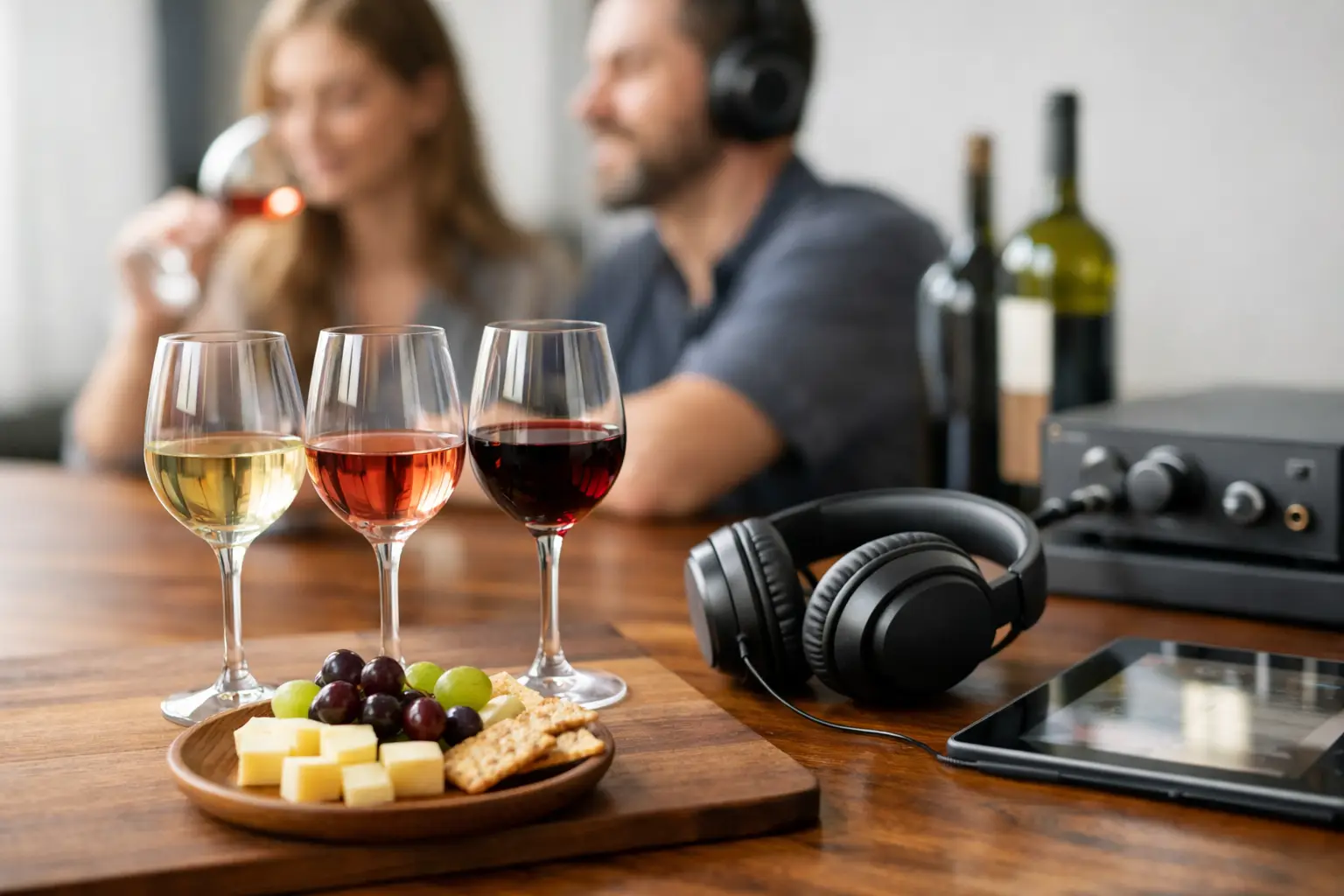
Most people do not need more wine advice. They need better guidance in the moment - when the glass is poured, the first sip lands, and the question arrives: what am I actually noticing here? That is where an audio wine tasting experience becomes genuinely useful. It gives structure without making the occasion feel like homework, and it helps ordinary drinkers turn a bottle at home into something more thoughtful, more memorable, and far less intimidating.
For many wine drinkers, the barrier is not interest. It is hesitation. You might enjoy wine regularly, buy bottles with good intentions, and still feel unsure when asked what you liked beyond “smooth” or “fruity”. Written tasting notes can help, but they often ask you to translate someone else’s language before you have even settled into your own senses. Audio changes that rhythm. Instead of reading ahead and second-guessing yourself, you are guided in real time, step by step, through what to smell, what to notice on the palate, and how to describe the finish in plain language.
Why an audio wine tasting experience feels easier
The appeal of audio is simple. It meets you where tasting actually happens. Your hands are free, your eyes stay on the glass, and your attention stays with the wine rather than a screen or printed note. That matters more than it may seem.
Tasting is sensory work. If you are constantly looking down to read, you break the flow between aroma, flavour, texture and memory. Audio keeps the process continuous. A calm voice can prompt you to pause, swirl, smell again, take a smaller sip, or compare the start of the palate with the finish. Those are small actions, but they create better tasting habits over time.
That is especially helpful for beginners and casual enthusiasts. A good audio guide does not assume prior knowledge. It does not expect you to know your tannins from your acidity on command. Instead, it gives you a sequence that makes the glass easier to understand. No wine knowledge needed is not a slogan here. It is a practical design principle.
What a good audio wine tasting experience should include
Not every guided tasting is equally helpful. Some are too vague to teach anything. Others lean so heavily on expert language that they recreate the same intimidation many people are trying to avoid.
A strong audio wine tasting experience usually begins with observation before judgement. Rather than telling you what you should taste, it helps you notice what is in front of you. That might mean prompting you to look at colour and clarity, then moving into aroma intensity, then asking whether the wine feels light, rounded, crisp or drying on the palate. These cues are more approachable than abstract tasting theory because they connect directly to sensation.
Pacing also matters. If the guidance rushes through the stages, you end up reacting rather than tasting. If it is too slow or overly theatrical, the experience can feel awkward, especially if you are sharing a bottle with friends. The best version sits somewhere in the middle - calm, clear and quietly professional.
Useful language is another marker. Good guidance expands your vocabulary without showing off. It might help you move from “nice” to “ripe blackberry, black cherry, soft spice, medium body, gentle tannin”. That shift is not about sounding clever. It helps you remember what you enjoyed and recognise similar styles later.
The difference between drinking and tasting with intention
An audio-led format does not turn every glass into a formal event. Nor should it. Wine still needs room for pleasure, conversation and spontaneity. But there is a real difference between casually drinking and tasting with intention, even if the bottle is opened on an ordinary Tuesday evening.
Intentional tasting gives you a frame. You begin to notice why one Sauvignon Blanc feels sharper than another, or why a lighter Pinot Noir can still seem expressive and layered. You become more aware of texture, balance and finish, not just fruit. Over time, this changes how you buy, serve and talk about wine.
There is also a confidence benefit. When people feel unsure, they often defer to the loudest opinion at the table or stay silent altogether. Guided audio reduces that pressure. It gives you a starting point and lets your own observations lead. That is one reason the format works so well at home. It feels private, low-pressure and built for trust, not hype.
Where audio guidance helps most at home
Home tasting has advantages that traditional wine settings often lack. You are in your own space, using glasses you know, opening bottles you have chosen, and working at your own pace. There is no shop floor pressure, no crowded tasting room, and no need to perform knowledge.
Audio fits naturally into that setting because it respects how people actually learn. You can pause, replay and compare without embarrassment. If you are tasting alone, the guide becomes a steady companion. If you are tasting with a partner or friends, it gives the evening shape without dominating it.
This is particularly useful when comparing wines side by side. Once you hear prompts around body, acidity and finish in one glass, the differences in another become easier to spot. Comparative tasting is where many drinkers make their biggest leap. Patterns begin to emerge. You stop judging bottles only by label, price or grape name and start noticing your own preferences more clearly.
That said, there are trade-offs. Audio is excellent for attention and flow, but some people still want a visual reference for grape facts, regions or tasting structure. The strongest platforms recognise this and pair spoken guidance with a simple way to save notes, revisit bottles and build a tasting memory over time.
An audio wine tasting experience is most valuable when it helps you remember
One of the most common frustrations in wine is forgetting. You know you enjoyed a bottle last month, but not why. You remember ordering something great in a restaurant, but the flavour profile is gone by the next weekend. Without a record, your palate resets more often than you think.
That is why the experience should not stop when the audio ends. Lasting value comes from being able to save what you tasted, note what stood out, and return to those impressions later. Memory turns a pleasant moment into useful knowledge.
This is where digital tasting tools become far more practical than a paper notebook for many people. If you can store bottles, notes and comparisons in one place, it becomes easier to spot preferences across time. You may realise you consistently enjoy higher-acid white wines, softer reds with less oak, or sparkling styles with a cleaner finish. Those insights make future choices easier and more satisfying.
For a service such as Audio Sommelier, that combination of guided listening and saved tasting memory is the real strength. The point is not to make you dependent on expert commentary. It is to help you build your own internal reference point, one bottle at a time.
Who gets the most from this format
The audience for guided tasting audio is broader than many assume. It works well for beginners because it removes the fear of getting it wrong. It suits casual wine lovers because it makes familiar bottles feel more interesting without becoming fussy. And it appeals to developing hobbyists because it provides enough structure to sharpen judgement and vocabulary.
It can also be useful for entertaining. If you are hosting a small dinner or tasting evening, audio guidance creates a shared focus and keeps the conversation moving. People who might otherwise stay quiet often feel more comfortable contributing when they have heard the same prompt and can respond in their own words.
Still, it depends on what you want from the moment. If the goal is a purely social evening with no interruption, a guided format may feel too structured. If the goal is to learn, compare and enjoy with more intention, audio tends to earn its place quickly.
What to look for before you choose one
If you are considering an audio-led tasting platform, look for clarity over novelty. The experience should feel composed and trustworthy. Guidance should be accessible, not performative. Notes and saved bottles should be easy to manage. Privacy and billing should be straightforward. And the service should work with the bottles you already own rather than pushing you towards a new purchase every time you want to learn.
That final point matters. For most people, the best tasting education starts with what is already in the kitchen, on the dining table, or waiting in the wine rack. A useful platform makes those bottles more valuable by helping you understand them better.
A well-designed audio wine tasting experience does something quietly powerful. It slows the moment just enough for you to notice more, say more, and remember more. If a bottle already has your attention, good guidance helps you keep it.